

Fertilizers and Corn: Market Developments in Ukraine Mid-June - AgroPost
The Ukrainian agrarian market enters mid-June with a noticeable shift in focus toward production costs, logistical risks, and resource availability. For producers, this means the need to more carefully consider not only the sale price of grains but also the cost of crop nutrition and transportation to export channels.
Recent key news revolves around two areas: the fertilizer market and corn trading. A new corporate movement has emerged around assets of a bankrupt plant in the fertilizer sector, while organic products from biogas complexes are increasingly viewed as a practical tool to reduce dependence on mineral fertilizers.
Dnipro Mineral Fertilizer Plant Assets Sold at Auction
LLC "Ukravit Science Park" became the winner of the auction for the sale of assets of PJSC "Dnipro Mineral Fertilizer Plant." According to publicly available data, the company bid 76.85 million UAH.
The auction took place on June 10 in a hybrid Dutch auction format, meaning with a decreasing price. It involved the enterprise's property previously recognized as bankrupt.
This is significant not so much as an immediate increase in fertilizer supply but as a signal of private sector interest in production assets within the agrochemical segment. The further impact will depend on which specific assets are included in the lot, the condition of the production facilities, and the plans of the buyer after the completion of procedures.
Organic Fertilization: Digestate Becomes a Mainstream Element of Field Economy
Against the backdrop of high sensitivity among farmers to mineral fertilizer prices, interest in organic alternatives is intensifying. Representatives of MHP note that farms with access to livestock waste or biogas complexes can substitute part of mineral nutrition with organic matter.
The key product in this logic is digestate, produced after biogas generation. Estimates suggest that demand for digestate in Ukraine exceeds supply, and application areas are expanding.
MHP reports that current annual production and sales volumes are not disclosed. However, last year, volumes of 350,000 tons of liquid digestate and 90,000 tons of solid digestate were mentioned. Other farms, according to a company representative, are already selling 30-40% of solid digestate and about 60% of liquid digestate.
The economics of the product depend not only on nutrient content. Liquid digestate is valued at approximately €35/ton in terms of mineral nutrients, but farmers primarily focus on the nitrogen component.
The main constraints are logistics and application technology. Unlike mineral fertilizers, liquid organic products require specialized equipment, organized delivery, and qualified fieldwork. Therefore, a "turnkey" format with delivery and application may be as important for farms as the price per ton.
Corn: Limited Supply, but Buyers Are Not Hastening to Raise Prices
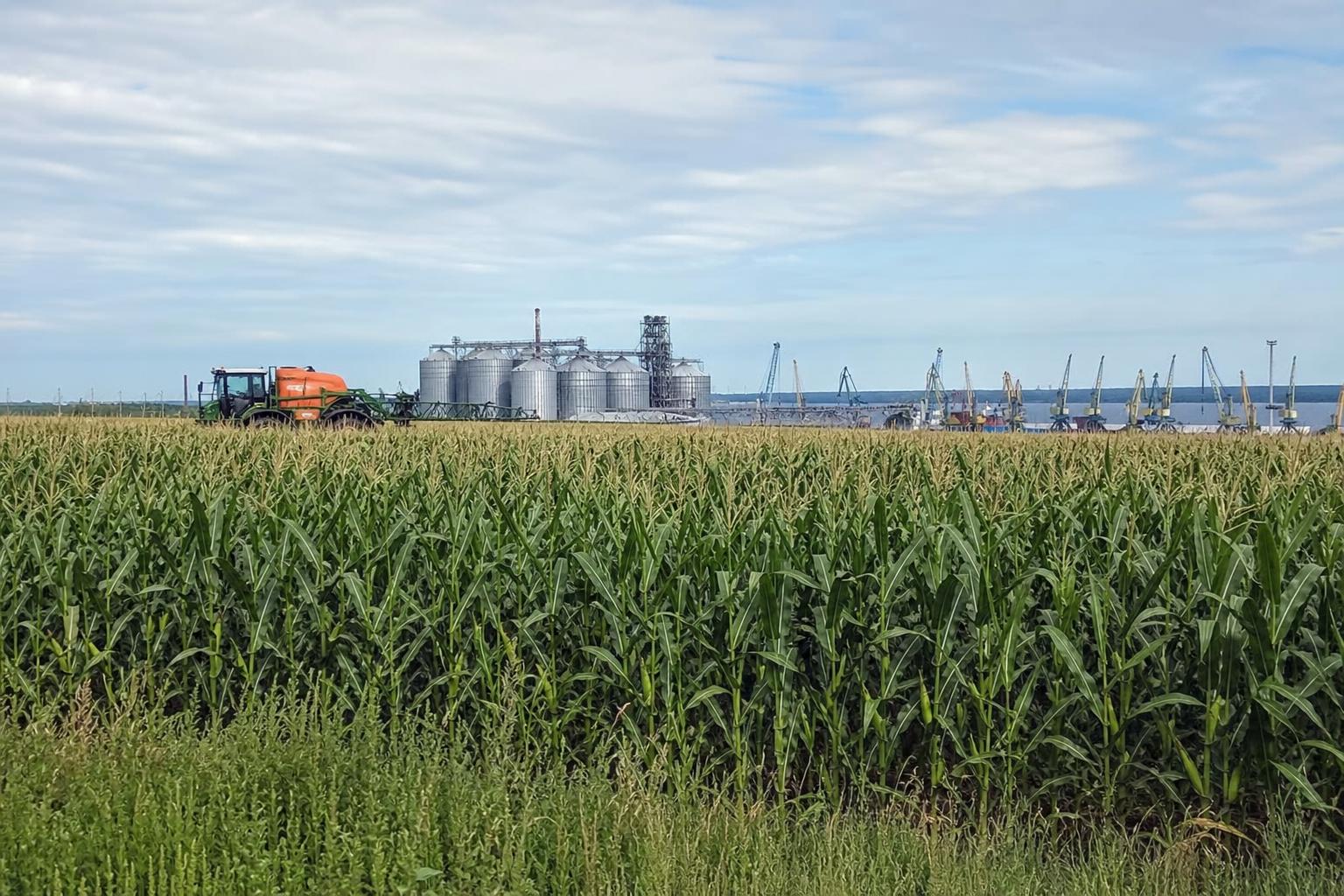
The Ukrainian corn market is experiencing decreased activity. According to Barva Invest, liquidity is gradually slowing down, and traders are not willing to increase prices despite a supply shortage.
Purchase prices at deepwater ports in Ukraine remain in the range of $214–224/ton DAP. At the same time, security risks related to port, railway infrastructure, and civil vessels are deterring some farmers from more active exports to ports.
The external environment currently does not provide a strong impulse for price growth. US corn futures showed a slight decline, while European futures increased slightly. December CBOT futures stood at $175.3/ton, and November Euronext futures at $238.1/ton.
Additional context is the import of corn into the EU. Since the start of the 2025/26 marketing year, the EU has imported 16.9 million tons of corn compared to 18.77 million tons last year. This indicates a slower pace of purchases compared to the previous season but does not fully explain Ukrainian market behavior.
Key Conclusions for Agribusiness
- The fertilizer market remains in focus. The sale of assets from a bankrupt plant may only impact the segment after clear decisions by the new owner regarding the use of the property.
- Digestate moves into practical application. Demand exists, but scaling depends on equipment, logistics, and application services.
- Corn prices are not supported by supply shortages. Buyers are cautious, and sellers consider delivery risks to ports.
- Export logistics remain a price factor. Even with demand, security risks can reduce farmers’ willingness for prompt sales.
Implications for the market
The main practical takeaway for producers is to work with multiple scenarios simultaneously. For corn, it’s essential to compare port prices with costs and risks of logistics, while in crop nutrition, it’s necessary to consider not only fertilizer prices but also total delivery, application costs, and equipment availability. In the near term, farms that quickly adapt resource procurement and grain sales to local conditions will have an advantage over those relying solely on overall market trends.
Comments
No comments yetNo comments yet - be the first.