
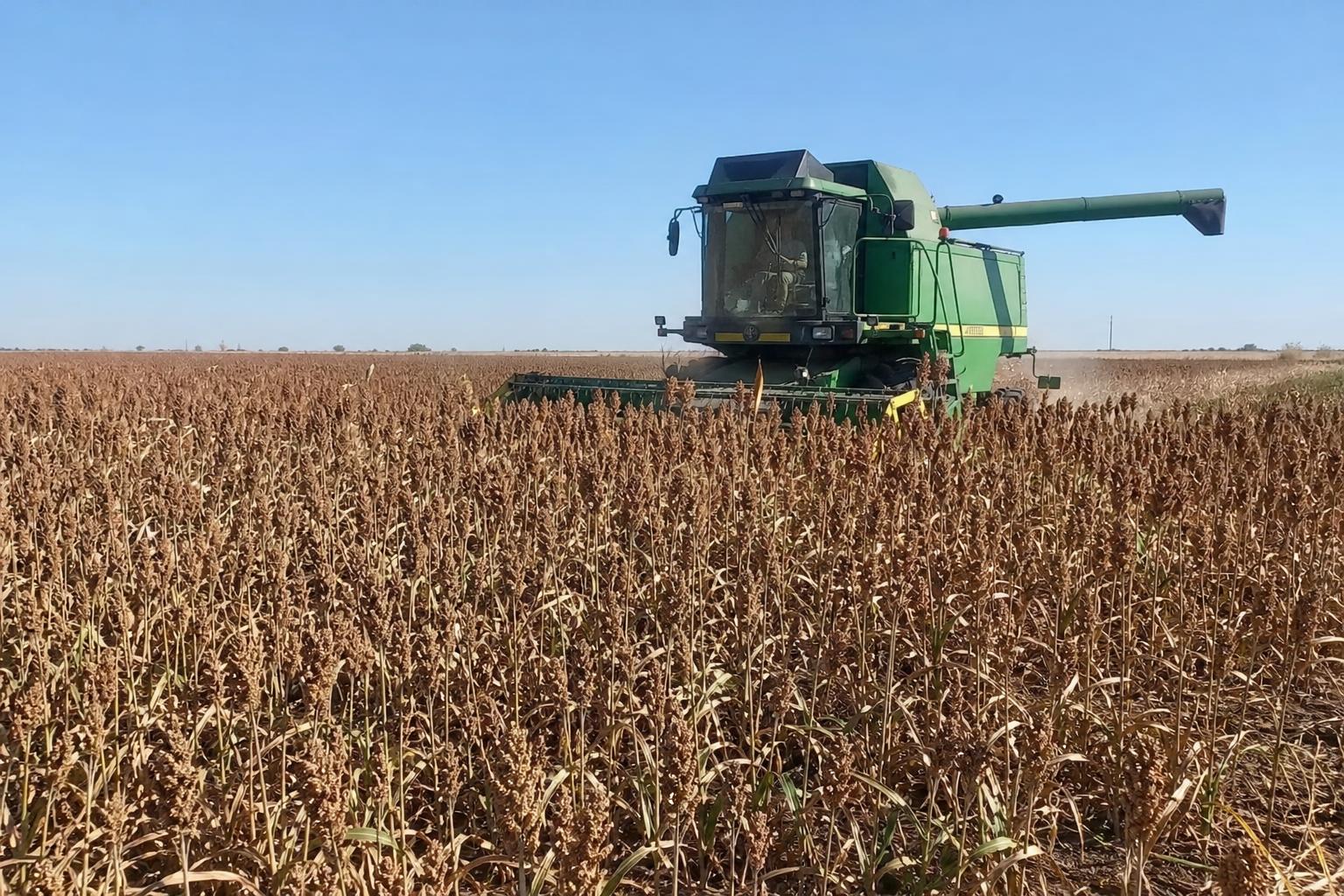
For the grain business, it is crucial to consider both crop yields and the safe delivery of products to buyers. In October, reports emerged about sorghum yields at NIBULON's fields in Mykolaiv region and drone attacks on commercial vessels in the Black Sea.
These news items relate to different segments of the market: grain production in the south and the cost and reliability of maritime export logistics.
Sorghum Demonstrated Resilience Amid Drought Conditions
According to the company, sorghum yields in the Mykolaiv region reach nearly 5 t/ha. During the growing season, 80 mm of rainfall was recorded. Harvesting took place in the Voznesensk district, with total sorghum area in the company's farms exceeding 700 hectares.
The report also provides a grain density indicator of 789 g/l. The company noted that sorghum requires less water and tolerates drought better than many other cereal crops. It is also considered as a potential substitute for winter crops that failed due to adverse conditions.
"NIBULON" plans to expand its sorghum cultivation areas. For southern farms, this signals the importance of evaluating sorghum in crop rotation, considering soil conditions, available moisture, and market access. The results mentioned pertain to a specific producer and do not represent an average for the region.
Black Sea Logistics Adds Uncertainty
In October, reports emerged of drone attacks on ships near the coasts of Romania and Bulgaria. According to Associated Press, Ukraine is increasingly relying on alternative routes for grain exports due to strikes on Black Sea and Danube ports.
The founder of the grain consulting firm Agricolumn stated that, at that time, these incidents had not yet affected trade through the Constanta port, but vessel insurance in the Black Sea was already becoming more expensive. This could lead to higher overall costs for maritime transportation.
However, the article does not specify insurance rates or the extent of freight cost increases. Additionally, claims of possible involvement in the attacks are not confirmed; the data indicate that responsibility for the incidents has not been established.
Considerations for Sellers and Buyers
- Producers: evaluate sorghum not only by yield but also by grain quality, processing costs, and available sales channels.
- Grain sellers: factor in potential increases in insurance expenses and verify transportation conditions for specific routes.
- Buyers: clarify the availability of batches, shipping deadlines, and delivery components before comparing offers.
Implications for the market: sorghum can be an option for southern farms, but specific results should be assessed in relation to local conditions and market outlets. For sellers and buyers, maritime logistics remains a separate cost and risk factor that should be carefully reviewed during each transaction.
Comments
No comments yetNo comments yet - be the first.