
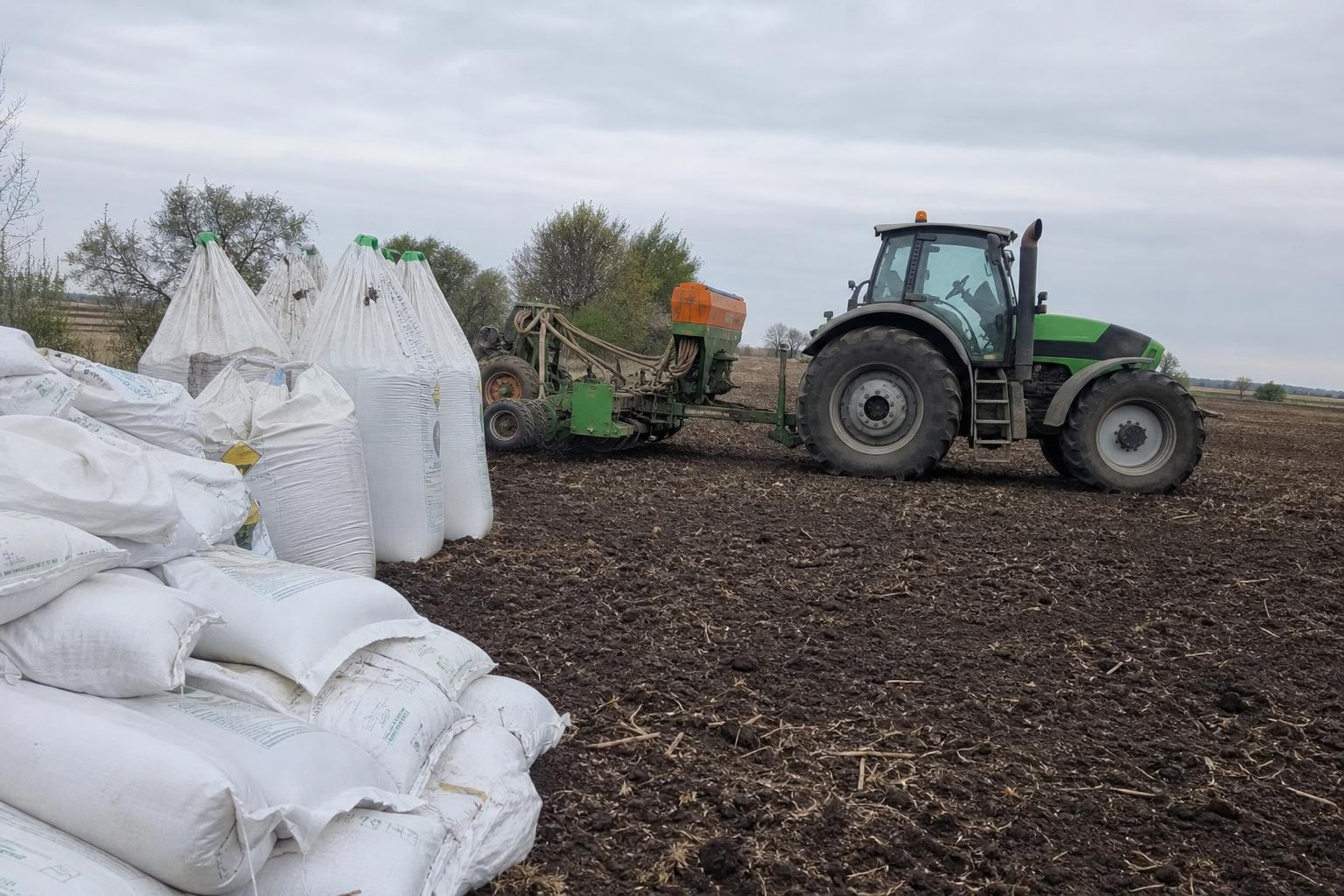
Autumn planting in Ukraine is entering a period when fertilizer demand depends not only on prices but also on farmers’ decisions regarding crop structure. According to the Ministry of Agrarian Policy, sown areas for winter crops in 2027 may decrease, primarily for winter wheat.
For the fertilizer market, this means a more cautious approach to applications of nitrogen, NPK, and starter products. Buyers will scrutinize application rates for specific crops, and sellers should focus on availability, packaging, delivery conditions, and quickly meeting planting needs.
Changes in Sowing Structure
According to publicly available estimates from the Ministry of Agrarian Policy, a reduction in winter wheat areas is already considered a baseline scenario. The exact scale has not yet been specified: information collection is set to begin in September, with more realistic estimates expected in early October.
Meanwhile, winter rapeseed areas are expected to remain roughly at current levels. Sowing of rapeseed is already underway, making it difficult for those who did not plan to increase areas significantly. Changes regarding winter barley are also anticipated to be minor.
Winter crop sowing may continue until the end of October, and in some cases until November 10. This extends the period of urgent fertilizer demand but does not eliminate the risk of local shortages of specific products in certain regions.
Impact on Demand for Nitrogen and NPK
Reduced wheat areas do not necessarily mean a proportional decline in fertilizer purchases. Farms may revise their technological plans: some buyers will postpone decisions, while others will focus on available formulations for specific fields.
For winter wheat and barley, the demand for basic complex fertilizers and products for initial feeding will remain relevant. For rapeseed, proposals aligned with autumn technology will be important, but sellers should avoid universal promises and clearly specify composition, active substances, and application recommendations.
Nitrogen fertilizers may be purchased in stages: part of the needs for autumn operations, and the rest closer to spring fertilization. Therefore, it is advisable to post not only large lots but also offers for medium and small farms with quick contact options on AgroPost.
Logistics and Liquidity: Factors Not to Ignore
On the grain market, there is a noted increase in transportation costs for long-distance routes over 400 km, while tariffs on shorter routes are mostly decreasing or remaining stable. This does not directly reflect fertilizer delivery costs but influences the overall financial environment for farmers.
If some farms incur additional costs for grain transportation or face longer turnover times, procurement may become more fragmented. In such cases, fertilizer sellers should showcase actual stock levels, self-pickup conditions, delivery options, and minimum order quantities.
For buyers, the practical takeaway is straightforward: compare not only the price per ton but also the total cost of receiving the product at the farm, especially for remote routes and urgent deliveries for planting.
Key Conclusions for AgroPost
- Fertilizer sellers should update listings for NPK, nitrogen products, and starter formulas with clear indications of composition, packaging, region, and availability.
- Buyers should calculate needs separately for wheat, rapeseed, and barley, rather than purchasing based on last year's scheme without adjusting for area changes.
- Farms with deferred wheat decisions should have backup supply options, as precise area estimates will be available closer to October.
- For spring planting, it is still early to draw final conclusions, but the Ministry of Agrarian Policy anticipates a possible return to growth in oilseed share, particularly soy and sunflower.
Implications for the market: The Ukrainian fertilizer market is entering a phase of more selective demand. Bulk purchases for winter wheat may become more cautious, while stable rapeseed areas and the need for timely starter fertilization will support interest in complex products. On AgroPost, proposals with transparent conditions, real availability, and quick communication between seller and buyer will prevail.
Comments
No comments yetNo comments yet - be the first.