
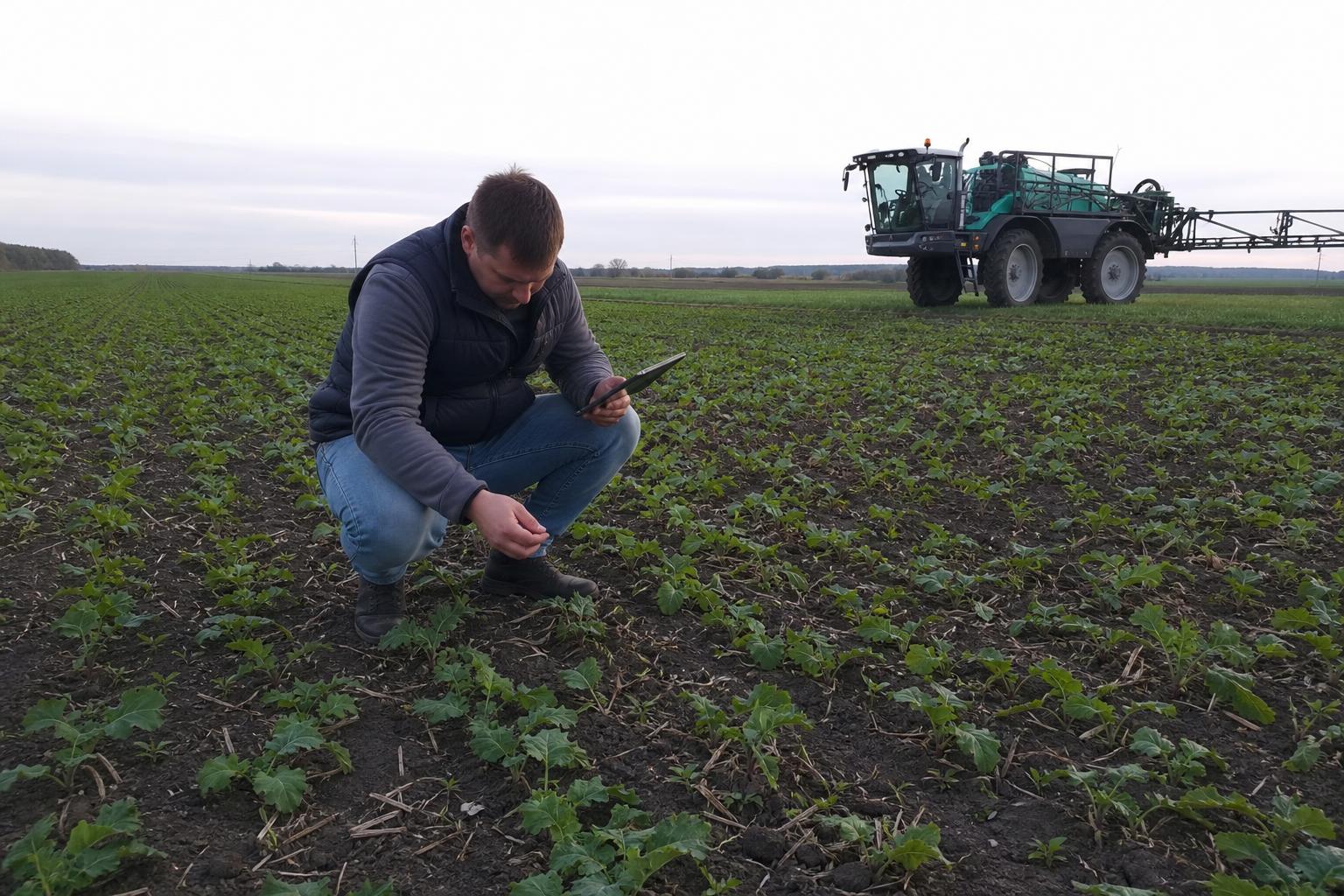
In early September, the plant protection market in Ukraine enters a practical autumn phase: farms are simultaneously completing some harvests, sowing winter rapeseed, and preparing fields for winter cereals. For suppliers of plant protection products (PPP), this signals the need to check availability for autumn schemes, while buyers should quickly verify their needs based on crops and growth stages.
The situation in Vinnytsia region is indicative: as of September 4, farmers have harvested 52% of cereal crops, totaling nearly 2.5 million tons with an average yield of 59.2 c/ha. Simultaneously, sowing of winter rapeseed continues: 105,000 hectares have been sown, or 85% of the forecasted area.
Insights from Field Work
Active sowing of winter rapeseed indicates that upcoming decisions regarding crop protection will focus on autumn herbicide, insecticide, and fungicide-regulator programs. At this stage, farmers should avoid purchasing products universally and instead tailor treatments to specific crops, growth stages, weed presence, and weather conditions.
Soil preparation for winter cereals also influences demand for seed treatments, starter fungicides and insecticides, as well as herbicides for autumn weed control. For sellers, this is a period when advertisements should clearly specify the crop, application rates according to labels, packaging, and available volumes.
The harvesting of cereal grains and the start of early soybean harvests indicate that some farms are still working with late crops. In Vinnytsia region, buckwheat has been harvested on 18% of the area with an average yield of 15.9 c/ha, millet on 82% with a yield of 37.8 c/ha, and soybeans on 5,400 hectares, or 5% of sown areas, with an average yield of 20.9 c/ha.
Potential Focus Areas for PPP Requests
- Winter rapeseed: herbicides against volunteers and weeds, seedling insect control, fungicide solutions with regulatory effects as needed.
- Winter cereals: seed treatments, autumn herbicides, fungicide and insecticide components according to crop and registration.
- Late crops: monitoring before harvest and spot treatments only where economically and technologically justified.
- Post-harvest period: planning for next crop protection considering previous crop, volunteer plants, and weed seed bank in the field.
How PPP Sellers Can Enhance AgroPost Listings
During the short window of application, buyers primarily look for availability, quick shipment, and product-crop compliance. Therefore, listings with specific details perform better than general offers.
- Specify the crop: winter rapeseed, wheat, barley, soybean, or others.
- Add product type: herbicide, fungicide, insecticide, seed treatment, growth regulator.
- Include packaging details, stock remaining, and shipment region.
- Indicate whether documents, certificates, and official origin are available.
- Avoid replacing labels with personal recommendations; buyers need to verify application regulations.
What Buyers Should Check Before Purchasing
For farms that have already sown rapeseed or are preparing to sow cereals, the main risk is buying products without considering the actual field conditions. It is important to evaluate the previous crop, weed spectrum, moisture status, temperature forecast, and crop development stage.
Before payment, verify the product registration for the intended crop, expiration date, storage conditions, and packaging integrity. If purchasing via a marketplace, it is advisable to clarify the availability of the batch, delivery options, and accompanying documents immediately.
Key Conclusions
- The autumn segment of the PPP market is already forming around rapeseed and winter cereals.
- Demand will become more targeted: buyers will look for solutions tailored to specific crops and growth stages, not just general products.
- Sellers should update listings with remaining stock, packaging, and shipment region details.
- Buyers need to verify registration, documentation, and product suitability for field conditions.
Implications for the Market
In the coming weeks, the most successful PPP sellers will be those who quickly demonstrate actual stock availability and clearly structure offers for winter rapeseed and cereals. For buyers, AgroPost’s autumn period is a time to compare available batches, logistics, and documents before application, rather than delaying purchases until the last moment.
Comments
No comments yetNo comments yet - be the first.