
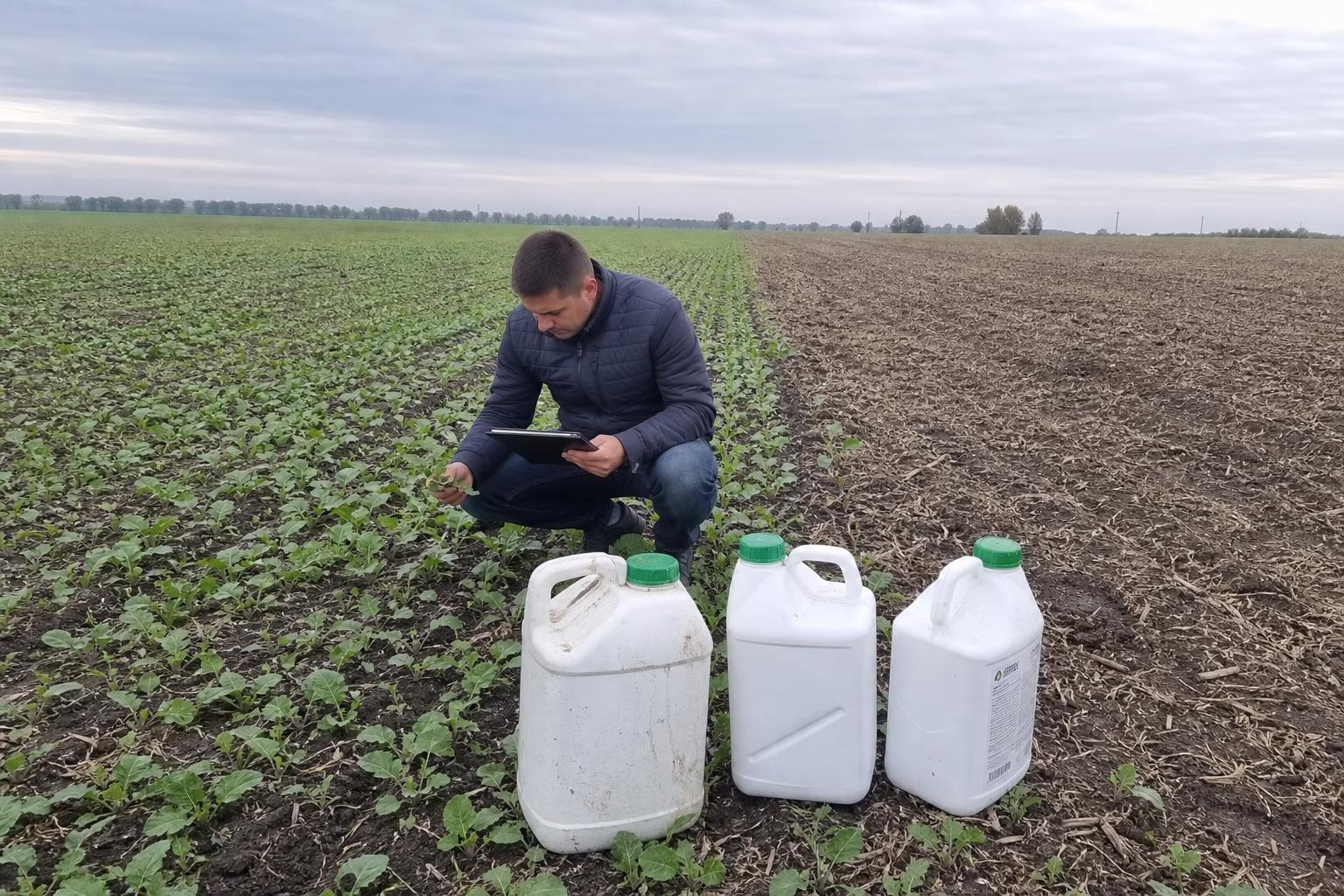
Autumn planting in Ukraine is entering a phase that directly influences the demand for plant protection products. According to operational data from the agricultural authorities, as of September 1, winter grains had just begun sowing, while winter rapeseed had already approached half of its forecasted area.
For sellers and buyers of crop protection agents, this is an important signal: the market is simultaneously operating with two different paces. For rapeseed, some farms are already transitioning to field support, while for grains, preparations of seeds, fields, and procurement baskets are still ongoing.
What has already been sown: figures shaping the demand for protection
As of September 1, Ukraine had sown 10.1 thousand hectares of winter grains. This accounts for only 0.3% of the projected 3.877 million hectares.
The planned area for winter grains is nearly 300 thousand hectares less than last year's result: last year, 4.045 million hectares were sown. While this does not eliminate seasonal demand for crop protection products, it may influence procurement structures and competition among suppliers.
Winter wheat was sown on 8.9 thousand hectares in Ivano-Frankivsk and Kherson regions as of the reporting date. This is 0.3% of the national forecast of 3.341 million hectares.
Winter barley covered 0.7 thousand hectares, or 0.1% of the planned 491 thousand hectares. Winter rye was sown on 0.5 thousand hectares, corresponding to 1.1% of the forecasted 45.7 thousand hectares.
Rapeseed outpaces grains: where demand for crop protection may be more active
Winter rapeseed demonstrates significantly higher season readiness: as of September 1, it was sown on 445.3 thousand hectares. This is 47.7% of the forecasted 933.8 thousand hectares.
For the crop protection market, this means that part of the demand is already shifting from preparatory procurement to decisions for crop support. Buyers may focus on products for early weed, disease, and pest control, as well as solutions used in autumn technological schemes for rapeseed.
Meanwhile, the main volume of grain sowing is still ahead. This sustains the relevance of seed treatment products, herbicides for field preparation, and basic protection schemes for winter wheat, barley, and rye.
What crop protection sellers should focus on on AgroPost
- Segment offers by crops. Since rapeseed and grains are at different seasonal stages, generic ads may be less effective in meeting buyer needs.
- Highlight seed treatments separately. At the start of grain sowing, buyers often look for pre-sowing solutions, so such listings should be made as prominent as possible.
- Specify crop and application stage. Phrases like “for winter rapeseed,” “for winter wheat,” “autumn herbicide protection” help buyers quickly find the right product.
- Update availability and packaging. During active sowing periods, confirming stock levels promptly can be as important as price.
What buyers should consider before procurement
Buyers should align their crop protection needs not only with sowing area but also with specific field sowing schedules. Rapeseed that has already emerged or is in early development stages requires different solutions than fields where grains are still planned for sowing.
It is also crucial to verify the registration of products for specific crops, recommended application rates, compatibility in tank mixes, and weather restrictions. This is especially relevant in autumn when treatment windows can be short.
Implications for the market: in the crop protection category, near-term demand will be uneven. Rapeseed already creates a need for operational solutions for field protection, while grains are just opening the main procurement season for seed treatments, herbicides, and protection schemes for winter crops.
Comments
No comments yetNo comments yet - be the first.