
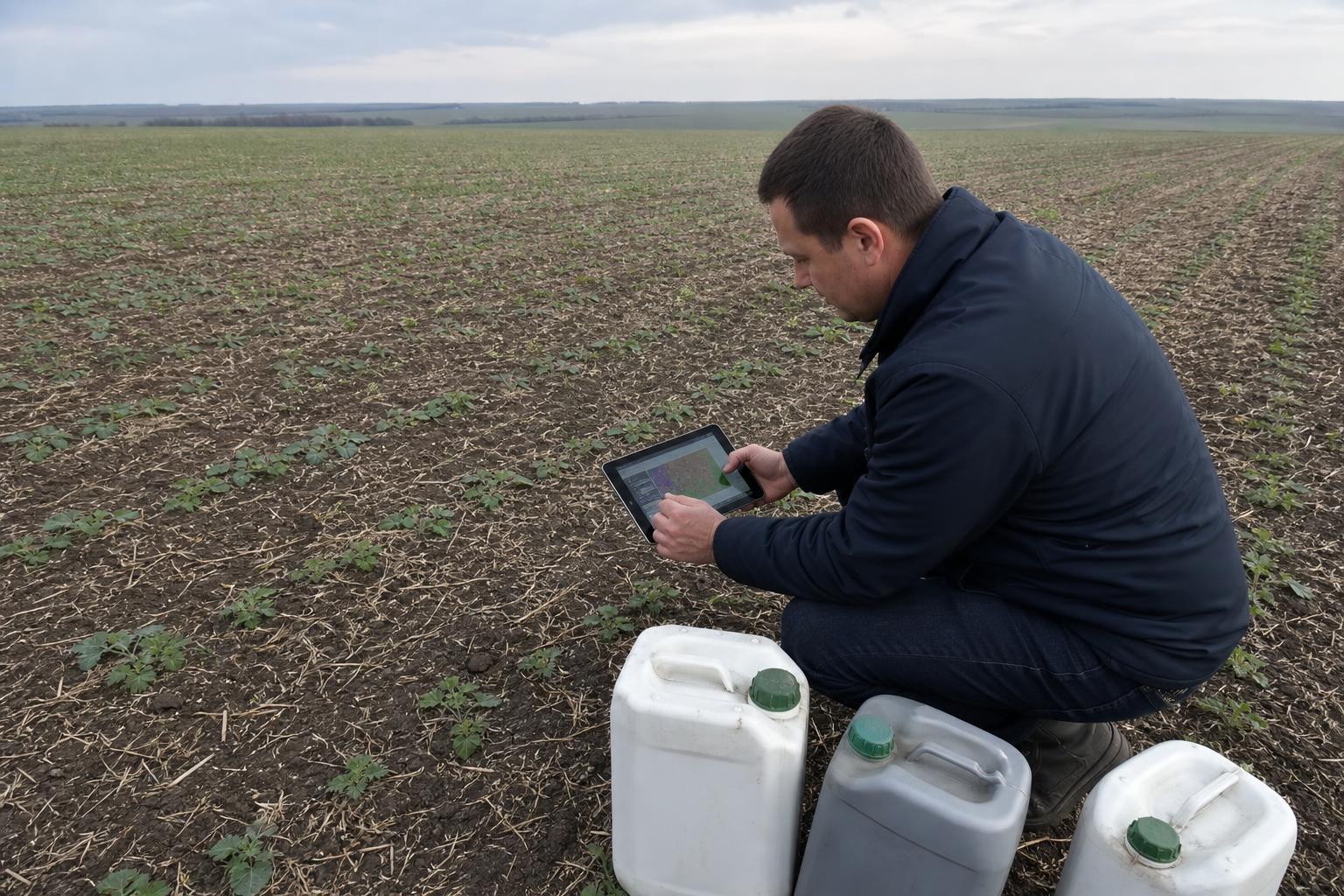
The autumn plant protection campaign in Ukraine is entering the season with uneven starting conditions. At the end of August, many regions experienced soil drought, and dry, compacted soil hampered field preparations for winter crops.
The Ukrainian Hydrometeorological Center highlighted the highest risks for sowing rapeseed and rye. For suppliers and buyers of agrochemicals, this is an important signal: demand this fall may shift from traditional schedules to more flexible solutions based on actual soil moisture, sowing timing, and field conditions.
Drought Alters Autumn Protection Strategies
As of August 31, many regions of Ukraine still had dry and compacted soil. This created unfavorable conditions for sowing winter crops, primarily rapeseed and rye, within optimal timeframes.
For protection systems, this means that decisions regarding herbicides, seed treatments, and fungicides should be linked not only to the sowing plan but also to the actual field conditions. If sowing is delayed or emergence is uneven, calendar-based treatments may require adjustment.
Farmers should pay particular attention to pre-sowing field cleanliness. Under moisture deficit conditions, weed competition for available resources becomes more critical, so demand for herbicidal solutions before autumn sowing may remain relevant even with cautious expenditure planning.
Regional Moisture Variability — Agrochemical Procurement Will Vary Accordingly
In the third decade of August, most of the country experienced a rainfall deficit. Adequate rains occurred only in certain regions: Chernivtsi, Kirovohrad, northern parts of Mykolaiv and Odesa regions, and locally in Cherkasy, Dnipropetrovsk, and Kharkiv regions.
In these zones, rainfall amounted to 100–150% of the decadal norm. However, the stormy nature of the rains did not always improve the situation, as water sometimes failed to fully penetrate the soil.
For distributors and suppliers of agrochemicals, this means a need for more precise regional segmentation of offerings. Where moisture has partially recovered, farmers can more actively prepare for full autumn treatment schemes. In drier areas, purchases are likely to be more cautious and staged.
What Buyers of Agrochemicals Should Focus On
- Herbicides. Pre-sowing and early autumn field cleanliness are crucial, especially if winter crop emergence is expected to be uneven.
- Seed Treatments. Under challenging initial conditions, seeds require effective basic protection, but product choice should be coordinated with the crop type, sowing timing, and phytosanitary background.
- Fungicides. Autumn treatments are best planned after assessing actual plant development, emergence density, and weather conditions.
- Combined Purchases. Avoid excessive stockpiling of products without understanding actual sowing schedules and crop conditions.
What Sellers Need to Know for AgroPost
Agrochemical sellers should clearly specify the crop, application stage, target weeds or diseases, and product format. During a season with uneven moisture, farmers respond more quickly to proposals that address specific problems rather than simply repeating standard price lists.
Offers tailored for winter rapeseed, wheat, barley, and rye with an emphasis on autumn application will be useful. It is also important to highlight products for pre-sowing field preparation and seed protection at the start of the season.
Implications for the Market: The autumn demand for agrochemicals in Ukraine is likely to be more selective and regionally uneven. Buyers will focus on actual soil moisture and crop conditions, while sellers should emphasize precise, practical proposals for winter crops instead of universal seasonal kits.
Comments
No comments yetNo comments yet - be the first.