
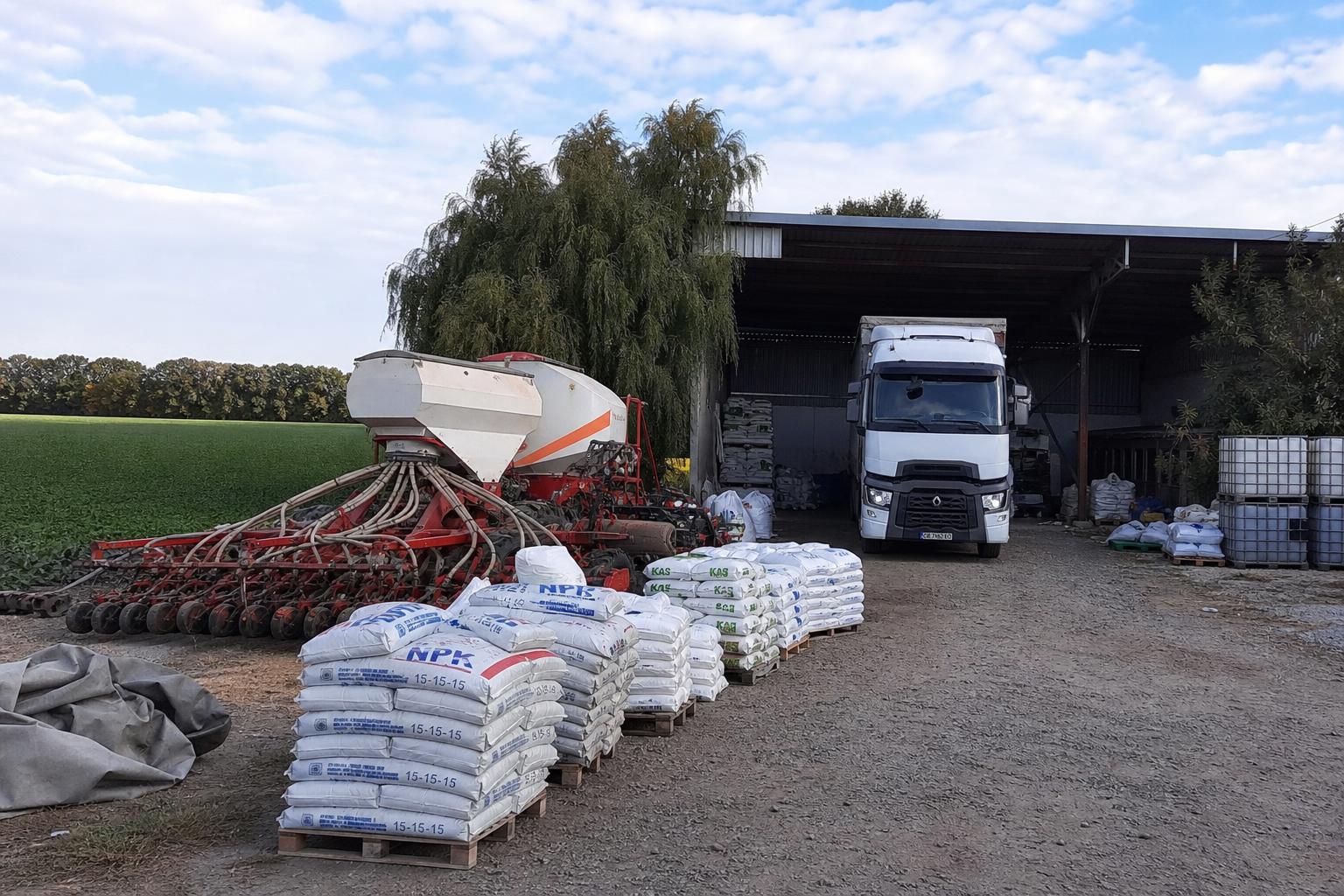
The Ukrainian fertilizer market ahead of the autumn sowing is shaped not only by agronomy but also by the financial discipline of farms. For buyers, the key issue now is not just finding nitrogen or NPK, but selecting the volume, delivery terms, and payment conditions aligned with their actual cash flow.
For sellers on AgroPost, this means that offers with clear availability, packaging, shipment region, and quick communication will have an advantage. The market is becoming more practical: farmers respond less to general promises and more to specifics regarding logistics and application.
Sowing supports demand for nitrogen and complex fertilizers
After harvesting early crops, farms move on to soil preparation and sowing winter crops. Under these conditions, demand traditionally concentrates around starter nutrition, phosphorus-potassium solutions, and nitrogen products for further technological planning.
At the same time, farmers increasingly purchase not "just in case," but tailored to specific fields and crops. This enhances interest in NPK formulas, microgranulated products, sulfur-containing fertilizers, and adjustments based on soil analysis.
The experience of large producers, who emphasize adherence to technology, crop monitoring, and rapid decision adjustments after a challenging season, is indicative of the market. This does not necessarily mean increased fertilizer costs but highlights the importance of balanced nutrition in production planning.
Farmers’ cash flow remains the main constraint
According to agro-export market data, from August 1 to 18, Ukraine exported 900,000 tons of agricultural products. This is only 31% of the potential volume under free port access in Greater Odessa. The most significant decline was in grains: 522,000 tons, or about 20% of the possible volume.
For the fertilizer market, this is an important indirect signal. When grain sales are complicated, some farms delay or split resource purchases, even if agronomic needs are already identified. Buyers more often look for smaller batches, nearby warehouses, and delivery options without excessive logistics overhead.
Oilseeds and processing products, according to sources, better withstand alternative logistics. Therefore, demand for fertilizers may be more stable in farms where crops like rapeseed, sunflower, or soy occupy a larger share of crop rotation, but this depends on the specific economics of each enterprise.
Fertilizer logistics: proximity to warehouses becomes a competitive advantage
Alongside issues with Black Sea logistics, the importance of alternative routes and regional transshipment opportunities is growing. In Romania, modernization of the Luminița port on the Danube-Black Sea Canal has been announced, with plans to gradually handle 300,000 tons of cargo annually in the third year of operation.
This fact does not directly change fertilizer prices in Ukraine but indicates a broader trend: Danube and border routes remain vital for agricultural logistics. For fertilizer sellers, regional warehouses, pre-booking transport, and transparent information on shipment timing are becoming relevant.
Buyers should compare not only the price per ton but also the total cost of delivery to the farm. Sometimes a more expensive offer from a closer warehouse can be more advantageous if it reduces the risk of delays during sowing.
What buyers and sellers should focus on AgroPost
- Buyers: clarify product availability, batch size, shipment warehouse, payment terms, and possible delivery schedule.
- Sellers: specify the exact fertilizer brand, active substance content, packaging, region, and minimum batch size.
- Farmers for winter crops: plan procurement prioritizing fields where delayed nutrition could most affect crop start.
- Distributors: emphasize quick shipments and consultations on product compatibility within technological schemes.
It is also important to verify quality and origin documents. Trust in the supplier often matters as much as, or more than, price differences in the fertilizer market.
Implications for the market
The Ukrainian fertilizer market is entering the sowing season with active demand but without room for chaotic procurement. Farmers consider liquidity, sellers compete on speed and transparency, and logistics increasingly influence the final cost for farms.
For AgroPost, this is a period when the most effective are specific announcements: fertilizer, warehouse, tonnage, conditions, and contact. The less uncertainty in the offer, the faster the buyer can make a decision aligned with their sowing schedule.
Comments
No comments yetNo comments yet - be the first.