
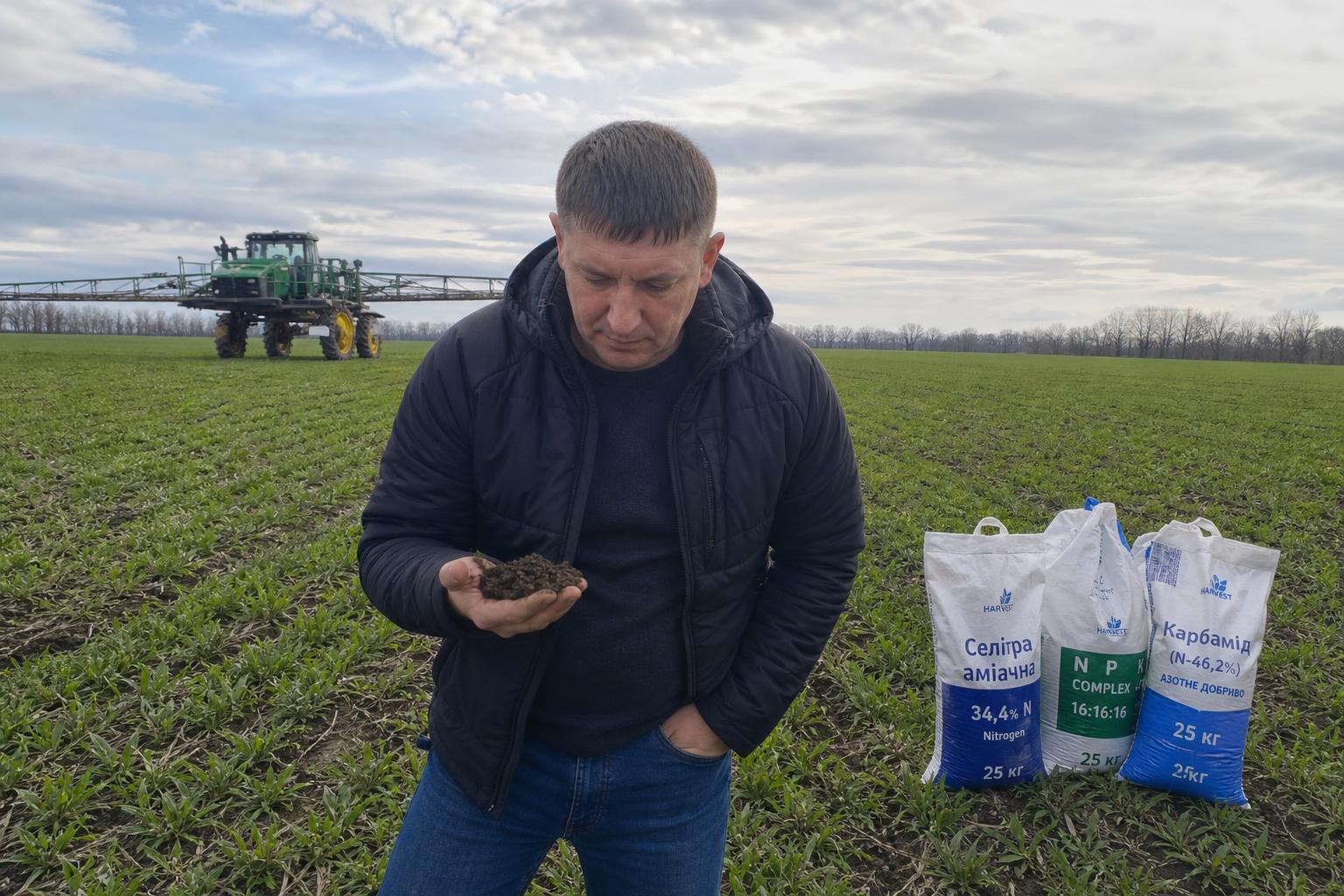
For the Ukrainian fertilizer market, the key issue is not only the price per ton of nitrogen or NPK but also the product’s suitability for a specific field. The granulometric composition of the soil influences its water retention and nutrient holding capacity, thereby affecting the efficiency of fertilizer application.
According to research by the Ukravit Institute, over 2,000 soil samples from various regions of Ukraine were analyzed in 2025. The results confirm that fertilizer procurement should be planned not only based on crop type but also considering soil type and natural zone.
Polissya: Focus on Split Feeding and Loss Control
In Polissya, among the analyzed samples, approximately 56% were light sandy loam soils, and another 32% were medium loamy. Such soils warm up faster in spring, allow good air permeability, and are easier to cultivate.
At the same time, light soils retain water and nutrients less effectively. This is especially true for nitrate nitrogen, sulfate sulfur, potassium, magnesium, and boron.
Practical advice for fertilizer buyers: on such fields, it is more appropriate to consider not only the total application rate but also the possibility of dividing the feeding into smaller doses during periods of maximum crop uptake. This is important when purchasing nitrogen, sulfur-containing, and microfertilizers.
Forest-Steppe: Demand for Flexible NPK Solutions
In the Forest-Steppe, the soil structure in the study was mixed: 25% of samples were light loamy, 41% medium loamy, and 34% heavy loamy. For the fertilizer market, this means that a universal feeding scheme within one farm may produce different results across various fields.
For agricultural enterprises in this zone, soil analysis, clarification of nutrient availability, and selection of NPK formulations tailored to specific fields are crucial. Fertilizer sellers should clearly specify the composition, element forms, and application recommendations.
On AgroPost, buyers can compare offers not only by price but also by product composition: nitrogen, phosphorus, potassium, sulfur, magnesium, or microelements content. For sellers, this is an argument to make listings as detailed as possible.
Steppe: Heavy Soils Require Attention to Structure, Not Just Rate
In the Steppe, the majority of samples were heavy loamy soils — 71%. Another 21% were medium loamy, and 8% light loamy.
Heavy soils can accumulate more water and nutrients. However, this does not always mean better availability for plants. After heavy rains, water passes more slowly, and with poor drainage, the root system may experience oxygen deficiency.
In such conditions, increasing fertilizer doses alone does not solve the nutrition problem. If roots are restricted by compaction or lack of air, nutrient uptake can deteriorate even when nutrients are abundant in the soil.
What to Consider When Buying Fertilizers for the Season
- For light soils: timing of application and splitting doses, especially for nitrogen, sulfur, potassium, magnesium, and boron.
- For medium loams: focus on NPK balance and results of agrochemical analysis.
- For heavy soils: evaluate not only the fertilizer rate but also compaction, drainage, aeration, and excess moisture risks.
- For sellers: specify the exact composition, element forms, packaging, certification availability, and recommended application conditions.
- For buyers: compare not only the price per ton but also the active substance cost and product suitability for specific technologies.
Experts emphasize that changing the granulometric composition of soil is impossible, as it depends on the parent rock. However, farmers can improve soil structure, porosity, and water permeability through organics, cover crops, ameliorants, and properly selected technologies.
Implications for the Market
The fertilizer market in Ukraine is gradually shifting from purchasing a “standard rate” to more precise product selection tailored to soil and crop. For buyers, this offers a chance to reduce nutrient losses and increase cost efficiency. For sellers on AgroPost, it provides an opportunity to better segment proposals for nitrogen, NPK, sulfur-containing, and microfertilizers according to the needs of different regions of Ukraine.
Comments
No comments yetNo comments yet - be the first.