
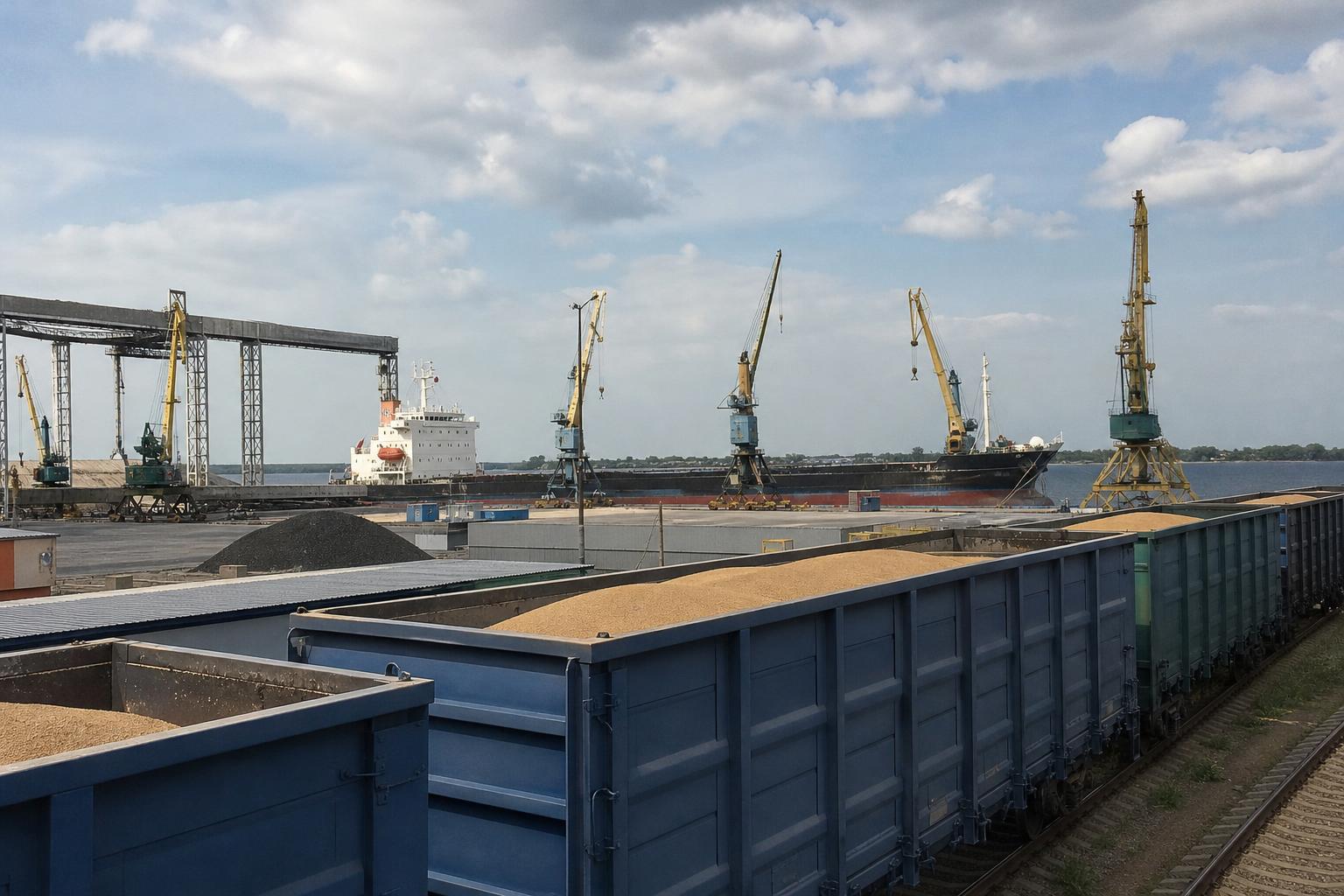
Ukrainian grain exporters are using alternative routes through Romania, while the rail component of logistics is becoming more expensive. According to the data cited, volumes of Ukrainian grain moving through the Port of Constanța have increased, while Ukrzaliznytsia has announced a higher rate for using grain hoppers.
For sellers and buyers, this is a reason to review the route, railcar availability and how transport costs are factored into the contract price.
Constanța handles more Ukrainian grain
From January to September 2026, 1.03 million tonnes of Ukrainian grain were shipped through the Romanian port of Constanța. The figure for the same period in 2025 was 321,000 tonnes.
Total grain throughput at the port reached 15.8 million tonnes in the first nine months of 2026, up 7% year on year. These figures show the port’s scale as an export route, but do not in themselves determine the cost or availability of a specific route for an individual shipper.
Ukrzaliznytsia grain hopper rate to rise in November
In November, the fee for using a Ukrzaliznytsia grain hopper is set to be UAH 3,771 per day, excluding VAT. This is UAH 400 more than in October.
According to the published data, the rate for food-grade tank cars will rise by UAH 100 to UAH 1,850 per day. This is a separate railcar category and should not be equated with the grain transportation tariff.
What to check before planning a shipment
- Compare the cost of using a railcar with other route components, including railcar delivery, idle time, transshipment and delivery to the port.
- Check grain hopper availability and turnaround times for the required route.
- Make clear in your calculations whether the quoted rate includes VAT and the period for which it applies.
What this means for the market
Higher throughput via Constanța expands the actual capacity of this export channel, while the increase in grain hopper rates raises the cost of using railcars. For AgroPost market participants, it is important to compare commodity prices with the current terms of a specific logistics route rather than relying solely on port volumes or the railcar rate.
Comments
No comments yetNo comments yet - be the first.