
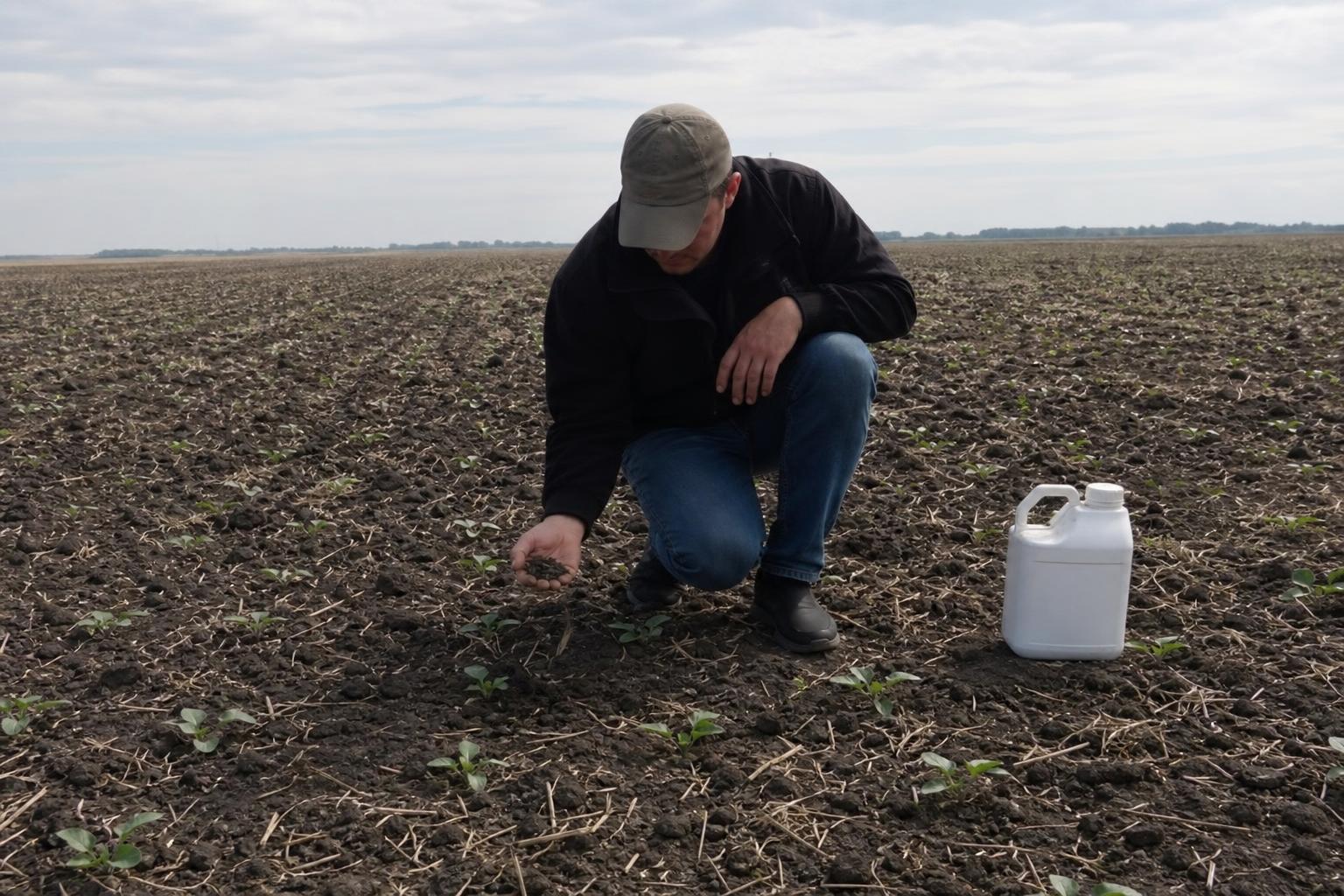
The autumn plant protection campaign in Ukraine is entering a period of high uncertainty. In the south, farmers are already harvesting sunflower, but at the same time, they are experiencing a severe moisture deficit, which directly influences decisions regarding sowing winter rapeseed and purchasing plant protection products.
For sellers and buyers on AgroPost, the key issue is not just the availability of products but the ability to quickly select an effective scheme tailored to specific field conditions: soil moisture, previous crop, sowing deadlines, and the expected window for application.
Drought shifts focus in winter crop protection
In Mykolaiv region, one farm has begun harvesting sunflower with an initial yield of 1.5 t/ha. In the same region, some farms report lower yields — within 400–900 kg/ha, according to agricultural sources.
The main reasons cited are heat and drought. The farm estimates that from August 2025 to July 2026, only 120 mm of effective rainfall fell, and currently, there is no moisture in the soil.
As a result, some producers are delaying rapeseed sowing. One farm in Mykolaiv region is considering starting after September 10, if conditions permit.
Implications for the plant protection market
With limited moisture, demand for protection products becomes more selective. Buyers are more cautious in stocking soil herbicides, as their effectiveness largely depends on field conditions and proper application according to regulations.
At the same time, there remains a need for seed treatments, protective herbicides, and fungicidal solutions for autumn disease control, provided that rapeseed crops are established timely and uniformly. For sellers, it is crucial to specify the crop, active substance, formulation, packaging, remaining stock, and region of shipment clearly.
Buyers should not reserve products solely based on price. During the short autumn application window, confirmed availability, logistics efficiency, documentation, and compliance with crop and growth stage requirements become equally important.
Practical guidelines for buyers on AgroPost
- Check soil moisture before purchasing soil herbicides. If sowing is delayed, the protection scheme may need adjustment.
- Verify the registration of the product for the crop. For rapeseed, it is important to check the label, application rate, and restrictions related to growth stages.
- Prioritize purchases. Seed treatments and basic solutions for starting the campaign may be more critical than large reserves of “backup” products.
- Ask for manufacturing date and batch number. This is especially important for residues from previous seasons.
- Arrange for prompt delivery. During a short application window, logistics can be as crucial as price.
What sellers of plant protection products should consider
General listings with descriptions like “herbicides” or “fungicides” are less effective when the market shifts to targeted procurement. Farmers need to quickly determine if a product suits their crop, region, and timing of work.
In product descriptions, it is advisable to specify the active substance, concentration, formulation, packaging, minimum order quantity, payment terms, delivery options, and accompanying documentation. If the product is specifically suitable for rapeseed, sunflower, or cereals, it is better to highlight this in the description.
In a season with moisture shortages, buyers are looking not for the longest list of products but for the quickest response: what is available, where it can be delivered, and whether it fits their field conditions.
Implications for the market. The autumn segment of plant protection products in Ukraine will depend on actual sowing dates and moisture availability. For buyers, this is a time for cautious planning and verifying each item; for sellers, an opportunity to succeed through transparent availability, detailed listings, and rapid communication.
Comments
No comments yetNo comments yet - be the first.