
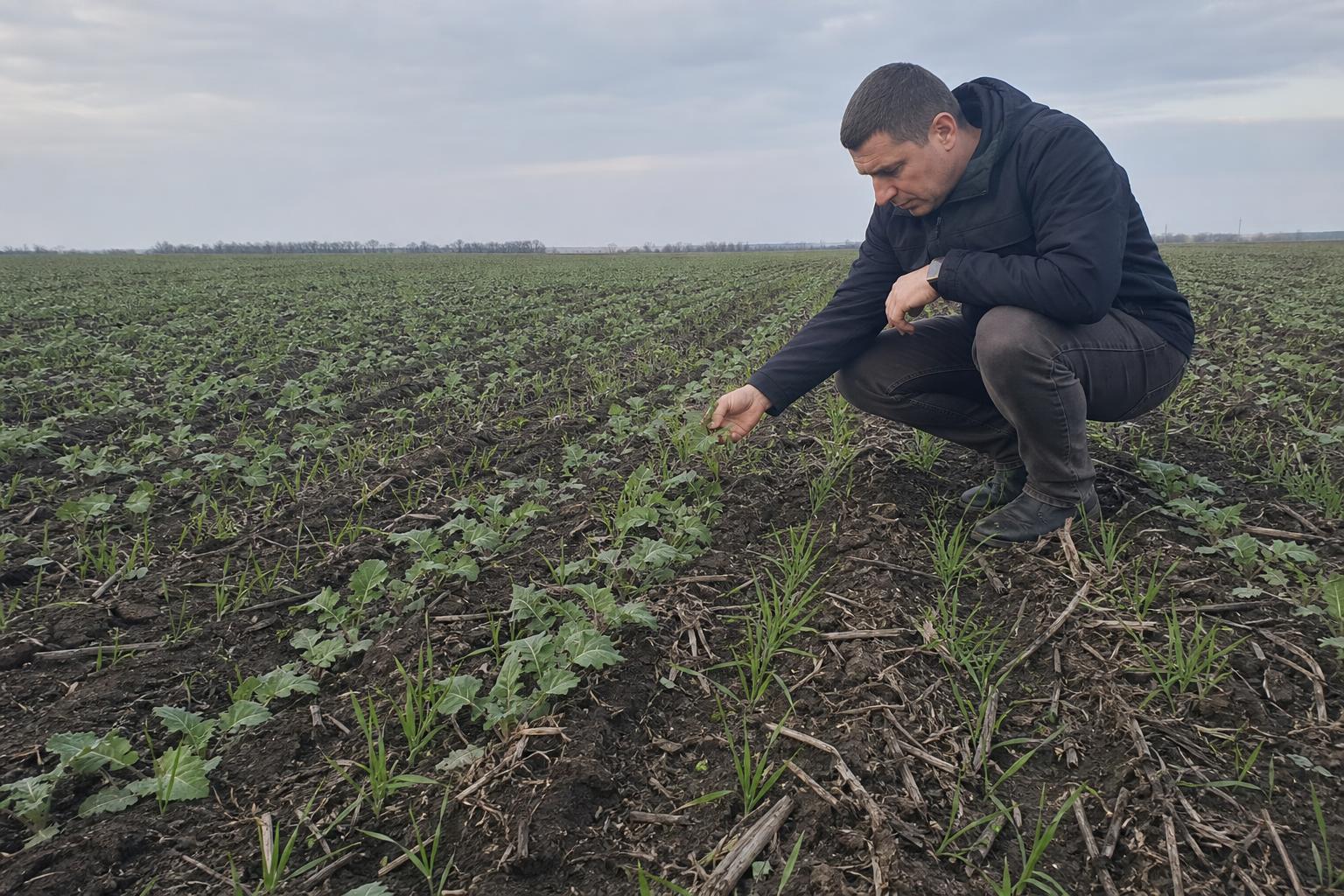
Autumn sowing of winter rapeseed for the 2027 harvest is proceeding unevenly: in some regions, moisture levels are sufficient for planned operations, while other farms are sowing into dry soil or postponing activities awaiting rainfall.
Under such conditions, plant protection becomes a practical issue: farmers need not only to purchase herbicides but also to select a scheme that will be effective given the specific soil moisture, crop growth stage, and weed infestation level.
Why an autumn start for rapeseed is critical
In the early stages of development, rapeseed must quickly form sufficient vegetative mass and prepare for wintering. Competition with weeds during this period consumes moisture, nutrients, and light.
Particularly important are grassy weeds and volunteer cereals, which often remain after previous crops. If not controlled in time, they can complicate the formation of a uniform crop stand before the crop enters winter.
Soil protection does not always solve the problem
The traditional approach for rapeseed involves a combination of a soil-applied herbicide and a subsequent insurance treatment when the effect of the first application diminishes. However, in conditions of soil moisture deficit, the efficacy of soil-applied products may be reduced.
An additional risk factor is the quality of field preparation. If the seedbed is uneven and the topsoil is dried out, farmers may experience incomplete weed control or opt to skip soil treatments altogether in favor of post-emergence solutions.
Therefore, in autumn, the role of insurance herbicides increases, allowing farmers to respond based on actual field conditions.
What to consider when choosing a post-emergence herbicide
In the grassy weed control segment for rapeseed, experts focus on products containing the active ingredient halauxifen-methyl. The source provides an example of a product with a concentration of 125 g/l, positioned for controlling annual and perennial grasses, as well as volunteer cereals.
The mechanism of action of this group involves inhibition of the acetyl-CoA carboxylase enzyme, which is involved in fatty acid synthesis. Practically, this means the product targets grass weeds specifically, so it is important to correctly identify weed species before purchase.
For maximum effectiveness, the source recommends targeting early weed growth stages: 2–4 true leaves for annual grasses, and up to 10–15 cm in height for perennials. This serves as an important guideline for planning procurement and logistics of crop protection products.
Key conclusions for sellers and buyers of crop protection products on AgroPost
- Buyers should verify not only the price but also the active ingredient, concentration, registration for rapeseed, shelf life, and availability of batch documents.
- Sellers should clearly specify whether the product is for grassy weeds and volunteer cereals, as this may be a relevant request in autumn.
- Farmers need to time treatments based on weed growth stages, not just calendar dates.
- Distributors should demonstrate product availability in regions where sowing is delayed due to moisture shortages, enabling quick decision-making on crop protection.
It is also important to check phytotoxicity, crop rotation restrictions, compatibility with other products, and application regulations according to the official label of each product.
Implications for the market
The autumn rapeseed protection season in Ukraine could support demand for post-emergence herbicides against grassy weeds. For AgroPost buyers, quick access to proven products with the correct active ingredient is key, while sellers should provide detailed product descriptions, transparent residue information, and readiness to meet farmers’ needs during a short operational window.
Comments
No comments yetNo comments yet - be the first.