
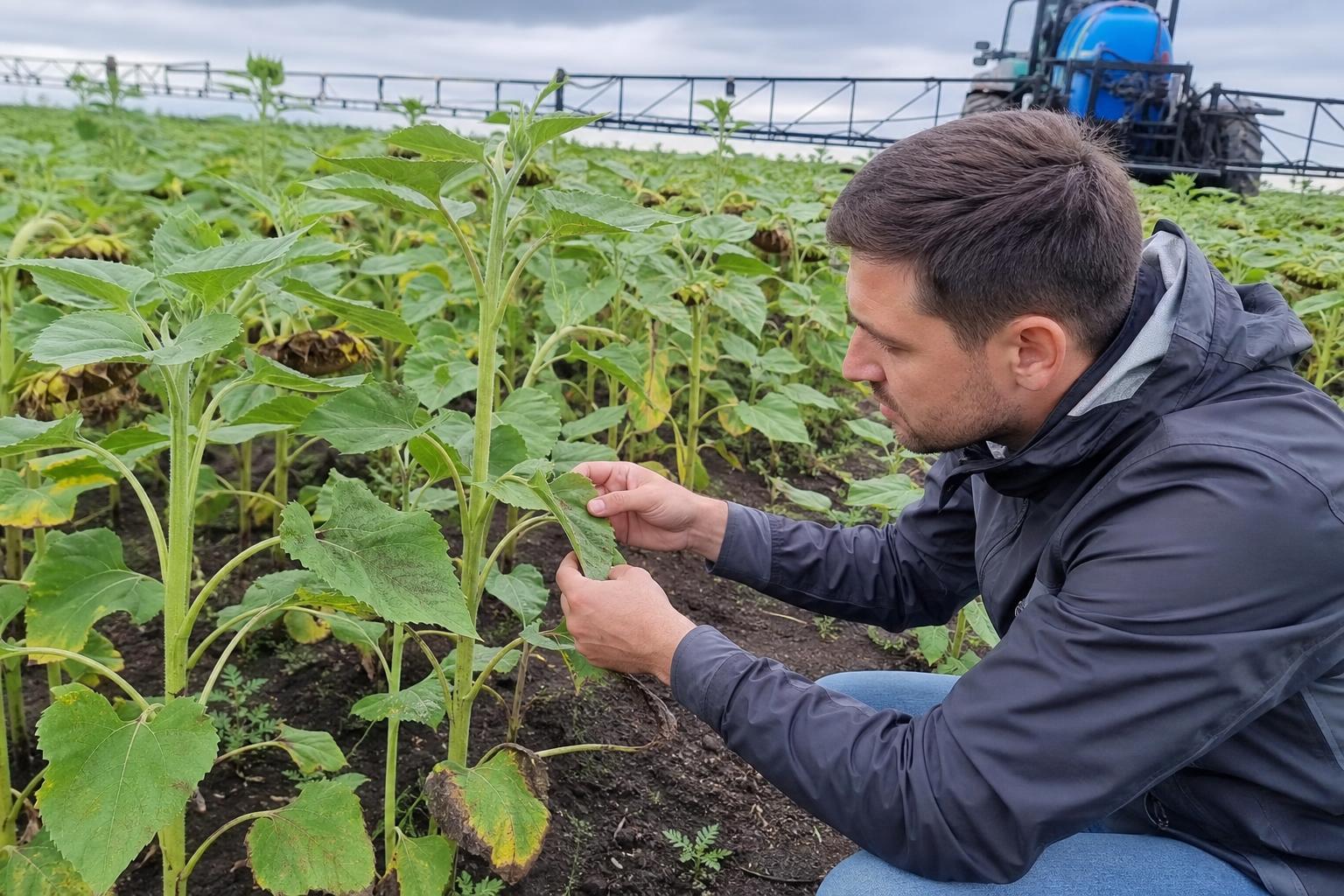
Following the rains in the second half of June, the risks of diseases in Ukrainian crops, primarily sunflower and soybean, have intensified. Moisture combined with moderate temperatures has created favorable conditions for the development of phytopathogens.
For the plant protection market, this means a shift in demand toward foliar fungicides. Buyers should quickly evaluate crop conditions, while sellers need to clearly indicate which products are suitable for specific crops and diseases.
Current Disease Focus
Signs of secondary downy mildew, white rust, and septoria are already observed on sunflower. Soybean crops show symptoms of downy mildew and other foliar diseases.
Increased humidity also raises risks for vegetable crops. For potatoes and tomatoes, late blight and alternaria are relevant, while for vineyards, mildew remains a concern.
What Producers Should Check Before Buying Fungicides
The first step is field monitoring. It is important not to limit inspections to a general overview but to examine lower and middle canopy leaves, areas with poorer ventilation, and fields that have experienced heavy rainfall.
The second step is to match the active ingredient with the target pathogen. Market sources mention products based on cymoxanil, metalaxyl, or their combinations for controlling oomycetes.
The third step is to verify application regulations: crop, dosage, growth stage, waiting period, and tank-mix compatibility. This is especially important for farms managing sunflower, soybean, vegetables, or grapes simultaneously.
Impact on Pesticide Supply on AgroPost
In the near future, buyers will look for specific solutions against downy mildew, late blight, mildew, white rust, or septoria, rather than just a generic "fungicide." Therefore, advertisements should specify active substances, crops, formulation, packaging, and documentation availability.
For sellers, transparent communication regarding residues and logistics is crucial. If a product is available in the regional warehouse, it could be decisive for farms with a narrow window for treatment after rains.
Key Recommendations for Farms
- Sunflower and soybean — under increased scrutiny due to downy mildew and foliar diseases.
- Vegetables and grapes — also require monitoring for late blight, alternaria, and mildew risks.
- Active ingredients — should be selected based on the specific disease, not just the product name.
- Before treatment — verify the registration of the product for the crop and the application regulations.
Implications for the Market
Weather conditions following June rains are creating short-term demand for fungicides for field crops, vegetables, and grapes. On AgroPost, buyers should promptly compare offers based on active ingredients and availability, while sellers should detail their listings to quickly meet farmers’ crop protection needs.
Comments
No comments yetNo comments yet - be the first.