
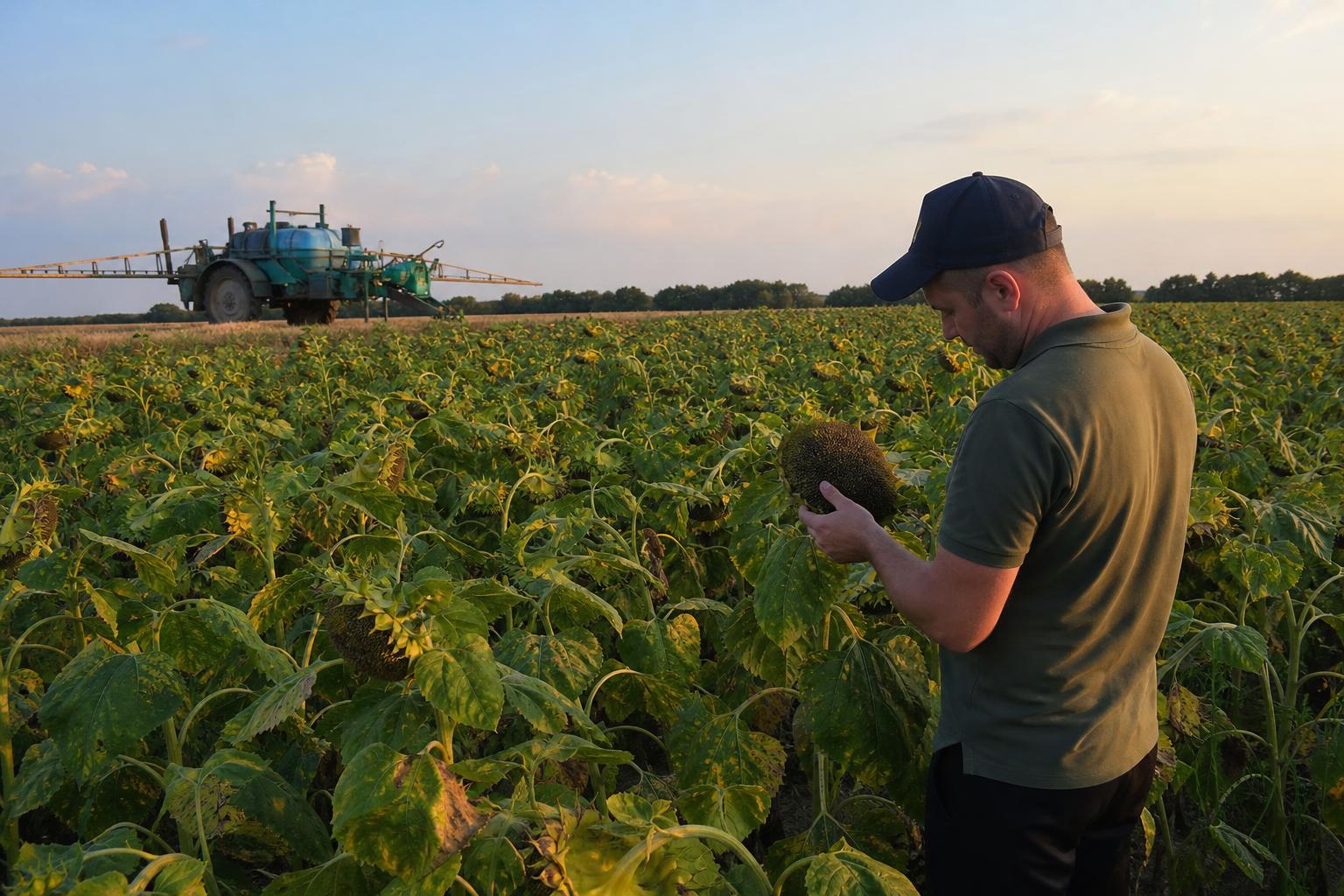
New season sunflower enters the market with noticeable market tension: analysts expect sufficient supply for domestic processing, with the most challenging period for prices being September-October.
For producers, this makes the final stage of technology particularly crucial. Desiccation, canopy condition control, uniform ripening, and equipment readiness directly influence how much marketable seed can be delivered to storage or buyers.
Market Background: Supply May Pressure Prices
According to PUSK analysts, even with challenging weather conditions in southern Ukraine, the harvest could reach at least 11.5-12 million tons of sunflower. In some southern regions, due to rainfall deficits and high temperatures, yields may decrease to 1.2-1.5 t/ha.
At the start of the season, sunflower prices may range from 19,000 to 20,000 UAH/ton. If harvesting proceeds quickly and supply sharply increases, analysts allow for a decline to 16,000-17,000 UAH/ton.
After the supply peak, the market may partially recover. Forecasts mention a possible return to levels of 19,000-20,000 UAH/ton closer to December-January, but this will depend on logistics, demand from processors, and harvest sales pace.
Why Desiccation Is Especially Important During Price Pressure Season
When the market anticipates a mass influx of sunflower, producers often choose between quick sale of part of the harvest and storage for better prices. In both cases, harvesting quality is key.
Desiccation helps synchronize crop ripening and reduces dependence on a few critical weather days. For farms with different sowing times, heterogeneous fields, or drought stress, it can be an essential tool for planning harvest.
At the same time, desiccation is not an automatic solution for every field. The decision should be made after inspecting the crop: canopy condition, seed moisture, weediness, presence of diseases, weather forecast, and the actual readiness of harvesters should all be considered within a technological plan.
What to Check Before Buying Plant Protection Products for Season Finish
- Product registration. For sunflower, only use products approved for the specific crop and intended purpose.
- Purpose of the product. Desiccant, herbicide, or fungicide have different functions, so replacing one with another without technological justification can pose risks.
- Waiting periods. Before harvesting, consider application regulations to avoid quality issues with the batch.
- Compatibility and water. If tank mixes are planned, check manufacturer recommendations, water quality, and mixing procedures.
- Supply logistics. During peak periods, demand for desiccants and related materials increases, so availability in stock is often more important than minimal price differences.
Context for Sellers and Buyers on AgroPost
For agrochemical sellers, the coming weeks are a time to update offers for desiccants, adjuvants, herbicides for post-harvest weed control, and application services. Buyers are looking not only for price but also for quick confirmation of availability, documentation, and clear delivery conditions.
Farmers should categorize procurement tasks: sunflower finishing, field preparation after harvest, autumn fallow and weed control. This approach helps avoid mixing urgent decisions with planned purchases for the next season.
The market is also discussing draft laws on temporary zeroing of export duties on soy, rapeseed, and sunflower. One explanation of the draft mentions expected growth in purchase prices for farmers by 8-12%, but this is not yet a binding regulation.
What this means for the market. During a season when sunflower prices may fluctuate under supply and logistics pressures, crop protection extends beyond purely agronomic issues. Quality desiccation, proper choice of plant protection products, and timely harvesting help producers preserve marketable volume and have more flexibility in choosing the sale moment.
Comments
No comments yetNo comments yet - be the first.