
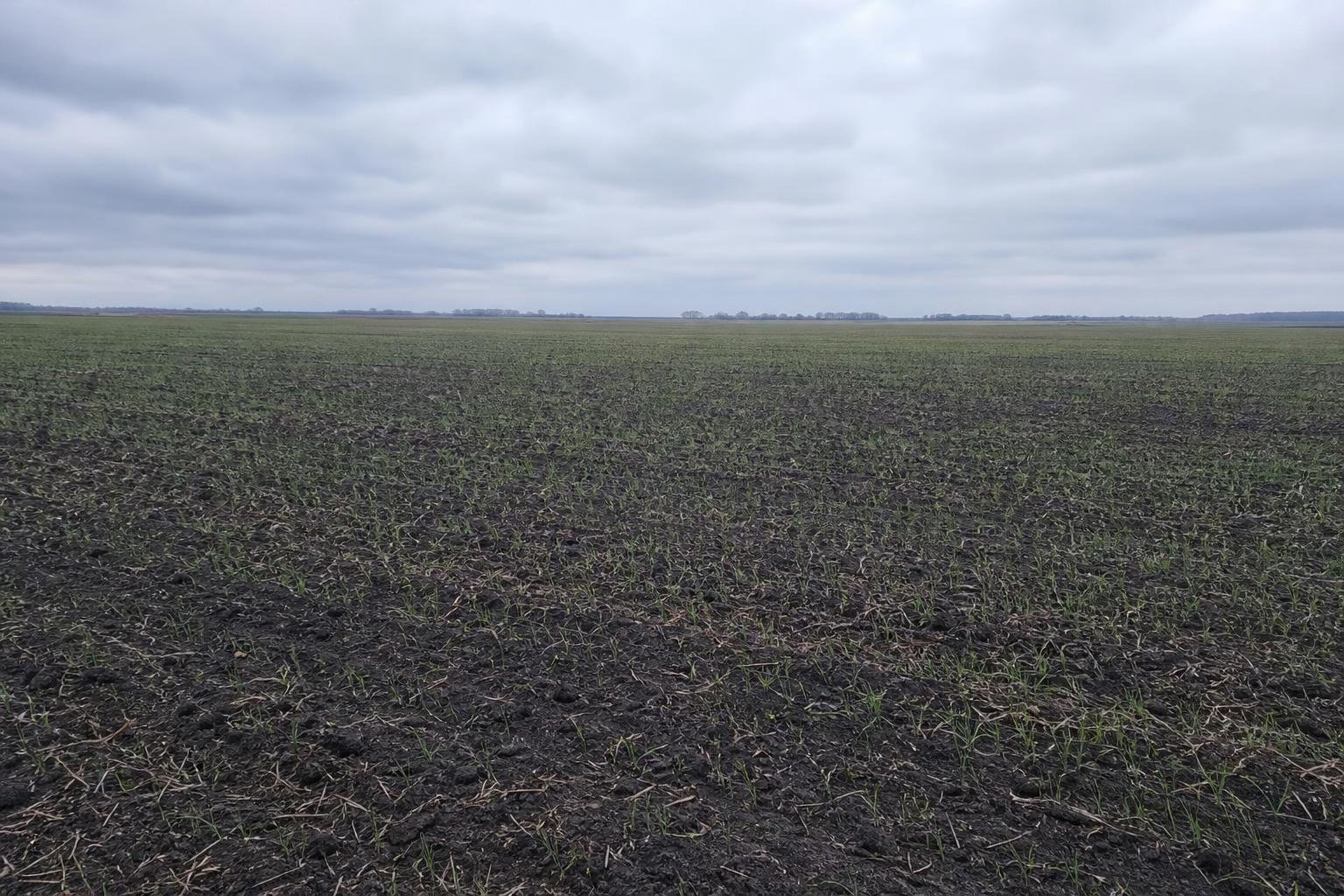
Winter wheat in Ukraine is heading into winter in varying condition: plants are already tillering in some fields, while seedlings are only just emerging in others. Some crops sown in the first half of November may enter winter without having emerged, NAAS reports.
This is not enough to draw conclusions about the size of the future harvest, but it adds uncertainty for producers and grain market participants.
Crop condition depends on sowing dates
According to NAAS’s agrometeorological review for October 2026, weather conditions and late sowing have led to uneven winter wheat development, ranging from the first sprouts to the tillering stage.
Long-term observations show that autumn vegetation usually ends in the second or third ten-day period of November across most of Ukraine. For successful overwintering, plants need to grow for at least 45–50 days after emergence and develop 3–5 shoots.
Late emergence may reduce winter hardiness
At low temperatures, seedlings emerge 29–30 days after sowing, with tillering beginning another 26–28 days later. As a result, late-sown crops may enter winter with a weak root system and an underdeveloped or absent tillering node.
Scientists note that this condition reduces frost and winter hardiness and may affect future yields even if the crops successfully overwinter. At the same time, crops sown at the recommended time in late October were in better condition than last year.
What grain market participants should watch
Producers should assess crops based on sowing dates and actual plant development, rather than applying a general assessment to every field on the farm. For grain buyers and sellers, the condition of winter crops is one of the factors to monitor when planning future purchases and sales.
Current data do not indicate either the scale of losses or the size of the harvest. The practical guide for the market is to continue monitoring crops and assess their condition after winter.
What this means for the market
Uneven winter wheat development adds uncertainty about future supply, but does not yet support specific conclusions about the harvest or prices. Sellers and buyers should factor this into their planning without treating it as a firm production forecast.
Comments
No comments yetNo comments yet - be the first.