
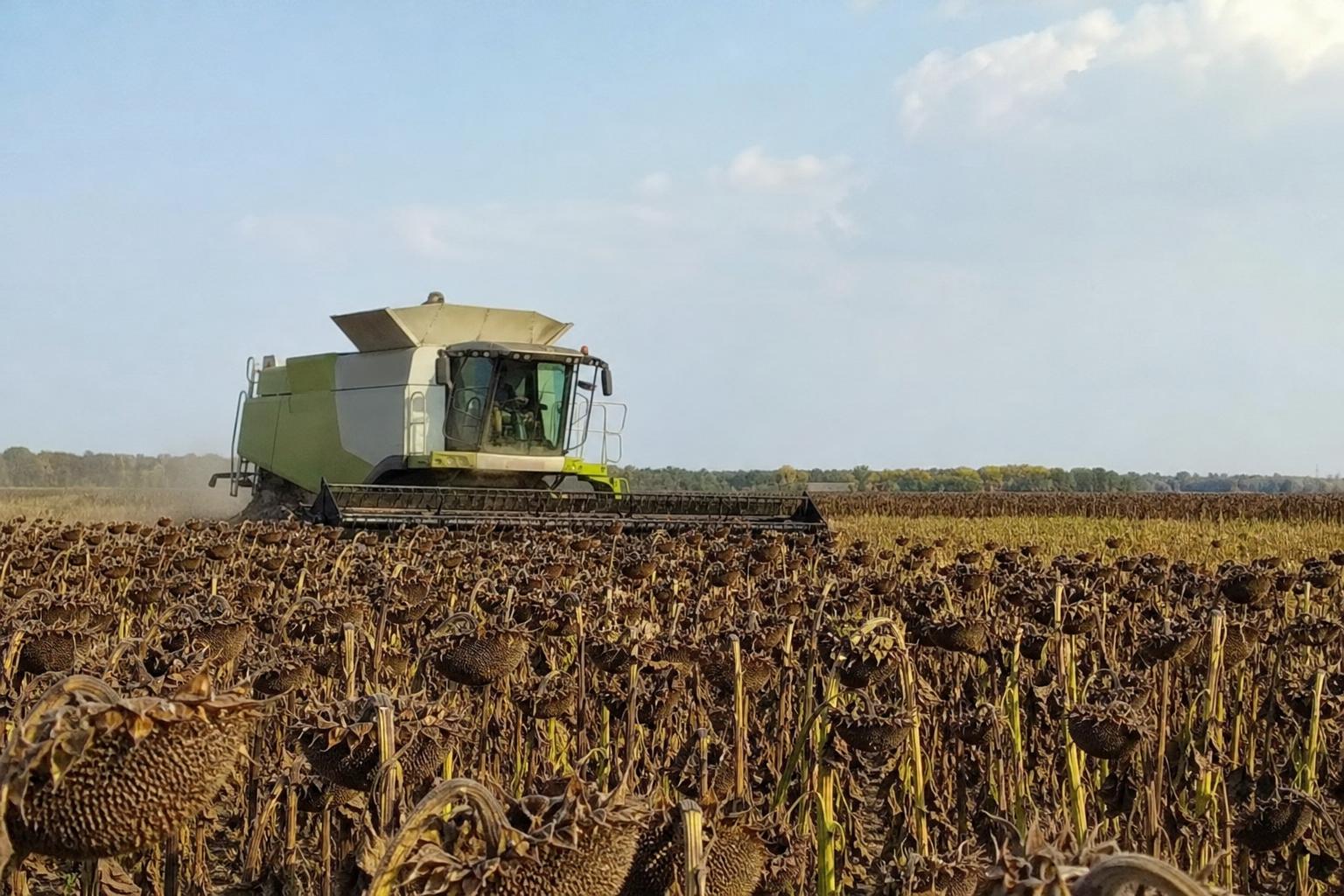
Reports from agricultural companies on the completion of oilseed harvesting provide the market with local yield benchmarks. TAS Agro has completed its sunflower and soybean harvest, while a MHP division reported the results of harvesting high-oleic sunflower.
For sellers and buyers on AgroPost, these figures provide useful context when planning purchases and offers. They do not determine the price or quality of an individual lot: its specifications, volume and delivery terms are what matter in a deal.
Harvest figures at TAS Agro
The company harvested sunflower from more than 27,000 hectares. The average yield was 3 t/ha. Soybeans were harvested from more than 5,000 hectares, with an average yield of 2.2 t/ha.
TAS Agro also continued harvesting corn. The company described its oilseed yields as expected given the weather conditions and growing practices.
High-oleic sunflower at MHP
The Khomyntsi division of MHP-Urozhaina Kraina has completed harvesting high-oleic sunflower. The average yield measured at the combine was 3.7 t/ha.
The company planted 4,606 hectares with this crop, including 2,927 hectares at the Khomyntsi division. The company attributed the result in part to agronomic practices and sufficient rainfall in the fields. These are figures from a specific farm, not a universal benchmark for the region.
National context
According to figures cited in the report on TAS Agro’s results, as of October 26, Ukraine had harvested 9.8 million tonnes of sunflower, 3.1 million tonnes of soybeans and 7.8 million tonnes of corn. This is a snapshot as of a specific date, not the final season total.
Market participants should distinguish between total production, the yield of an individual farm and the volume available for sale. Yield figures alone do not indicate how much product a farm is ready to ship or on what terms.
What to include in an offer on AgroPost
- The crop and, where relevant, the type of sunflower — conventional or high-oleic.
- The available volume and the storage or loading location.
- The lot’s quality specifications and supporting documentation.
- The delivery basis, timing and terms, as well as the payment method.
What this means for the market: the published results show differences between crops and specific production units, but do not justify applying one farm’s yield to the entire market. Sellers should make their listings as specific as possible, while buyers should assess each lot based on verified specifications and logistics.
Comments
No comments yetNo comments yet - be the first.