
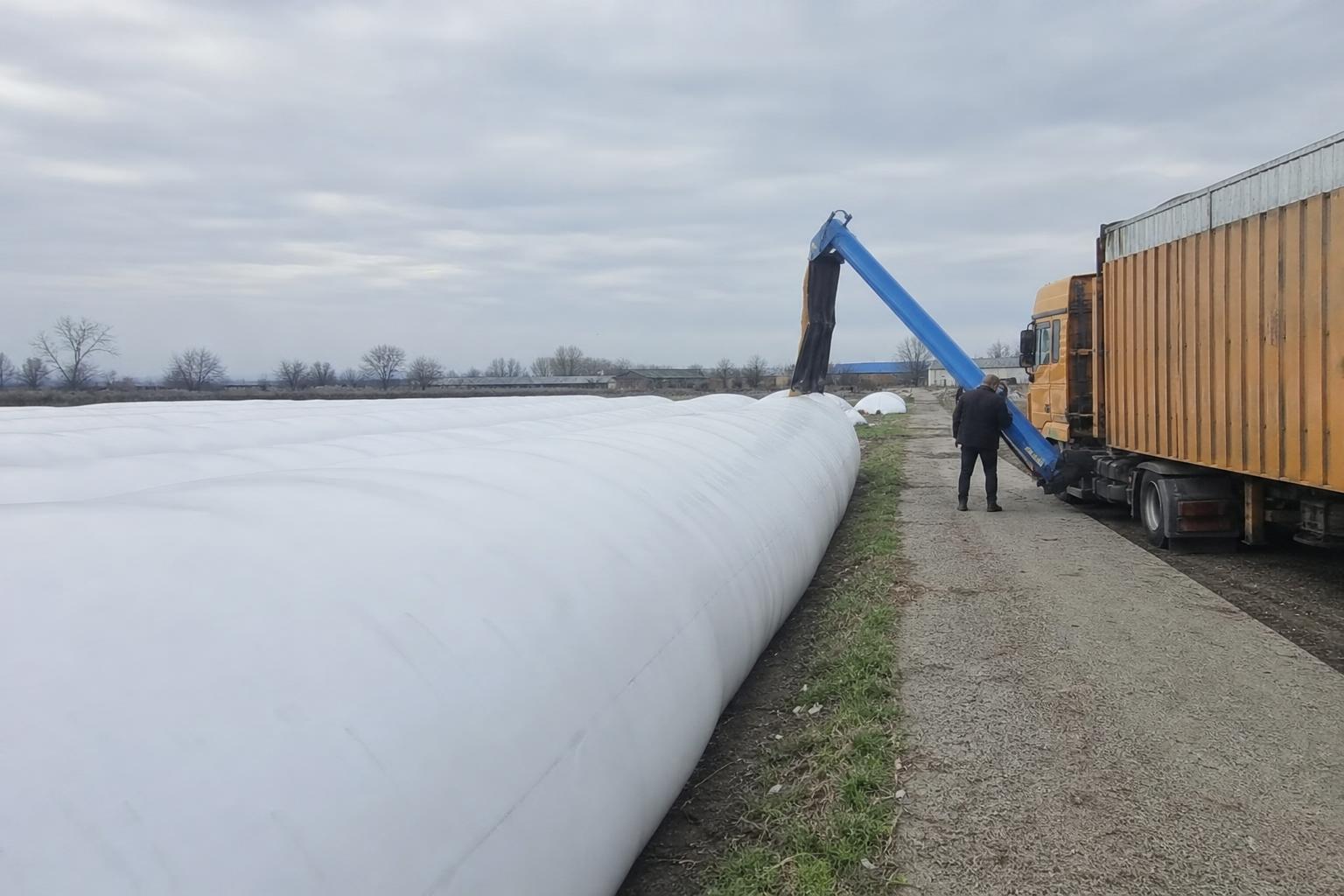
Lithuania will provide farmers in Ukraine’s frontline regions with 2,800 grain storage bags. The Ministry of Agrarian Policy announced the assistance following an online meeting with its Lithuanian counterparts.
The need for additional storage options is particularly evident amid attacks on port infrastructure and the challenging security situation for shipping. The bags could become one element of crop logistics, but they do not replace planning for the grain’s onward transportation.
What is known about the assistance
The grain storage bags are intended for farmers in frontline regions. The announcement did not specify how the equipment would be allocated among regions or when it would be delivered, so these details still need to be clarified.
Farms need to match available temporary storage capacity with shipment volumes and schedules. Decisions on storing grain should take into account storage conditions, transport access and plans for the subsequent sale or movement of the consignment.
What sellers and buyers should consider
- Confirm the storage location. Before agreeing to a deal, check exactly where the consignment is stored and how transport will access it.
- Align schedules. Coordinate truck arrivals and grain collection with the capabilities of the farm and the buyer.
- Document the consignment’s specifications. Before shipment, agree on procedures for quality checks and recording the grain’s characteristics.
These steps help parties plan transactions more accurately, but they do not in themselves eliminate security risks or transport infrastructure constraints.
What this means for the market
The provision of grain storage bags will expand temporary storage options for farmers in frontline regions. The practical benefit for sellers and buyers will depend on how well storage is linked to available transport, agreed schedules and clear terms for transferring the grain.
Comments
No comments yetNo comments yet - be the first.