
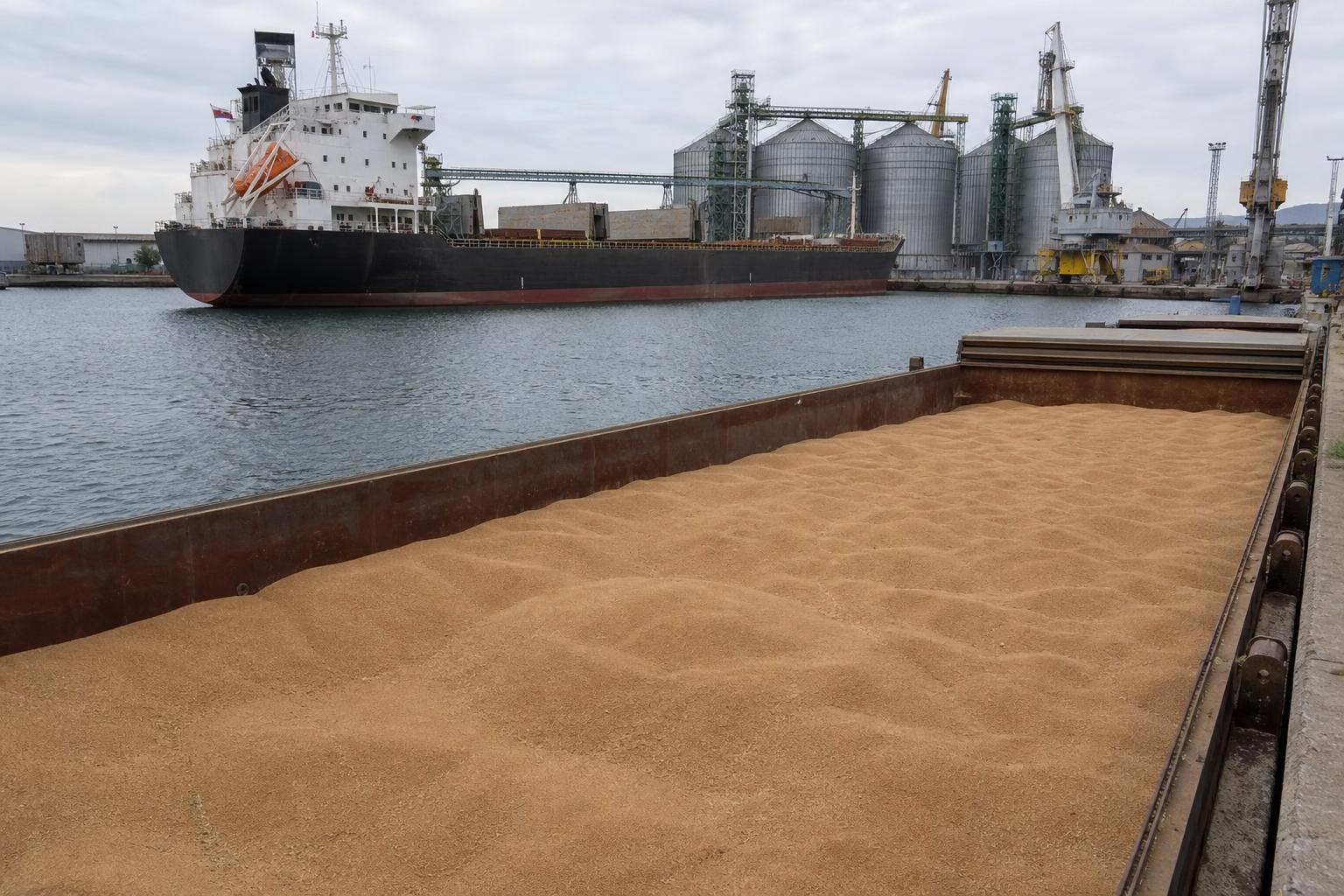
Selling grain directly to a foreign processor can offer sellers an alternative to standard sales on FOB or CPT terms. But a higher deal price alone does not guarantee better economics: all costs and payment timelines need to be compared.
A case in point is a shipment of 7,000 tonnes of Ukrainian wheat to Egypt. According to the selling company, the financial result was $6/t higher than the FOB option and $15/t higher than CPT.
What the shipment to Egypt showed
The wheat was shipped from Danube ports to Abu Qir for Egyptian companies with their own mills. Teams in Ukraine and Egypt handled the deal, coordinating transportation, storage, port transshipment, freight, quality inspection, insurance and documentation.
According to the seller, the company turned to direct sales in search of a more profitable sales channel amid falling prices. The result of this particular shipment is not a benchmark for every lot: the final margin depends on its specifications and delivery costs.
What grain sellers should consider
- The full cost of the route. Calculate delivery to port, transshipment, freight, storage, insurance and related charges.
- Buyer requirements. Agree on quality, volume, shipment schedule, acceptance and unloading.
- Payment terms. Compare not only the price but also when funds will be received and the associated working capital requirements.
- Consolidation options. Smaller lots can be combined into an export shipment, provided quality, storage location, volume and logistics economics allow it.
Export infrastructure and partner network
Direct sales depend not only on the buyer and price, but also on having service providers who can coordinate logistics, documentation and the requirements of the destination market. One option described is to deliver grain to a warehouse in Egypt and look for a buyer after the cargo arrives. This gives the seller more flexibility, but requires an assessment of costs and commercial risks.
The activity of elevator operators and trading partners is one indicator of access to sales channels. According to NIBULON, nearly 3,900 farms worked with the company in the 2026/27 marketing year; the company also reported that partner cooperation had recovered to nearly 90% of its pre-war level. These figures describe one company, not the grain market as a whole.
What this means for the market
Direct shipments to processors can provide Ukrainian wheat sellers with an additional sales tool. For buyers, they may offer another channel for sourcing lots, while producers have reason to compare the net returns from several routes. On AgroPost, it is worth clearly stating the volume, quality, storage location and delivery basis: this makes it easier for sellers and buyers to assess whether an offer fits their logistics and deal terms.
Comments
No comments yetNo comments yet - be the first.