
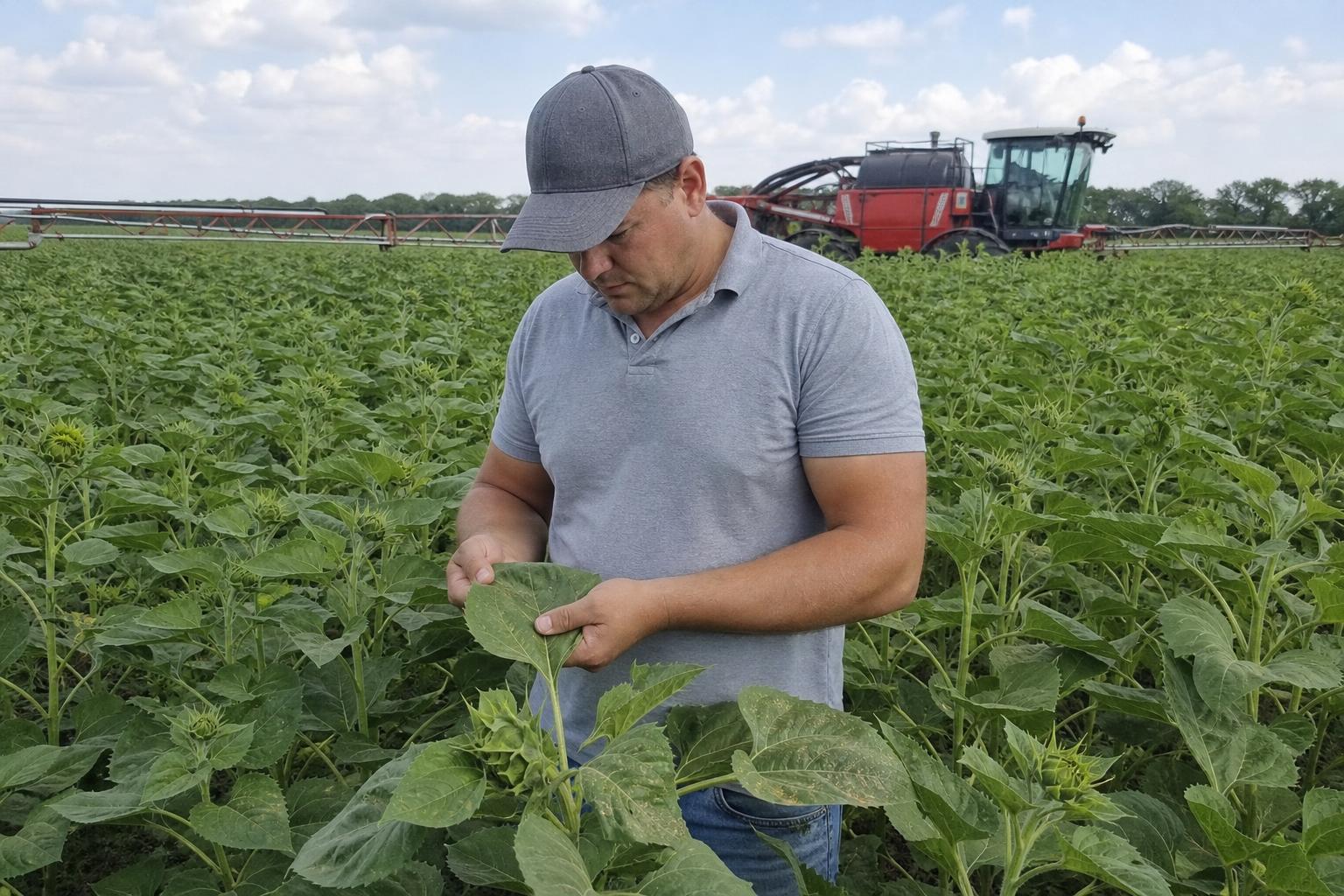
A sunflower fungicide program should be tailored to the crop’s growth stages and the condition of the fields. This season, the Khomyntsi production unit of MHP’s “Urozhaina Kraina” harvested high-oleic sunflower with an average bunker yield of 3.7 t/ha.
According to the company, the crop was treated with fungicides at three growth stages, with applications combined with foliar feeding. The information does not specify product names, application rates or the diseases targeted.
What is known about the crop protection program
The farm said fungicide applications were part of a broader set of measures to limit disease development and support crop growth. The company also reported on soil preparation, timely moisture conservation and adequate rainfall in the fields.
Therefore, the yield of 3.7 t/ha should not be attributed solely to the fungicide program: the data provided do not make it possible to separate the effects of crop protection from other agronomic and weather-related factors.
What to consider when choosing crop protection products
Buyers should assess not only a product’s name or price, but also whether it is suitable for the crop, the application stage and the specific field objective. Before placing an order, check the product’s registration, label, application rate and directions for use.
- Check which growth stage and target organism the product is intended for.
- If you plan to apply it together with foliar feed products, verify that the products are compatible.
- Compare offers by active ingredients, formulation, pack size and delivery terms.
What sellers should consider
AgroPost listings should include the crop, active ingredients, pack size and registration details. A clear description helps farmers compare options and check whether a product fits their crop protection program.
What this means for the market: MHP’s example shows that several fungicide applications were made at different sunflower growth stages, but it is not a comparative product trial. Buyers should ask for specific product details and directions for use, while sellers should provide them in product listings and avoid promising yields that cannot be attributed to crop protection products alone.
Comments
No comments yetNo comments yet - be the first.