
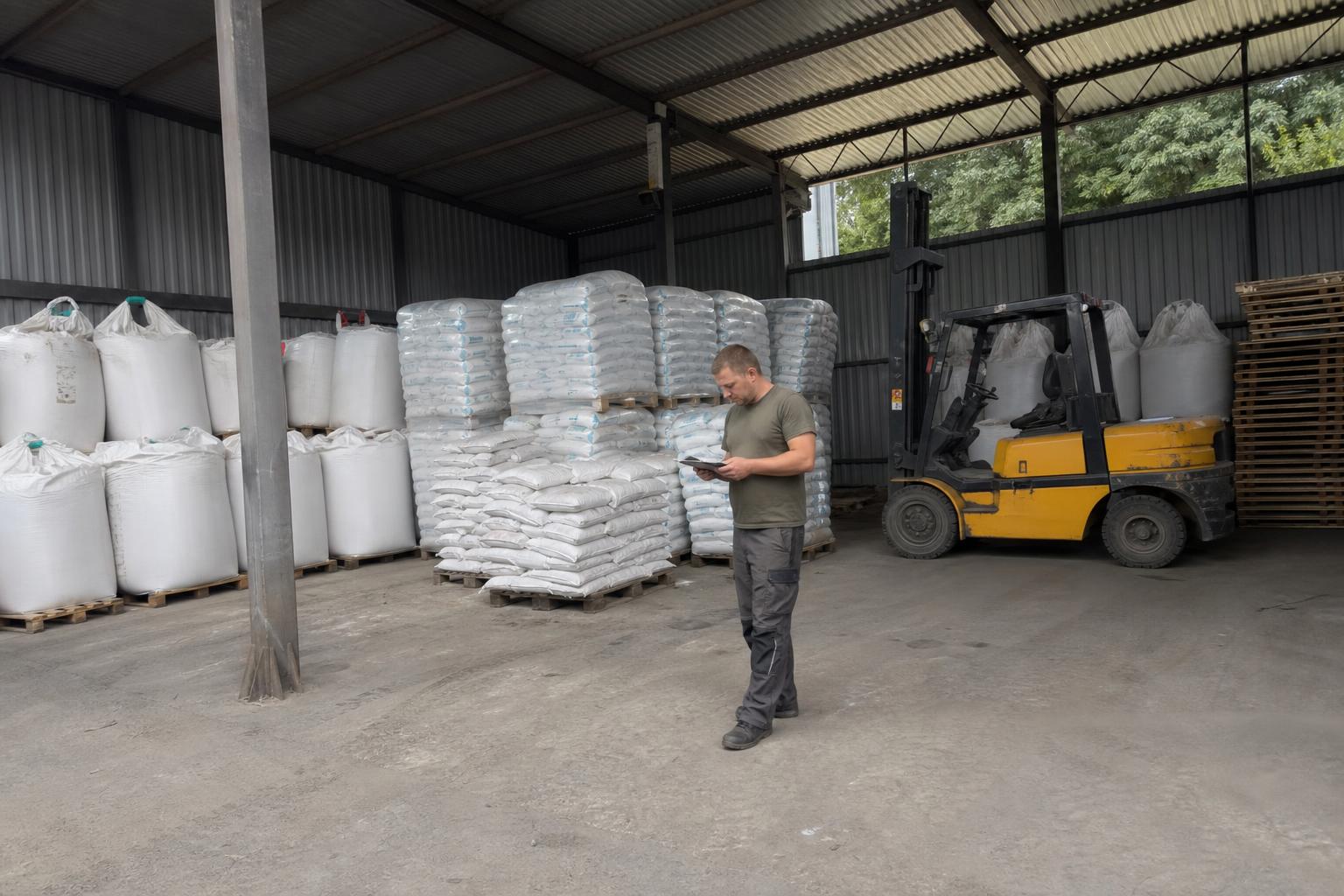
The Ukrainian fertilizer market is currently shaping itself not only around the needs of farms for nitrogen, NPK, and other agrochemicals. Liquidity of agricultural producers, harvest sales pace, and logistics availability increasingly influence purchasing decisions.
Market data provided do not include direct indicators of fertilizer prices or supply volumes. However, the situation with agro-export demonstrates why fertilizer buyers may plan payments more cautiously, and sellers should work more clearly on shipment conditions.
Farmer liquidity remains a key demand factor
According to reports from the agricultural market, Ukraine does not anticipate a quick resolution to the full restoration of Black Sea grain exports. It has also been estimated that alternative routes currently account for about 45% of the required transportation volume, with their maximum capacity covering only half of the needs.
For the fertilizer market, this means not an automatic demand decline but a change in buyer behavior. Farms may split purchases into several stages more often, agree on smaller batches, or tie payments to harvest sales.
For fertilizer sellers, in such a situation, it is important not only to specify prices but also to detail conditions: stock availability, minimum batch size, shipment deadlines, delivery options, and reservation possibilities.
Logistical signals: export routes are active but uneven
In September, agro-exports via Danube routes showed growth: from September 1–24, the throughput of agro-products to Danube ports, including Orlivka, amounted to 917.7 thousand tons. This already exceeded the August figure by 22.9%.
At the same time, rail transportation of grain to certain port directions in September was lower than the previous month. This highlights the unevenness of logistical loads: some routes are increasing flow, while others are operating less intensively.
For fertilizer market participants, this is a practical signal: delivery planning should be part of the agreement, not a post-payment issue. This is especially important for seasonal positions, where even a few days’ delay can alter application schedules.
What fertilizer buyers should consider
- Define your needs by crop. Separately account for nitrogen fertilizers, complex NPK, microfertilizers, and auxiliary agrochemicals.
- Compare not only the price per ton. Consider packaging, payment terms, distance to warehouse, shipment deadlines, and responsibility for delivery.
- Don’t postpone negotiations until peak demand. Early agreement on batches, even without confirmed shortages, reduces logistical delay risks.
- Request product documentation. For fertilizers, origin, composition, labeling, and compliance with declared characteristics are important.
How fertilizer sellers can prepare offers on AgroPost
In cautious market conditions, buyers respond faster to announcements that clearly specify key product parameters. For nitrogen fertilizers and NPK, it is advisable to include exact names, formulas or active substance contents, packaging type, region of storage, and available volume.
Transparent logistics will be an additional advantage. If the seller can organize delivery, self-pickup, or batch shipments, this should be indicated in the listing. For agricultural producers, this is often just as important as the price difference.
Current conditions favor proposals with clear commercial logic: "product in stock," "warehouse shipment," "batch from a certain volume," "delivery negotiable." Such details shorten negotiation time and increase trust in the seller.
Key conclusions for the fertilizer market
- There are no direct public signals regarding changes in fertilizer prices in the provided sources.
- Farmer liquidity remains an important factor in procurement activity.
- Uneven agro-export logistics emphasizes the need for advance planning of supplies.
- On AgroPost, more competitive listings will include specifics about stock, availability, region, and delivery options.
What this means for the market: demand for fertilizers in Ukraine maintains a seasonal basis, but deals are becoming more pragmatic. Buyers are more carefully calculating cash flow and delivery timelines, while sellers providing transparent conditions and confirmed stock will have a better position in negotiations.
Comments
No comments yetNo comments yet - be the first.