
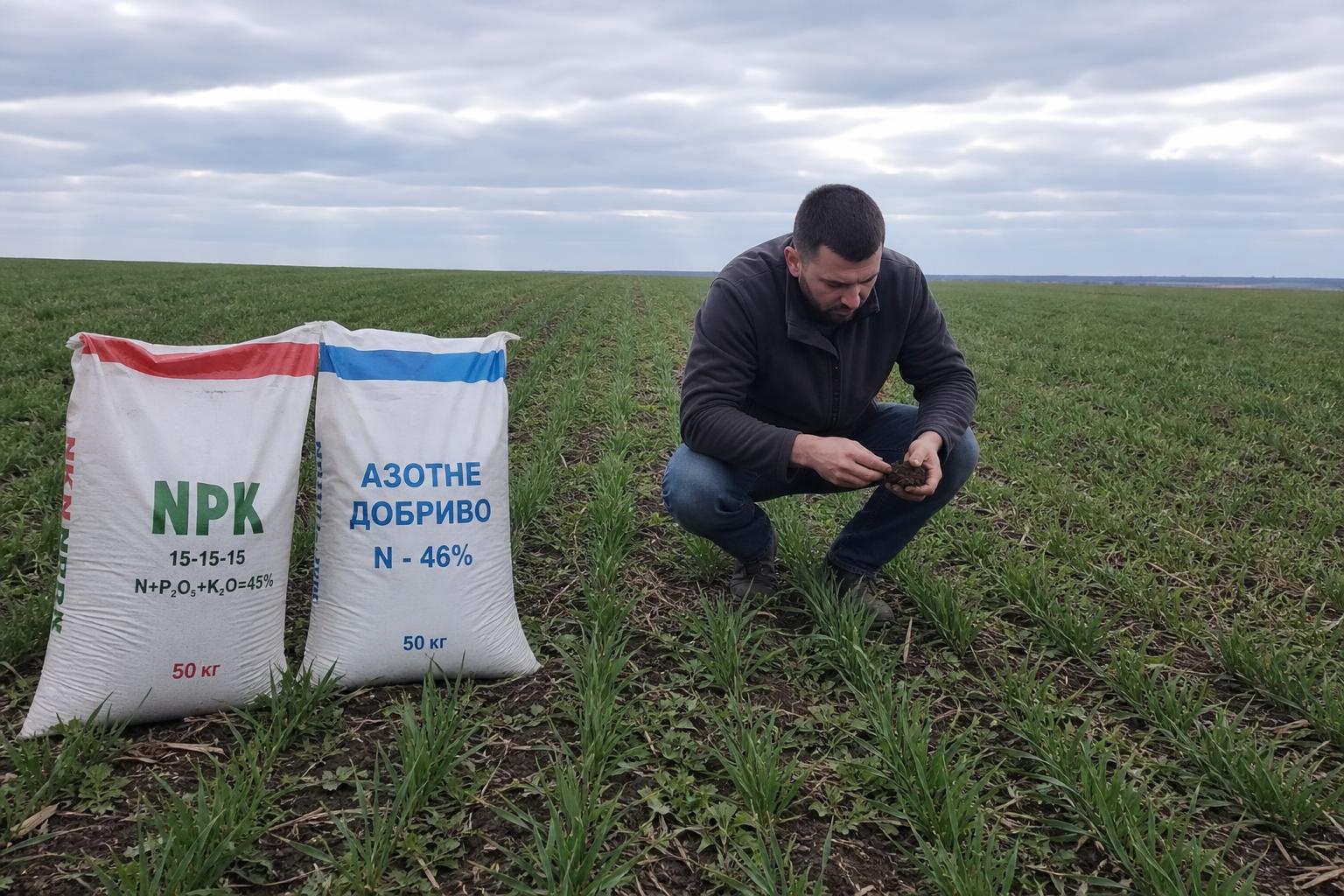
The Ukrainian fertilizer market is entering a period where farmers are increasingly paying attention not only to the cost per ton but also to the return on investment for each nutrient element. Against this backdrop, the experience of the farm "Kharkiv Seed" is illustrative, where long-term use of cover crops has allowed reducing mineral fertilizer application by 60–70% compared to standard norms for the respective agro-climatic zone.
This case does not imply an immediate nationwide abandonment of mineral fertilizers. However, it indicates a direction in which demand may move: from standard schemes of "nitrogen plus NPK" to more precise nutrient management considering soil conditions, moisture, organic matter, and previous crops.
What the farm's experience has shown
According to Viktor Filatov, co-owner of "Kharkiv Seed," in fields where cover crops are used over a long period, the farm has reduced mineral fertilizer application by 60–70%. In some areas, the reduction reaches up to 90%.
At the same time, this approach is not presented as a complete replacement for mineral nutrition. Cover crops help plants better utilize nutrients already present in the soil but in less accessible forms. They also gradually increase soil biological activity and organic matter content.
The farm notes that on certain fields, they may forego phosphorus and potassium fertilizers, leaving only nitrogen and, if necessary, sulfur-containing fertilizers. This is an important signal for fertilizer sellers: demand does not disappear but may shift toward more justified positions and advisory sales.
Nitrogen and sulfur remain central
Even in cases with significant reduction of mineral nutrition, nitrogen does not disappear from the scheme. This is logical for cereal crops, where nitrogen nutrition is directly related to yield formation and quality indicators.
Sulfur-containing fertilizers may also remain in the system if the crop requires it and soil analysis confirms this. For the market, this means that the segment of nitrogen and specialized products may be more resilient than universal approaches to applying full NPK without diagnostics.
For buyers on AgroPost, a practical conclusion is simple: before purchasing, it is worth comparing not only the price per ton of fertilizer but also the expected application rate, form of the element, logistics, compatibility with the crop technology, and availability of agronomic support.
Economics of cover crops: not without costs
At "Kharkiv Seed," additional costs for cover crops are estimated at approximately $30–50 per hectare. According to the farm, this is about one-fifth of the cost of a full mineral nutrition system for wheat.
The effect of this technology is not immediate. Viktor Filatov states that over 10–12 years, or about five to six cycles of cover crop cultivation, the relative organic matter content in the soil can increase by 20–40%.
The farm also observes differences in yield: on fields with long-term cover crop use, wheat yields range from 6.5 to 8 tons/ha, while neighboring farms, according to him, typically harvest 5–6 tons/ha. On recently cultivated land, such differences are not yet evident.
Key conclusions for fertilizer sellers and buyers
- Demand for fertilizers is becoming more precise. Farmers will increasingly seek not just NPK but solutions tailored to specific soil and crop conditions.
- Nitrogen fertilizers retain their role as a fundamental element. Even with reduced phosphorus and potassium fertilization, nitrogen often remains part of the technology.
- The phosphorus and potassium segment requires stronger justification. Sellers need to support their products with soil analyses, field maps, or agronomic recommendations.
- Buyers will evaluate the system as a whole. The cost of fertilizers will be compared with expenses on cover crops, tillage, fuel, moisture conservation, and the farm’s financial stability.
What this means for the market
For the Ukrainian fertilizer market, this is a signal not of a sharp demand decline but of increased complexity. On AgroPost, sellers should enhance product descriptions with data on composition, active ingredient forms, crop recommendations, and application conditions. Buyers should plan fertilizer purchases alongside soil diagnostics and long-term fertility management, not just for the upcoming planting season.
Comments
No comments yetNo comments yet - be the first.