
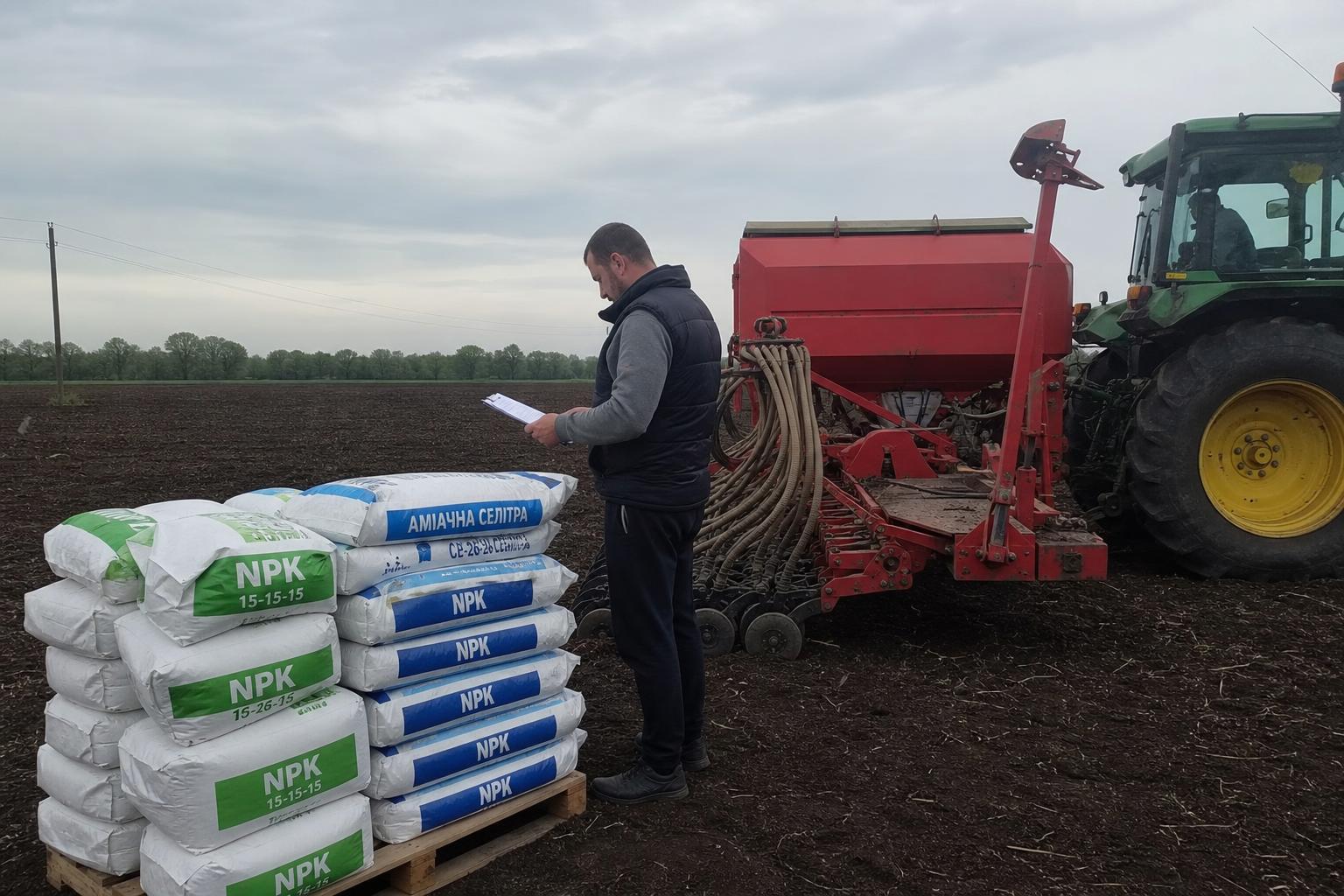
The Ukrainian fertilizer market is entering a period where purchasing decisions are increasingly influenced not only by supplier prices but also by the situation with key crops. Updated estimates of stocks and production for corn and oilseeds provide farmers with a practical context for planning their needs for nitrogen, NPK, and related agrochemicals.
Open sources used for this review do not contain direct data on current fertilizer prices or warehouse stocks among distributors. Therefore, the focus is on market signals that may be useful for sellers and buyers of fertilizers on AgroPost when preparing for autumn and pre-sowing procurement.
Corn: Larger Stocks Require More Attention to Cost Components
The USDA in its August forecast increased the estimate of Ukraine's corn harvest in 2026/27 MY to 31.8 million tons from 30 million tons in the July estimate. At the same time, the export forecast was lowered from 23 million tons to 22 million tons.
USDA estimated Ukraine's ending stocks of corn at 4.86 million tons, compared to 2.06 million tons in July. While this is not a direct price forecast for fertilizers, it provides an important background for financial planning of crop-specific technologies.
Fertilizer buyers should consider their nitrogen product and NPK needs not only based on cultivated area but also according to grain realization scenarios. Sellers should clearly specify packaging, delivery form, minimum order quantity, and regional availability in their advertisements.
Oilseeds: Residual Raw Materials Support Precise Nutritional Planning
According to the "UkrOliaProm" association, as of August 1, 2026, Ukraine had 947 thousand tons of sunflower seeds, 560 thousand tons of soybeans, and 205 thousand tons of rapeseed.
For sunflower, from September to June, 9.66 million tons of seeds were processed domestically, with seed exports totaling 39 thousand tons. For soybeans, total season resources are estimated at 5.379 million tons, of which 2.65 million tons were processed domestically and 2.169 million tons exported.
Rapeseed resources for July-June amounted to 3.446 million tons. Domestic processing was estimated at 1.34 million tons, with seed exports reaching 1.901 million tons. Notably, in July alone, approximately 64 thousand tons of rapeseed were processed in Ukraine, producing 27 thousand tons of rapeseed oil.
For the fertilizer segment, these figures serve as indicators of activity in crops where nutritional technology significantly impacts results. However, they should not be interpreted as automatic signals for fertilizer price increases or decreases without confirmation from suppliers.
What Fertilizer Sellers and Buyers Should Do on AgroPost
- Buyers: proactively compile a list of needed products — nitrogen fertilizers, NPK, microfertilizers, sulfur-containing solutions for rapeseed and other crops.
- Sellers: update stock availability, delivery conditions, payment options, and the possibility of dispatching small or bulk orders.
- Farmers: compare offers not only by price per ton but also by logistics, delivery timelines, and product compliance with planned technology.
- Distributors: highlight proposals separately for corn, sunflower, soy, and rapeseed, as buyers often search for fertilizers tailored to specific crops.
Key Conclusions
Updated balances for corn and oilseeds do not provide a direct answer regarding fertilizer prices but help assess where farmers might more actively plan their nutritional expenditures.
Transparency in proposals is crucial for the fertilizer market: current availability, clear delivery conditions, and detailed product descriptions can be just as important for closing deals as the price itself.
Implications for the market: fertilizer sellers should prepare structured offers for main crops, and buyers should avoid delaying needs calculations until peak periods when product choices and logistics windows may be limited.
Comments
No comments yetNo comments yet - be the first.