
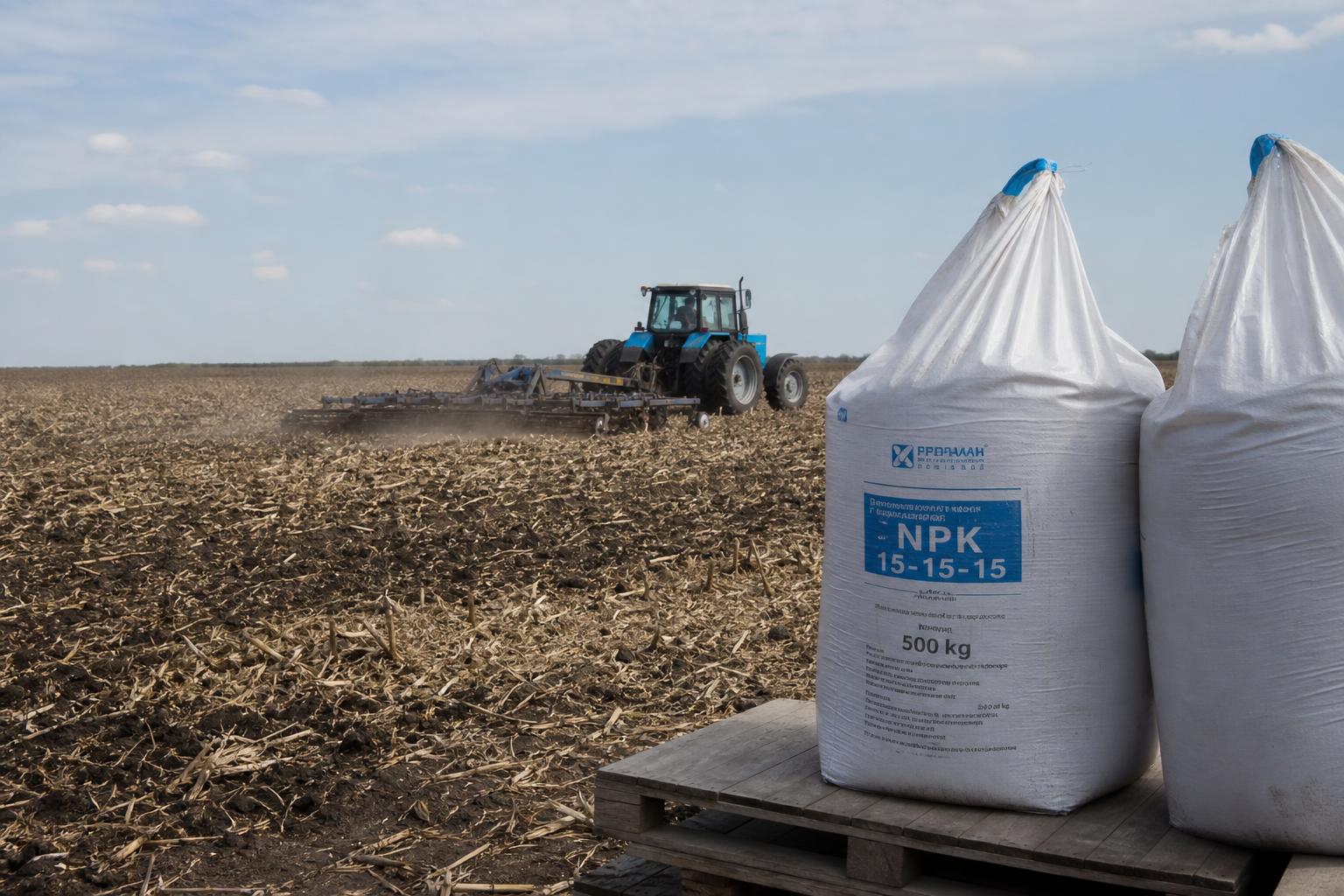
Autumn sowing is entering a phase where decisions regarding fertilizers are increasingly less dependent on the calendar. For buyers in the fertilizer market, the key factor is moisture: without it, farms postpone sowing, along with part of the application of starter NPK and nitrogen products.
The clearest signals currently come from the south. In Mykolaiv region, some farms have already begun sunflower harvest, but simultaneously report a lack of soil moisture and are postponing rapeseed sowing dates.
South sets a cautious tone for procurement
At the "Avantgarde" agricultural enterprise in Mykolaiv, the initial sunflower yield is around 1.5 t/ha. According to representatives, there are fields in the region where sunflower is harvested with yields of 400–900 kg/ha.
The weaker results are attributed to heat and drought. From August 2025 to July 2026, only 120 mm of effective rainfall was recorded, and at the start of work, there is no moisture in the soil.
This directly impacts plans for winter rapeseed: the farm considers starting sowing after September 10, if conditions permit. For fertilizer suppliers, this means that part of the demand may shift in time, and for buyers — that it is advisable to leave room for adjusting orders.
What’s happening with demand for NPK and nitrogen
For winter crops, farmers traditionally plan for starter fertilization, but in dry soil conditions, farms may evaluate the timing of application more carefully. The fertilizer market in such situations becomes less "package-oriented" and more tied to the actual field operations.
For NPK products, it is important that buyers and suppliers agree in advance not only on price but also on the possibility of quick dispatch responses. If sowing is delayed by several days or weeks, excess stock at the farm’s warehouse can freeze working capital.
Nitrogen fertilizers also remain a focus, but decisions on volumes should be linked to the actual crop structure. If winter crop areas are adjusted due to moisture shortages, procurement plans for nitrogen for further fertilization also need clarification.
How sellers and buyers should act on AgroPost
For fertilizer sellers, it is crucial now to clearly indicate product availability, packaging, minimum batch size, warehouse location, and dispatch timelines. During dry periods, buyers value not only the price per ton but also the ability to receive products when the field is ready for work.
Buyers should formulate requests considering different scenarios: main need, reserve batch, and possible postponement of deadlines. This will facilitate faster comparison of offers for NPK, urea, UAN, or ammonium nitrate without unnecessary negotiations during peak times.
- Avoid fixating only on dates. Clarify whether the supplier can hold the offer if sowing dates shift.
- Check logistics. For southern regions, delivery speed can be critical once working moisture appears.
- Divide procurement into batches. This reduces the risk of accumulating fertilizers for areas that may still be adjusted.
- Update listings. Current availability and actual dispatch conditions increase buyer confidence.
Signals from the field for the fertilizer market
The start of sunflower harvesting in southern farms indicates that after harvest, farmers will move on to soil preparation and the next sowing campaign. "TAS Agro Pivden" also reported the start of sunflower harvesting and subsequent soil preparation after completing work.
For the fertilizer market, this does not guarantee automatic demand growth at specific dates but shows where the nearest window of need is forming. Sellers should closely monitor regional moisture reports, and buyers — avoid delaying supplier searches until the day of application.
What this means for the market: the near-term demand for fertilizers for winter crops in Ukraine will be more dependent on weather and soil readiness than on the standard sowing calendar. On AgroPost, the winners will be those sellers with transparent availability and flexible logistics, and buyers who proactively prepare requests for multiple field work scenarios.
Comments
No comments yetNo comments yet - be the first.