
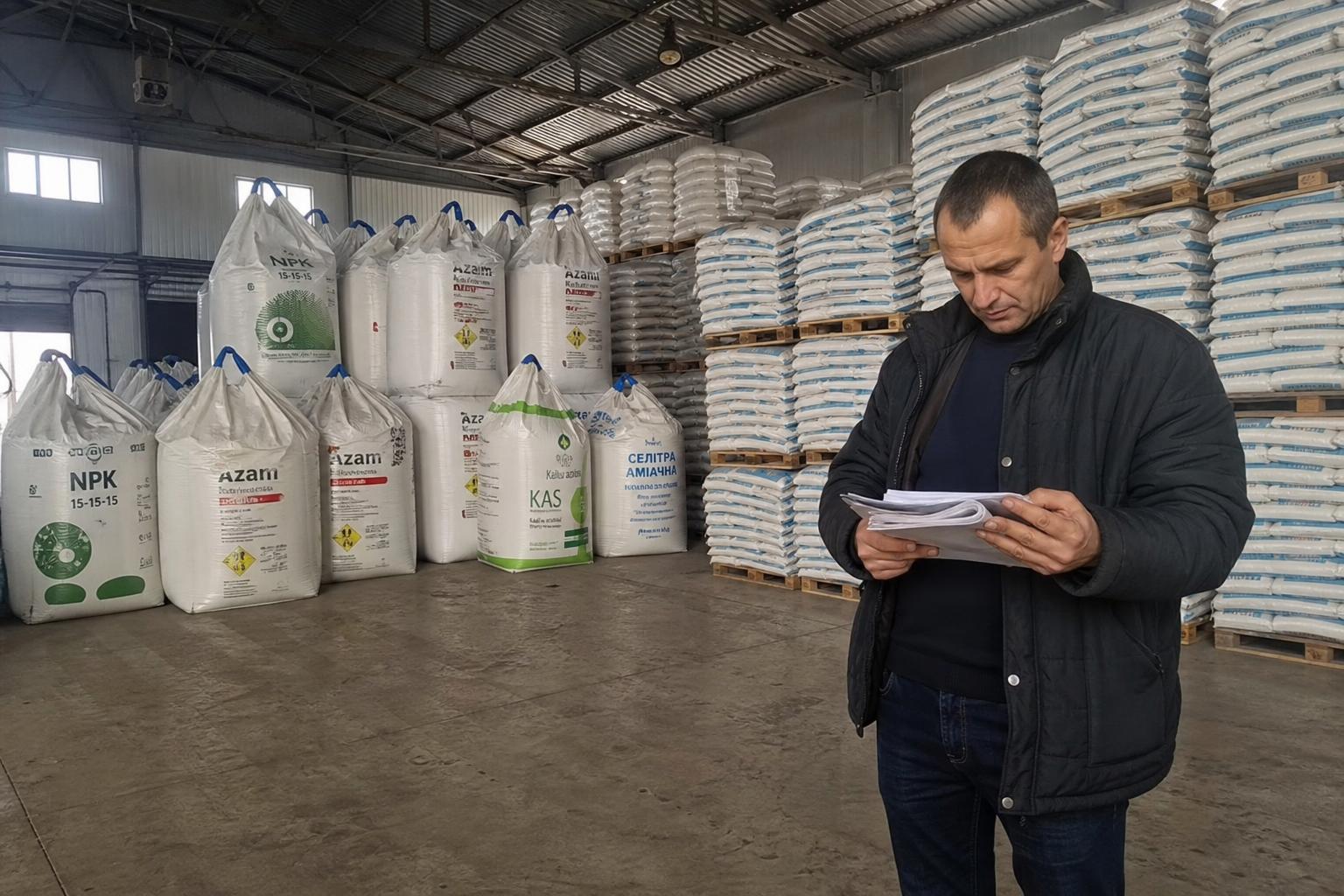
The Ukrainian fertilizer market in August is entering a practical phase of preparing for the autumn sowing. For agrochemical sellers and farms, the main concern is not only the availability of nitrogen and NPK fertilizers but also access to financing for procurement.
Recent news regarding support for the agricultural sector shows that quick grant funds to cover farmers' needs are unlikely. Therefore, demand for fertilizers will increasingly depend on credit lines, partnership programs with TMR suppliers, and payment deferral conditions.
No €220 Million Grant Support: What Changes for Fertilizer Buyers
The European Union has refused Ukraine an additional €220 million in non-repayable aid for farmers, requested due to the consequences of Russian attacks on Black Sea ports. Instead, the European Commission pointed to the use of existing support mechanisms.
For the fertilizer market, this means that some farms will not receive quick grant resources that could directly boost purchases before planting. Consequently, farmers may be more cautious in forming applications, splitting purchases into batches, or seeking suppliers with flexible payment terms.
At the same time, the EU emphasizes support through subsidized interest rates within the Ukraine Facility and credit programs via intermediary banks. This keeps the financial channel open but makes fertilizer procurement more dependent on bank decisions and the farm's credit history.
Loans for Planting Remain a Working Tool
According to data published in agricultural media, during the week of August 14-20, the agro sector received an additional 3.5 billion UAH in loans under the "5-7-9%" program. Beneficial lending for planting was utilized by 11,943 entities.
This is an important signal for sellers: demand may persist, but a significant part will be tied to the timing of financing approval. Buyers awaiting loan funds can reserve quantities but delay payment until the limit is officially opened.
Additionally, banks are expanding partnership programs for small and medium-sized agricultural producers with manufacturers and distributors of TMR resources. Under the mentioned conditions, the interest rate for autumn planting can be as low as 0.01% per annum for terms up to 12 months.
Nitrogen and NPK: How Sellers Can Adapt Their Offerings
Within the fertilizer category, the most practically valuable package for buyers includes availability, packaging or batch, shipment region, payment terms, and the possibility of working with credit programs. Given current liquidity, these parameters can be as important as the price itself.
Sellers on AgroPost should clearly indicate whether fertilizers are available for quick shipment, whether partial prepayment, reservation, or sales via bank financing are possible. This is especially relevant for nitrogen fertilizers and complex NPK, which farms plan to use according to their sowing technology maps.
Buyers should compare not only the price per ton but also the total purchase cost: delivery, delivery timelines, prepayment requirements, possibility of deferment, and compatibility with their field work schedule.
Key Conclusions for AgroPost Participants
- Liquidity remains the main constraint for some fertilizer buyers before planting.
- Grant expectations are weakening, so the market is more focused on bank and partnership programs.
- Sellers should emphasize financial conditions in their ads: prepayment, deferment, credit, reservation.
- Buyers should secure the availability of batches and avoid delaying the check of delivery conditions until peak periods.
What this means for the market: in the near future, competition in fertilizers will be driven not only by price but also by the convenience of procurement. Suppliers who combine available stock, transparent delivery conditions, and clear financial options will have better chances to meet farmers' demand for planting.
Comments
No comments yetNo comments yet - be the first.