
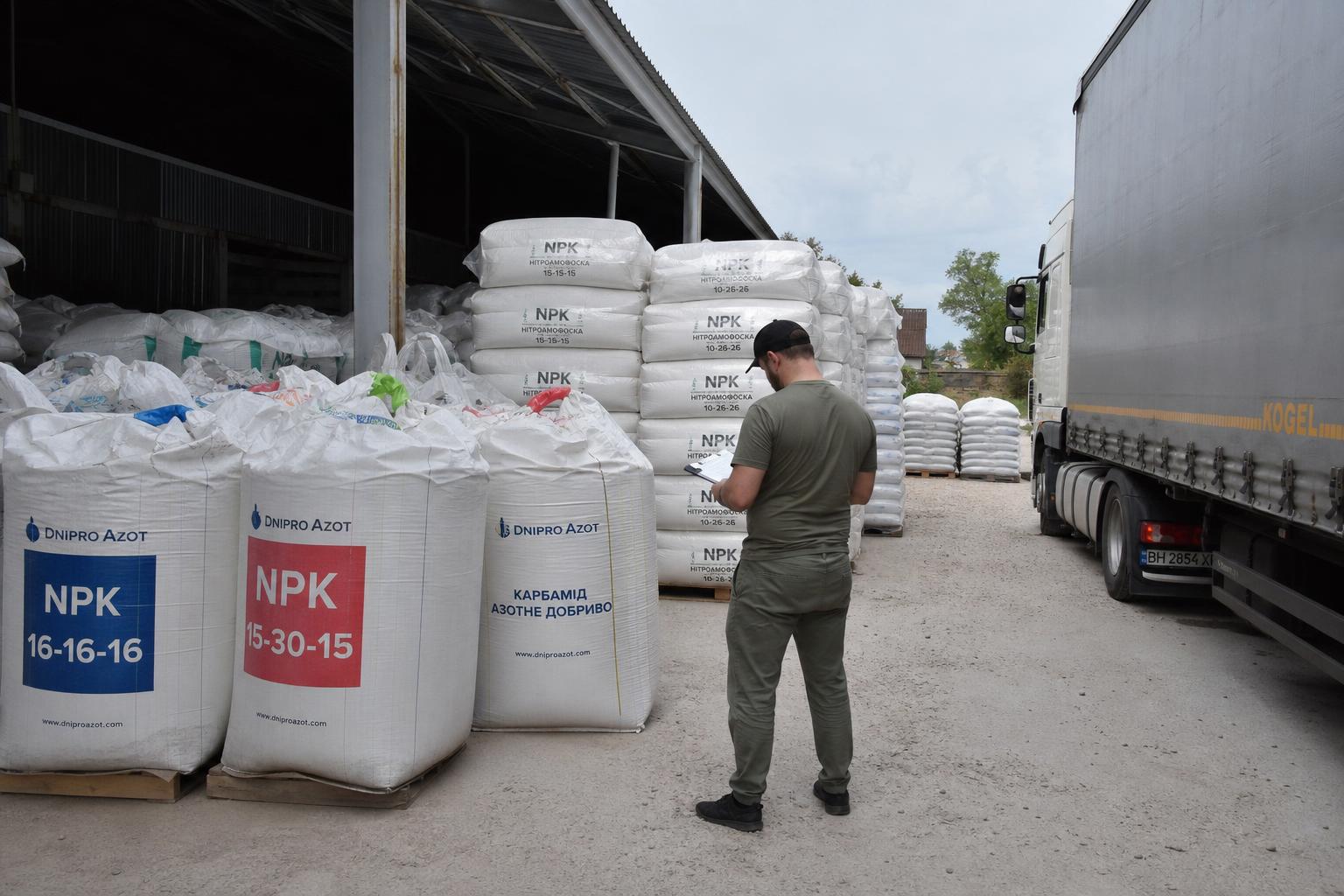
The Ukrainian fertilizer market is entering a period when buyers prioritize not only the price per ton but also confirmed availability, delivery routes, and the supplier’s readiness to promptly dispatch a batch. This is especially relevant for nitrogen fertilizers and NPK, which farmers plan according to specific technological maps and field work schedules.
Collected market signals do not provide direct data on prices or trade volumes of fertilizers. However, they illustrate the overall context: the Black Sea remains a sensitive logistical route, land corridors have limited capacity, and the return of land to cultivation due to demining gradually creates additional demand for resources for production.
Logistics once again become a key component of pricing
According to Bloomberg reports, Turkey has resumed vessel passage through the straits to the Black Sea after temporary delays affecting some ships heading to Ukrainian and Russian ports. The reasons for these restrictions have not been publicly explained by the Turkish authorities.
For the fertilizer market, this is not a direct signal of shortages or price changes, but a reminder: import and transit cargoes remain dependent on the security situation and the stability of route throughput. If a buyer plans to purchase for a specific application window, it is advisable to evaluate not only the supplier’s offer but also the feasibility of delivery within the required timeframe.
On AgroPost, fertilizer sellers are encouraged to clearly specify the composition, packaging, regional warehouse location, minimum order quantity, and available shipping methods. For buyers, this information reduces negotiation time and helps compare offers more efficiently, not only by price but also by logistical reliability.
Land routes are more active but not unlimited
According to Spike Brokers, in the first six days of August, road exports of agricultural products from Ukraine increased to 59.6 thousand tons, an 11.3% rise compared to July. Meanwhile, total agro-exports for this period decreased to 312.9 thousand tons, which is 60.1% less than in the same period of July.
These figures relate to agricultural products, not fertilizers. However, they highlight an important trend for the entire agro-market: road transport can absorb part of the flows, but its capacity does not replace large-tonnage maritime logistics. If infrastructure becomes congested with export cargoes, resource buyers for the sowing season should consider early transportation bookings and coordinate delivery schedules.
For nitrogen fertilizers, NPK, and other agrochemicals, this means paying closer attention to local warehouses and regional availability. Offers physically closer to farms may have an advantage even if their initial price per ton is not the lowest.
Land reclamation may sustain demand for resources
In July, within the framework of the humanitarian demining budget program, operators cleared 210 hectares of agricultural land. Payments for work under two agreements amounted to 13.2 million UAH, with an average demining cost of 62.9 thousand UAH per hectare.
It is also reported that 100 contracts have been completed, returning 16,410 hectares of agricultural land to use, with ongoing work under 43 contracts covering approximately 11.7 thousand hectares. In July, an additional 14 contracts were signed for over 1.4 thousand hectares, with an expected value of about 170 million UAH.
These data do not allow for a direct assessment of future fertilizer demand, as planting decisions depend on safety, funding, crop culture, technology, and access to machinery. However, each hectare returning to production potentially requires agrochemical planning: soil analysis, nutrient system selection, and procurement of basic and insurance fertilizer batches.
What sellers and buyers should do on AgroPost
- Buyers: request confirmation of stock availability, not just a commercial offer.
- Buyers: clarify fertilizer form, active substance content, packaging, payment terms, and partial shipment options.
- Sellers: update stock levels and regional dispatch points to keep listings current during active procurement periods.
- Sellers: specify whether delivery, self-pickup, or warehouse dispatch in batches is available.
- Both parties: agree on deadlines, quality, and documentation before payment, especially for large nitrogen and NPK batches.
For farmers planning the sowing campaign, the main practical takeaway is simple: it is better not to postpone fertilizer procurement until the last week before application. Even with stable prices, transportation delays or shortages of specific formulations in a particular region can be more costly than early booking.
Implications for the market: in the near future, competition in the Ukrainian fertilizer market will be driven not only by price but also by the speed of order confirmation, logistics transparency, and proximity of warehouses to the buyer. For AgroPost, this emphasizes the importance of high-quality listings: the more accurately nitrogen, NPK, and other fertilizers are described, the faster sellers find relevant buyers, and farms secure the necessary resources for the season.
Comments
No comments yetNo comments yet - be the first.