
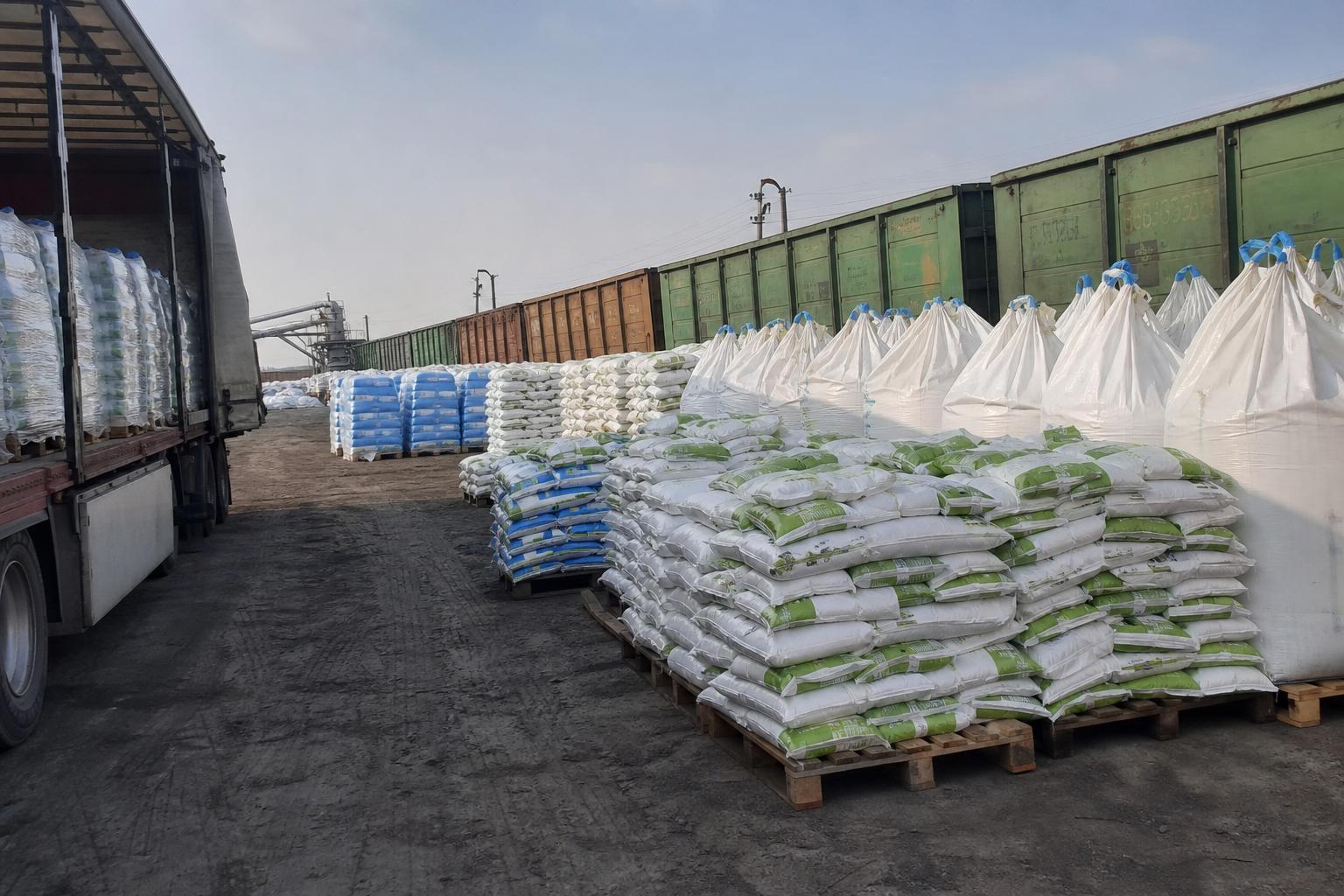
The Ukrainian fertilizer market is entering a period where buyers value not only the price per ton but also the actual ability of sellers to deliver the batch within the required timeframe. Against this backdrop, agreements between Ukraine and Romania regarding railways, ports, and the Danube route are practically significant for the entire agro-market, particularly for the agrochemical segment.
It is not about a specific agreement solely on fertilizers. However, for traders, importers, and farms working with nitrogen, NPK, and other mineral fertilizers, logistical capacity remains one of the key risks during the procurement season.
What has changed in the logistical landscape
Ukraine and Romania have agreed to maintain a daily transfer of six train pairs towards the Constanta port. There is also discussion about increasing this to ten pairs per day after accelerating repairs of railway and port infrastructure on the Romanian side.
For the fertilizer market, this is an important overall indicator of alternative route availability. If capacity along this route increases, importers and distributors will find it easier to plan supply schedules, although the actual impact on fertilizers will depend on tariffs, queues, cargo prioritization, and the availability of wagons or vehicles.
Separately, the parties discussed additional utilization of the Galați and Brăila ports. For the agrochemical business, this could be useful as a potential route expansion, but specific volumes for fertilizers have not been specified in current communications.
Danube route: why it is important for seasonal procurement
The Ukrainian side expressed the need to pass through the Sulina Canal at least ten vessels inbound and ten outbound daily. Mechanisms for joint vessel dispatching and the possibility of allocating a dedicated day for Ukrainian vessels in case of significant accumulation were also agreed upon.
Additionally, the parties agreed on night navigation for vessels that manage to enter the canal before darkness, provided safety requirements are met. This is especially relevant with the shortening of daylight hours, when delays can quickly accumulate in the supply chain.
For fertilizer buyers, the main takeaway is simple: during active procurement periods, it is not advisable to rely solely on the shipment date from the supplier. Clarifying the route, cargo status, possible queues, and time buffers before field application is essential.
Automobile border crossing and small batch deliveries
At the Porubne – Siret checkpoint, Ukraine has already constructed four additional lanes. Completion of arrangements on the Romanian side is currently expected.
For the fertilizer market, road transport is primarily important for flexible batches, regional distribution, and quick reorders. If border crossing capacity improves, operational pressure on suppliers may decrease, but it does not eliminate the need for early transport booking.
Recommendations for fertilizer sellers and buyers
- Buyers should inquire not only about the price but also about a confirmed route, estimated delivery time, and responsibility conditions for delays.
- Sellers should indicate actual stock availability in listings: warehouse in Ukraine, cargo en route, or order-based supply.
- Importers should have backup scenarios: railway, Danube, road, or combined delivery.
- Farmers are advised to split procurement into critical minimums for upcoming works and additional volumes that can arrive later.
On AgroPost in the “Fertilizers” category, this means that listings with clear delivery conditions will have an advantage. For buyers, value lies not only in lower prices but also in transparent logistics: where the product is located, when it can be picked up or received, and what documents accompany the batch.
What this means for the market
Agreements with Romania do not yet guarantee a reduction in fertilizer prices in Ukraine. However, they create an important logistical backdrop for the season: more routes and better coordination can reduce delays for agricultural cargoes. For the fertilizer market, practical planning remains key — procure in advance, verify availability, and avoid scheduling application based solely on optimistic delivery timelines.
Comments
No comments yetNo comments yet - be the first.