
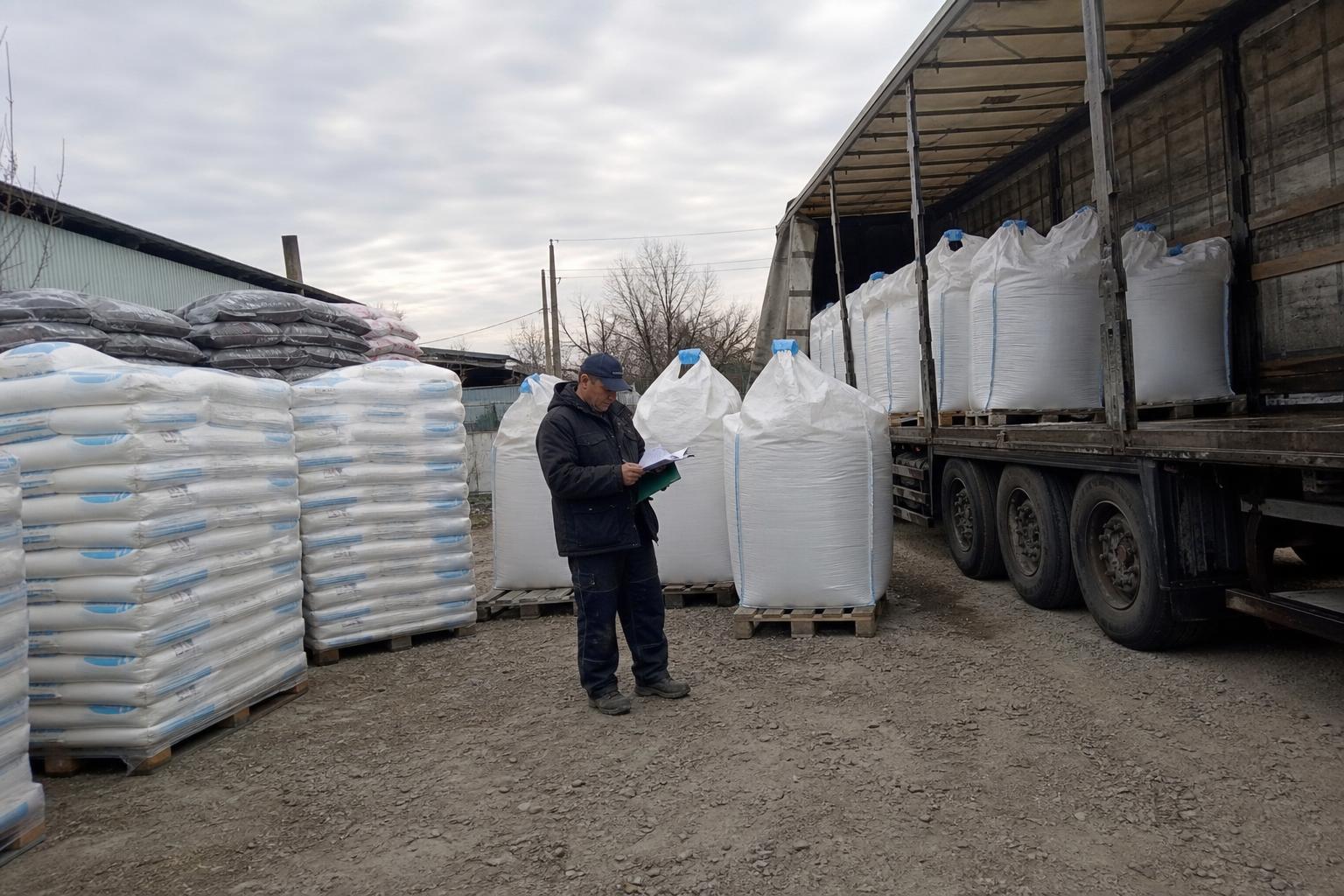
The Ukrainian fertilizer market is entering a period of active procurement planning for upcoming technological operations without clear public signals regarding prices from the provided sources. Therefore, for sellers and buyers, not only price lists matter but also product availability, logistics, and financial discipline of transactions.
The closest reference point for agribusiness is the situation with transportation and export logistics. While it does not directly indicate fertilizer prices, it influences overall farm behavior: grain sales rates, cash flow, and readiness to pre-book agrochemical batches.
Logistics Background: What the Agricultural Market Sees
According to data shared by a Ukrzaliznytsia representative during an online meeting with agricultural market participants, in the first 11 days of August 2026, 201.7 thousand tons of grain were transported by rail for export. This is 72% less than in July and 76% less than in the same period last year.
Overall, during this period, Ukrzaliznytsia transported 435.8 thousand tons of grain, which is 47% less than in July and 52% less year-over-year. The average daily grain load was 31.3 thousand tons, compared to peak season levels typically ranging from 80 to 100 thousand tons per day.
Routes have also shifted. In the first 11 days of August, 126 thousand tons of grain were transported to western border crossings, exceeding the previous month by 56 thousand tons. 91.1 thousand tons were directed to Izmail, and 75.2 thousand tons to the ports of Greater Odessa, which is nearly 89% less than in July.
Why This Matters Specifically for Fertilizers
For the fertilizer market, such news is not an indicator of prices but a risk signal for planning. If a farm is slower to sell grain or experiences delays in cash inflows, it may postpone some nitrogen, NPK, or microfertilizer purchases to a later period.
Suppliers should consider that buyers might more frequently request reservations for small batches, deferred payments, or confirmation of delivery to specific regions. Conversely, buyers should avoid waiting until the last week before application if they need a particular fertilizer brand or packaging.
An additional factor is competition for transport and routes. Even if fertilizers are physically available in stock, delivery times may depend on route loadings, vehicle availability, and the ability to quickly process accompanying documents.
Recommended Actions for AgroPost Buyers
- Request actual availability. Clarify whether the product is already in stock in Ukraine or if a delivery is expected.
- Confirm delivery routes. For fertilizers, not only the price per ton matters but also logistics costs to the farm.
- Verify documents. Ask for quality certificates, batch labeling, and storage conditions.
- Compare total costs. Calculate the price including delivery, unloading, and potential storage expenses.
- Avoid mixing needs. Nitrogen fertilizers, NPK, and specialty products are better purchased according to specific technical requirements.
Recommended Actions for Fertilizer Sellers
It is advisable for sellers to update listings with clear specifications of fertilizer brands, packaging, minimum order quantities, regions of shipment, and possible delivery routes. In a market with uncertain logistics, comprehensive information often shortens the path to closing a deal.
It is also useful to specify which items are available immediately and which are made to order. This helps farmers plan application timing and allows suppliers to avoid conflicts arising from unspoken expectations at the start.
If offering a comprehensive solution — fertilizer, delivery, consultation on application rates — it should be described separately. Recommendations on application norms should be based on soil analysis, crop type, and planned yield, not on generic schemes.
Implication for the Market: In the fertilizer segment, the key task is not to predict short-term prices but to reduce operational risks. Buyers should verify availability and delivery earlier, while sellers should transparently display stock levels, documents, and shipment conditions. This increases the likelihood of quick deals even amid logistical instability.
Comments
No comments yetNo comments yet - be the first.