
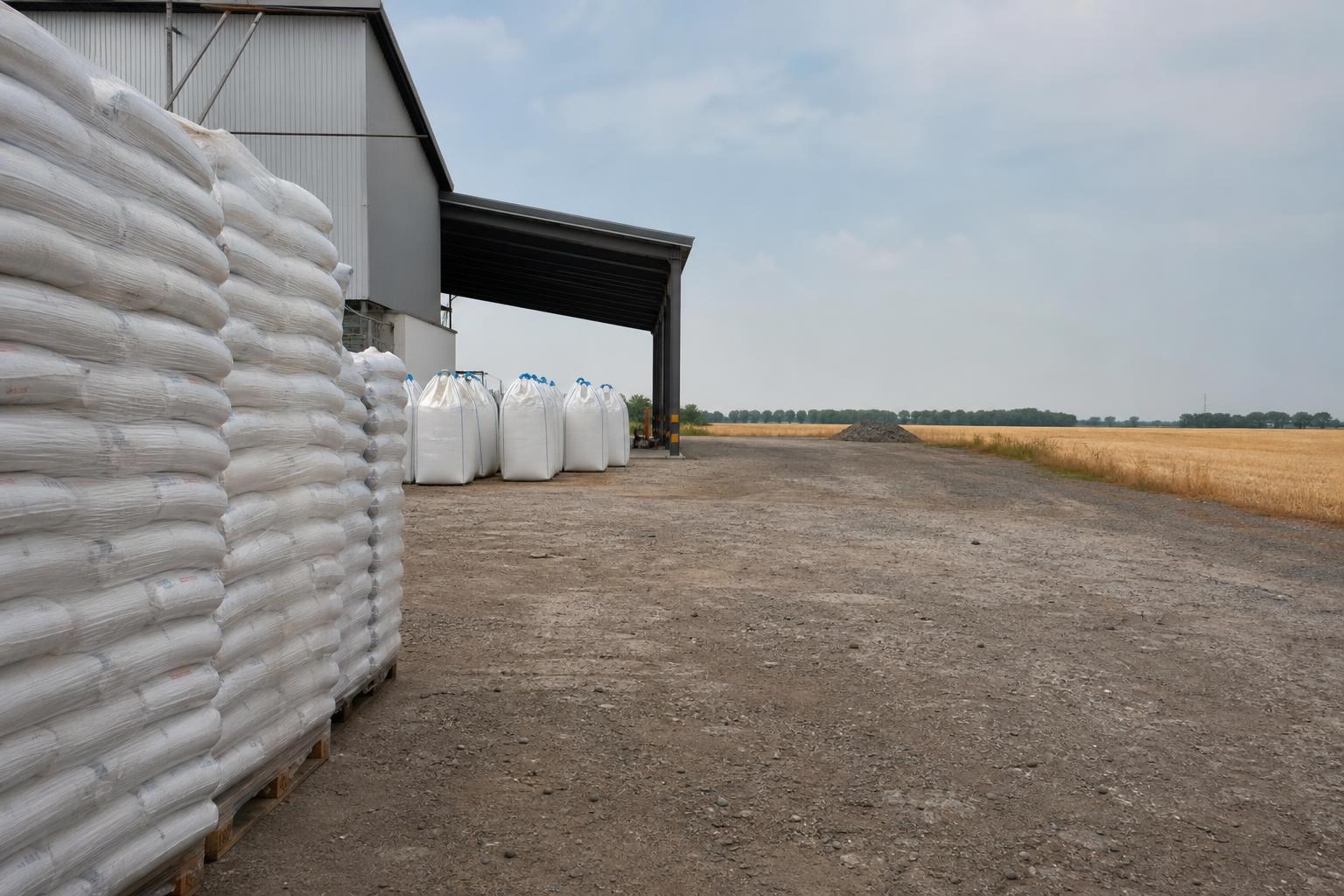
The Ukrainian fertilizer market is entering a period when demand increasingly depends not on the calendar but on the actual completion of harvests in the regions. After harvesting early grains and rapeseed, farms move on to assessing nutrient removal, soil preparation, and forming budgets for autumn and spring sowing.
According to the Ministry of Agrarian Policy, as of August 17, farmers have harvested approximately 6.6 million hectares of cereals and legumes, representing 57% of the forecasted areas. The total yield amounted to 30.83 million tons, with an average yield of 4.62 tons/ha. For fertilizer suppliers, this signals the need to pay closer attention to regions with active harvest completion, while buyers should not delay clarifying their needs in formulas and logistics.
Harvests form the basis for fertilizer demand
Wheat has already been harvested from 4.86 million hectares out of 4.86 million hectares, or 94% of the area, with a total yield of 23.82 million tons and an average yield of 4.91 tons/ha. Barley has been harvested from 1.52 million hectares, yielding 6.22 million tons at an average of 4.1 tons/ha. These volumes indicate that many farms already have data to recalculate their agrochemical programs.
An additional factor for the market is rapeseed. It has been harvested from 1.32 million hectares, or 99% of the forecasted area, with a total yield of 3.76 million tons and an average yield of 2.85 tons/ha. After rapeseed, farmers traditionally carefully assess the nitrogen, phosphorus, potassium, and sulfur balance, so demand may focus not only on classic NPK products but also on products for nutritional correction for the next crop.
Regional yield differences are important for sales
The highest average grain and legume yields were recorded in Khmelnytskyi region — 6.99 tons/ha. Other regions with high yields include Sumy — 5.98 tons/ha, Vinnytsia — 5.95 tons/ha, Kyiv — 5.68 tons/ha, Ternopil — 5.64 tons/ha, and Ivano-Frankivsk — 5.63 tons/ha.
For fertilizer suppliers, this does not directly predict sales but helps identify where farms may more actively plan for soil fertility restoration after high yields. In such regions, it is advisable to communicate the availability of NPK, phosphorus-potassium products, sulfur-containing fertilizers, and nitrogen-based products separately.
The lowest average yield among the regions mentioned is in Kherson — 3.28 tons/ha. In areas with lower yields, decisions on fertilizer procurement are more often influenced by cash flow, delivery availability, and flexibility of parties.
What to clarify in AgroPost listings
Currently, fertilizer buyers are looking not just for product names but for clear offers with delivery conditions. The more precisely the position is described, the less time is spent on clarifications, and the sooner parties can proceed to an agreement.
- Formula and composition: for NPK, specify the ratio of nutrients, presence of sulfur or microelements.
- Product form: granular, liquid, water-soluble, or other fertilizers.
- Packaging: big-bags, bags, pouring, or other formats.
- Location: region, warehouse for shipment, delivery options.
- Batch: minimum sale volume and available stock.
- Documents: quality certificates, origin, payment terms.
Key conclusions for sellers and buyers
- The completion of early crop harvests shifts farmers’ focus to planning nutrition for the next season.
- The immediate practical focus is on NPK/PK fertilizers for main application and nitrogen fertilizers for winter and spring crops.
- Regions with high yields may more actively calculate the need for replenishing soil nutrients.
- Buyers should pre-define their needs according to formulas, while sellers should update listings with clear delivery conditions.
What this means for the market: The fertilizer market in Ukraine is gradually shifting from anticipation to practical procurement decisions. For AgroPost, this is a period when listings with specifics—warehouse, batch, region, packaging, documents, and logistics—are most effective. Such offers best meet farmers’ needs after harvest and before the new sowing campaign.
Comments
No comments yetNo comments yet - be the first.