
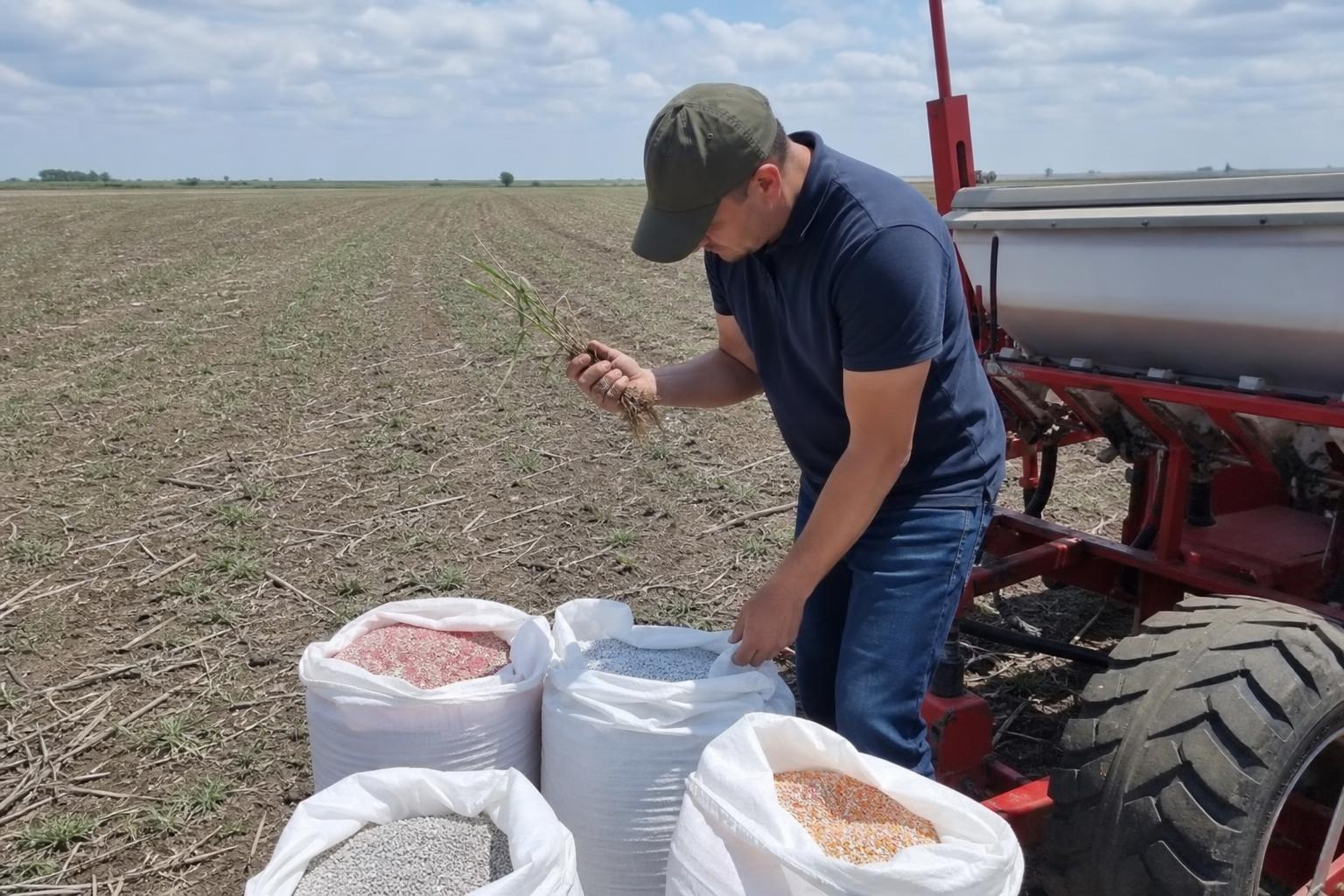
The Ukrainian fertilizer market is entering a period where purchasing decisions increasingly depend on climate conditions, crop structures, and available moisture. For sellers, this means demand not only for standard nitrogen products but also for clear, comprehensive solutions tailored to specific crops.
One indicative signal from southern Ukraine is the interest in flax as a crop that can complement sunflower in crop rotation under drought conditions. For the fertilizer segment, this is significant: changing the crop on a field automatically alters the fertilization requirements, timing, and consultation format for buyers.
South seeks flexible crops — the fertilizer market must respond
In Odesa region farms, yellow flax was tested this season. According to agronomists, flax does not fully replace rapeseed or sunflower but can serve as an additional crop for arid regions and help diversify crop rotation.
For fertilizer suppliers, this means some buyers may shift from a universal approach to more precise nutrient management. Farmers adding niche or less common crops need to understand not only the price per ton but also the technological appropriateness of the product.
In the case of flax, basic agronomic practices are mentioned in the sources: choosing predecessors, vertical soil tillage, fertilization, and crop care. Thus, demand may form around not just a "cheap ton," but a complete fertilization scheme within the technology.
Nitrogen and NPK: what matters in AgroPost ads
Buyers of fertilizers today look for more than just product availability. They need clear parameters: NPK formula, nitrogen, sulfur, or other element content, packaging, minimum order quantity, shipment region, and delivery conditions.
For sellers on AgroPost, it’s important to immediately indicate what tasks the product is suitable for: main application, starter fertilization, winter crop top dressing, or stress-condition crop treatments. This reduces clarifications and improves lead quality.
- For nitrogen fertilizers it is crucial to specify the product form, active ingredient concentration, and possible application timing.
- For NPK key factors are formula, granulation, solubility, crop recommendations, and batch consistency.
- For microfertilizers and foliar feeding buyers need information on crop, application phase, and compatibility with plant protection products if confirmed by the manufacturer.
Drought shifts focus from “more” to “more precise”
In early August, Ukraine experienced intensified air and soil drought, worsening conditions for the completion of late crop vegetations. Under such conditions, farmers are more cautious about expenses and more often evaluate the payback of each technological element.
For the fertilizer market, this does not necessarily mean a decline in interest in fertilization. More likely, it indicates an increased demand for precision: soil analysis, norm adjustments, selection of fertilizer forms, and rejection of template schemes where moisture is the main constraint.
Buyers should compare not only price but also logistics, batch availability, and product suitability for specific technologies. Sellers should include more agronomic information in their ads but not replace official manufacturer recommendations.
Key conclusions for sellers and buyers
- Crop diversification in the south may create demand for different fertilization schemes than those used for traditional crops.
- In arid regions, buyers will more carefully evaluate fertilizer efficiency and risks associated with application without sufficient moisture.
- Ads with clear formulas, packaging, region, and technological purpose are more likely to attract relevant inquiries.
- For niche crops, it is important not to automatically transfer fertilization schemes from sunflower, rapeseed, or cereals without agronomic validation.
What this means for the market: in the fertilizer category on AgroPost, competitive advantage is increasingly determined not just by price but by the quality of information in the offer. Buyers seek products tailored to specific crops, regions, and seasonal risks, and sellers who explain the purpose of nitrogen, NPK, and specialty fertilizers can more quickly find their customer.
Comments
No comments yetNo comments yet - be the first.