
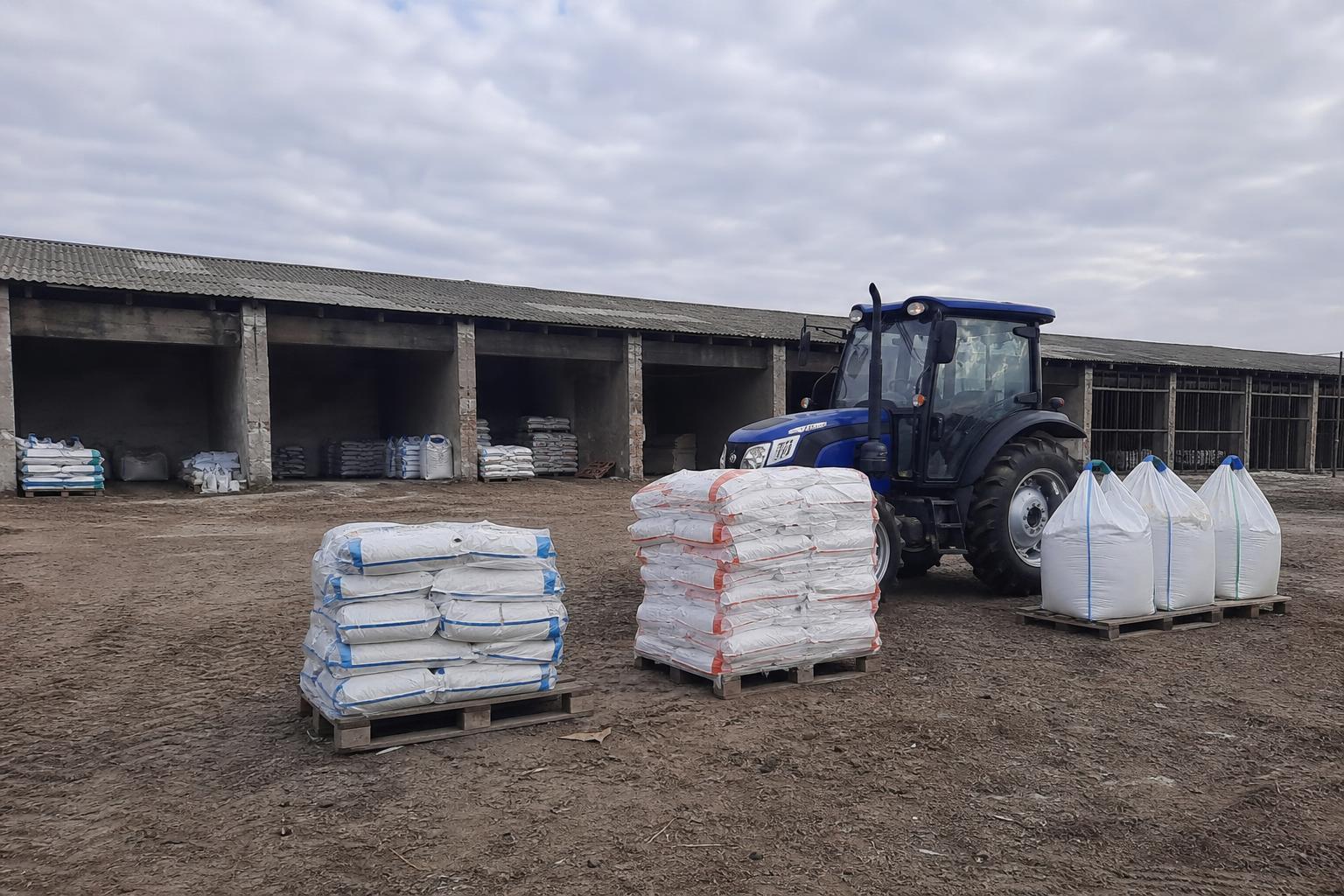
The Ukrainian fertilizer market is entering a period when farmers’ decisions increasingly depend on working capital. For sellers of nitrogen fertilizers, NPK, and associated agrochemicals, it is important to consider: demand before sowing is formed not in isolation but together with sales of the new harvest and export conditions.
Additional pressure on liquidity is created by the oilseed market. In autumn, active arrivals of the new sunflower harvest are expected, and parliament is concurrently discussing a temporary zeroing of export duties on soybeans, rapeseed, and sunflower. For fertilizers, this means potential changes in procurement pace: some farms will purchase only critical volumes now, with the rest after selling their produce.
Oilseeds Determine Buyers’ Payment Capacity
Agricultural market analysts expect Ukraine to harvest at least 11.5–12 million tons of sunflower, despite weather challenges in southern regions. In some southern areas, yields may decrease to 1.2–1.5 t/ha due to rainfall deficits and high temperatures.
The most tense period for producers is September-October, when the supply of the new harvest will increase most rapidly. The initial price expectations are 19–20 thousand UAH/ton, but with rapid harvesting and mass market entry, prices could drop to 16–17 thousand UAH/ton.
This is an important signal for the fertilizer market: if a farmer delays selling sunflower or sells only part of the batch, they may also postpone full fertilizer procurement. Under such conditions, proposals with flexible volumes, quick logistics, and the ability to meet immediate needs for specific fields work best.
Export Logistics Remains a Risk Factor
Ports of Greater Odessa account for about 90% of Ukraine’s grain exports. At the same time, in early August, Ukraine exported only about 500,000 tons of grain — roughly one-fifth of the potential shipment volume, according to the Ministry of Agrarian Policy and Food, as reported by specialized media.
Due to disruptions in shipping, alternative export routes are being considered. For agricultural producers, this means that revenue from sales may be uneven, and for fertilizer sellers, demand could be volatile, with short active procurement periods following grain or oilseed sales.
In such a situation, AgroPost recommends clearly indicating product availability, region of shipment, packaging, minimum order quantities, and delivery conditions. Fertilizer buyers today often seek not just the lowest price but also the ability to quickly meet their needs without excessive logistical risks.
Oilseed Duty: Potential Impact on Fertilizer Demand
Two draft laws have been registered in the Verkhovna Rada regarding the temporary zeroing of export duties on soybeans, rapeseed, and sunflower. One proposal suggests a zero rate for all exporters for three years, while another proposes a zero rate from the law’s enactment until the end or cancellation of martial law, but no less than two years.
The initiators link the need for changes to worsening conditions in the agro sector, export restrictions, additional procedures, and the loss of competitiveness of Ukrainian products. An assessment of one draft law indicates that abolishing the duty could increase procurement prices for farmers by 8–12%.
For the fertilizer segment, this is not a direct price factor but could influence payment capacity. If farmers receive higher revenue from oilseeds, part of the funds may be allocated for purchasing nitrogen, NPK, microfertilizers, and related materials for the upcoming season.
What Sellers and Buyers Should Consider on AgroPost
- Fertilizer sellers should prepare proposals for different budgets: from full technological schemes to minimal sets for the start of sowing.
- Buyers should compare not only price per ton but also product availability, delivery distance, and quick shipment options.
- For nitrogen fertilizers it is important to plan procurement in advance to avoid peak demand before application.
- For NPK accurate formulas tailored to the crop, soil, and planned yield levels remain relevant, rather than universal “stockpiling” purchases.
What this means for the market: in the near future, demand for fertilizers in Ukraine may remain cautious and uneven. The main advantages for sellers are product availability, transparent conditions, and fast logistics. For buyers, timely procurement planning is crucial to avoid dependence on oilseed price fluctuations and delays in harvest sales.
Comments
No comments yetNo comments yet - be the first.