
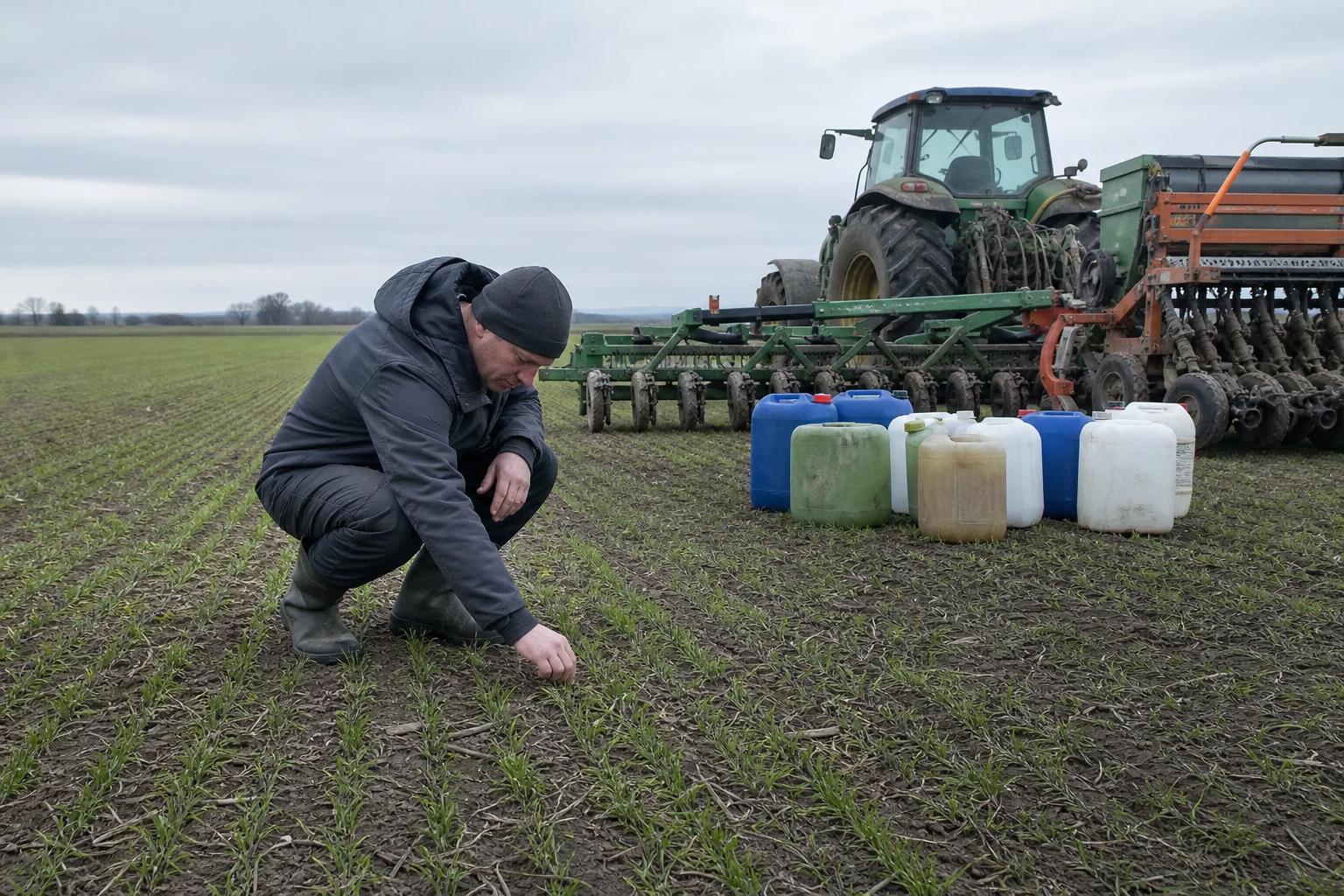
Autumn planting in Ukraine is entering a phase where agricultural producers are reviewing not only sowing areas but also the need for plant protection products. According to preliminary estimates from the Ministry of Agriculture, a reduction in winter wheat sown areas is expected for the 2027 harvest.
For the crop protection market, this means a more selective demand: farms can more accurately assess their needs for herbicides, seed treatments, fungicides, and insecticides tailored to each crop, avoiding excess stockpiling.
Wheat may generate a more cautious demand for crop protection products
The Ministry of Agriculture has not yet specified the exact scale of the reduction in winter wheat areas. Data collection is set to begin in September, with more realistic estimates expected in early October.
For crop protection suppliers, this signals the need to avoid uniform offers for all clients. Demand for products for winter wheat may become more region-specific, depending on sowing timing, previous crops, and the actual field conditions after harvesting the previous crop.
Buyers should first verify the actual areas intended for wheat cultivation and only then reserve seed treatments, soil herbicides, protective herbicides, and fungicide solutions for early spring crop protection.
Winter rapeseed appears to be a more stable segment
According to the Ministry of Agriculture, sown areas for winter rapeseed are unlikely to significantly decrease or increase, as sowing of this crop is already underway. This makes the rapeseed segment more predictable for crop protection suppliers.
Demand in this segment may focus on seed treatment, control of volunteers and weeds, autumn pest control, and fungicide-regulator treatments. At the same time, specific plans should depend on crop conditions and weather rather than just the calendar.
For AgroPost, this means that announcements regarding crop protection products for rapeseed should be as detailed as possible: crop type, active ingredient, formulation, packaging, documentation availability, stock levels, and regional shipment details.
Herbicide field preparation remains relevant
After harvesting the previous crop and before sowing winter crops, there is a short technological window for clearing the field of perennial and other unwanted vegetation. Such preparation helps reduce competition for young seedlings at the start.
Fields with problematic weeds or uneven emergence risks due to contamination should be carefully evaluated. In such cases, demand for contact herbicides and pre-sowing preparation solutions may remain steady even with changing sowing areas.
Buyers should avoid selecting products based solely on price. For autumn works, critical factors include the spectrum of action, temperature restrictions, timing before sowing the next crop, and the product’s suitability for specific field issues.
What sellers and buyers should consider on AgroPost
- Crop protection product sellers should differentiate offers for wheat, rapeseed, and barley, avoiding promoting the entire range as a single package.
- Buyers should calculate their needs after clarifying actual sowing areas, rather than relying on last year’s crop structure.
- For herbicides, it is important to specify whether the application is for pre-sowing preparation, soil control, or protective treatment.
- For fungicides and insecticides, it is advisable to indicate the crop, application stage, and target pest or disease.
- For seed treatments, key considerations include compatibility with the crop, application rate, and proof of product origin.
Special attention should be paid to documentation and quality. On the crop protection market, buyers increasingly seek not just lower prices but also clear origin, current residues, and quick logistics within their region.
Implications for the market
The autumn crop protection market in Ukraine is likely to become less universal and more tied to actual sowing structures. A reduction in winter wheat areas may temper some demand for grain crop products, while rapeseed remains a more stable sales point. For AgroPost participants, the main advantage now is to quickly update stock availability, clearly specify crop application, and assist buyers in meeting specific technological needs without excess inventory.
Comments
No comments yetNo comments yet - be the first.