
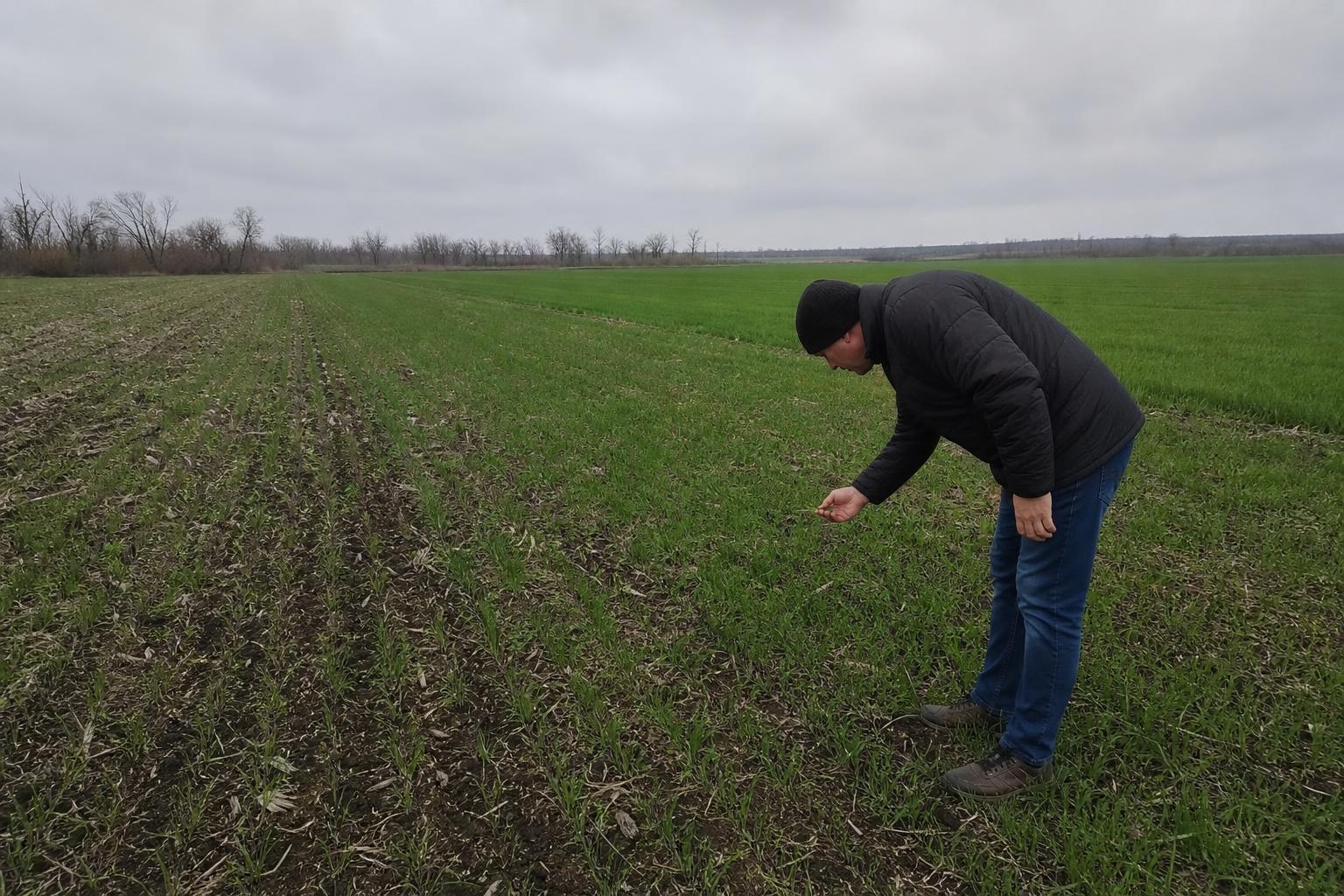
Winter wheat in Ukraine is in uneven condition: crops may enter winter at different growth stages, and some areas sown in the first half of November have yet to emerge. For the fertilizer market, this is a signal to assess the needs of individual farms more carefully rather than draw conclusions about demand based solely on the overall picture of planted areas.
The NAAS agrometeorological review for October 2026 also notes that wheat sown at the recommended time was in better condition than last year. The review does not include estimates of fertilizer stocks, prices or consumption.
Crops are developing unevenly
According to NAAS, late-sown crops may enter winter without having emerged or with a poorly developed root system and tillering node. For successful overwintering, plants need to grow for at least 45–50 days after emergence and develop 3–5 shoots.
At the end of October, crops sown at the recommended time were in better condition than last year. October rainfall totalled 74.9 mm, or 197% of the climatological norm. Wheat after bare fallow developed best; after sunflower, its condition ranged from full emergence to the start of tillering.
What to consider when managing fertilizer use
The varying condition of fields does not, by itself, determine the need for a particular fertilizer, product or application rate. Before purchasing, farms should check their plans against the actual development of their crops and their own agronomic data.
Agrochemical suppliers should clarify the crop, sowing date and condition of the specific field during consultations. The NAAS review does not support claims that late sowing will increase or reduce demand for nitrogen or compound fertilizers.
What is known about the market
The sources cited describe the agrometeorological condition of winter wheat but provide no information on fertilizer prices, availability or sales in Ukraine. They therefore cannot be used to make price forecasts or assess the supply-demand balance.
What this means for the market
For fertilizer buyers, the key practical task is to plan purchases according to the condition of their own crops rather than apply a nationwide assessment to every field. For sellers, this is an opportunity to segment farm enquiries more precisely; the data presented do not, on their own, confirm a change in market demand.
Comments
No comments yetNo comments yet - be the first.