
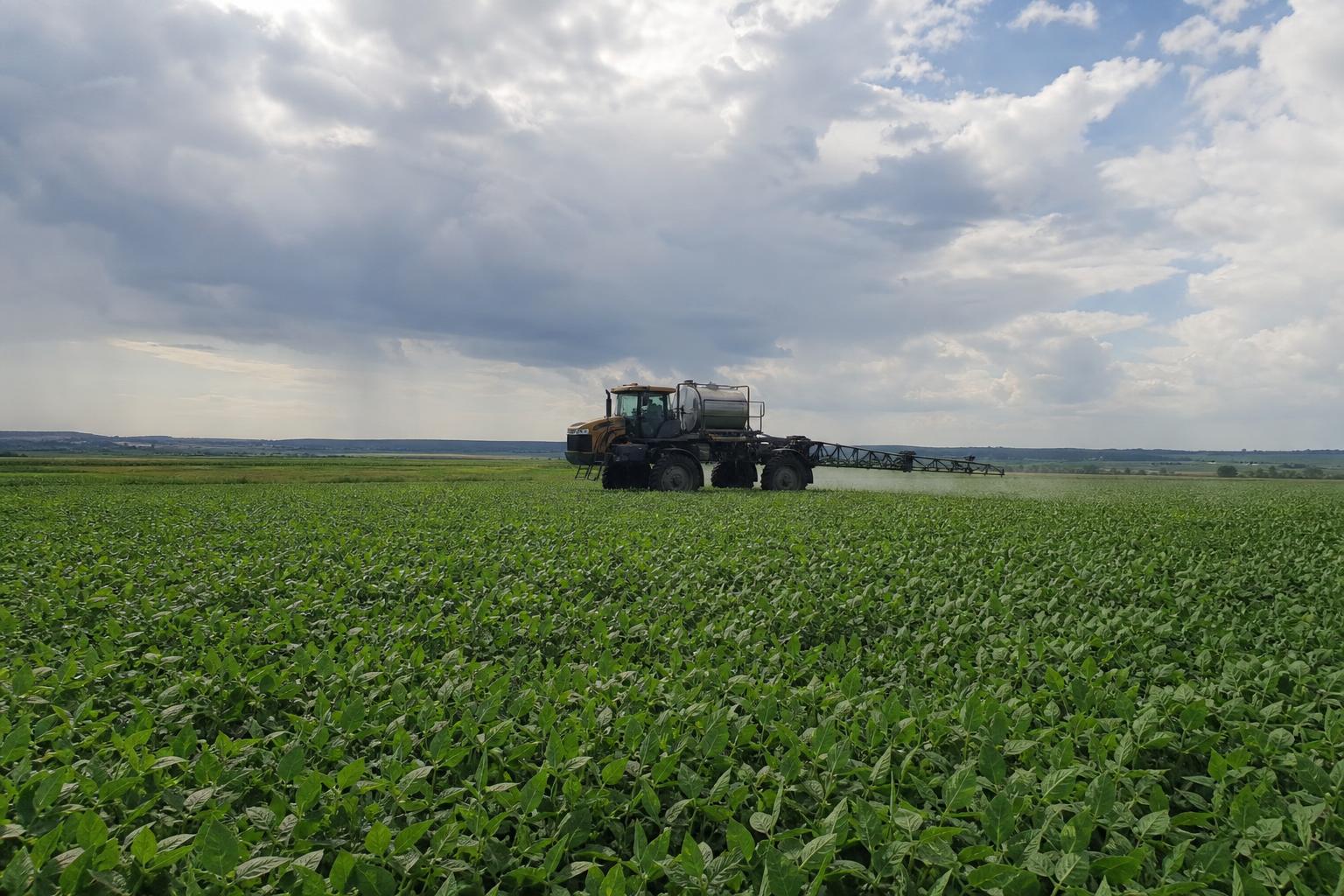
In the second half of summer, Ukrainian farms operate on a tight schedule: protecting crops from pests, diseases, and weeds, harvesting, and simultaneously preparing for the autumn sowing.
Spraying quality is affected by unstable weather: heat waves are replaced by moderate temperatures, local showers, thunderstorms, and gusty winds. Under such conditions, attention is focused not only on selecting the pesticide but also on how it is applied to the leaf surface.
Why Adjuvants Are Becoming More Important for Crop Protection
According to Ukravit specialists, in variable weather conditions, it is advisable to add adjuvants to working solutions. Their role is to improve droplet spread, leaf wetting, and penetration of active substances through the leaf cuticle.
For farms, this is especially relevant when the treatment window is short and the risk of reduced efficacy due to weather factors is higher. An adjuvant does not replace herbicides, fungicides, or insecticides, but can help the working solution better realize the product's potential.
What Crop Protection Buyers Should Pay Attention To
Buyers on AgroPost should evaluate adjuvants not only by price per liter. Composition, recommended concentration, compatibility with tank-mix partners, and the crop to be treated are also important.
Ukravit’s recommendations mention an alcohol-based adjuvant based on ethoxylated alcohols with a content of 980 g/l as an example. The declared concentration in the working solution is 0.1–0.2%, i.e., 100–200 ml per 100 liters of water.
The manufacturer also states that such a product reduces the surface tension of the working solution, improves surface wetting, and enhances absorption of active ingredients, potentially accelerating the action of sulfonylurea herbicides.
What to Show Sellers in Proposals
- Type of adjuvant: alcohol-based, oil-based, sticker, wetting agent, or other functional class.
- Composition and concentration: buyers need a clear active ingredient, not just a trade name.
- Application rate: preferably indicated in percentages and ml per 100 liters of water.
- Compatibility: specify which pesticide groups the product is compatible with.
- Restrictions: conditions related to temperature, wind, rainfall, and tank-mix requirements should be visible to the buyer.
For pesticide sellers, a detailed product card can be a competitive advantage. During the season when agronomists make quick decisions on treatments, clear technical parameters reduce clarification time and help avoid mistakes in selection.
Practical Conclusions for Farms
Adjuvants should be considered as part of the application technology, not as a universal solution for any weather. If strong winds, rain, or other risky conditions are expected, the primary focus should be on choosing the right timing for treatment.
Before applying tank mixes, it is necessary to check the product regulations, manufacturer recommendations, and conduct a physical compatibility test. This is especially important when combining herbicides, fungicides, insecticides, microfertilizers, and auxiliary components.
What this means for the market: the demand in the crop protection segment is shifting from simply searching for a pesticide to a comprehensive solution for quality application. For AgroPost, this means proposals with complete information on application rates, compatibility, and conditions will become more valuable.
Comments
No comments yetNo comments yet - be the first.