
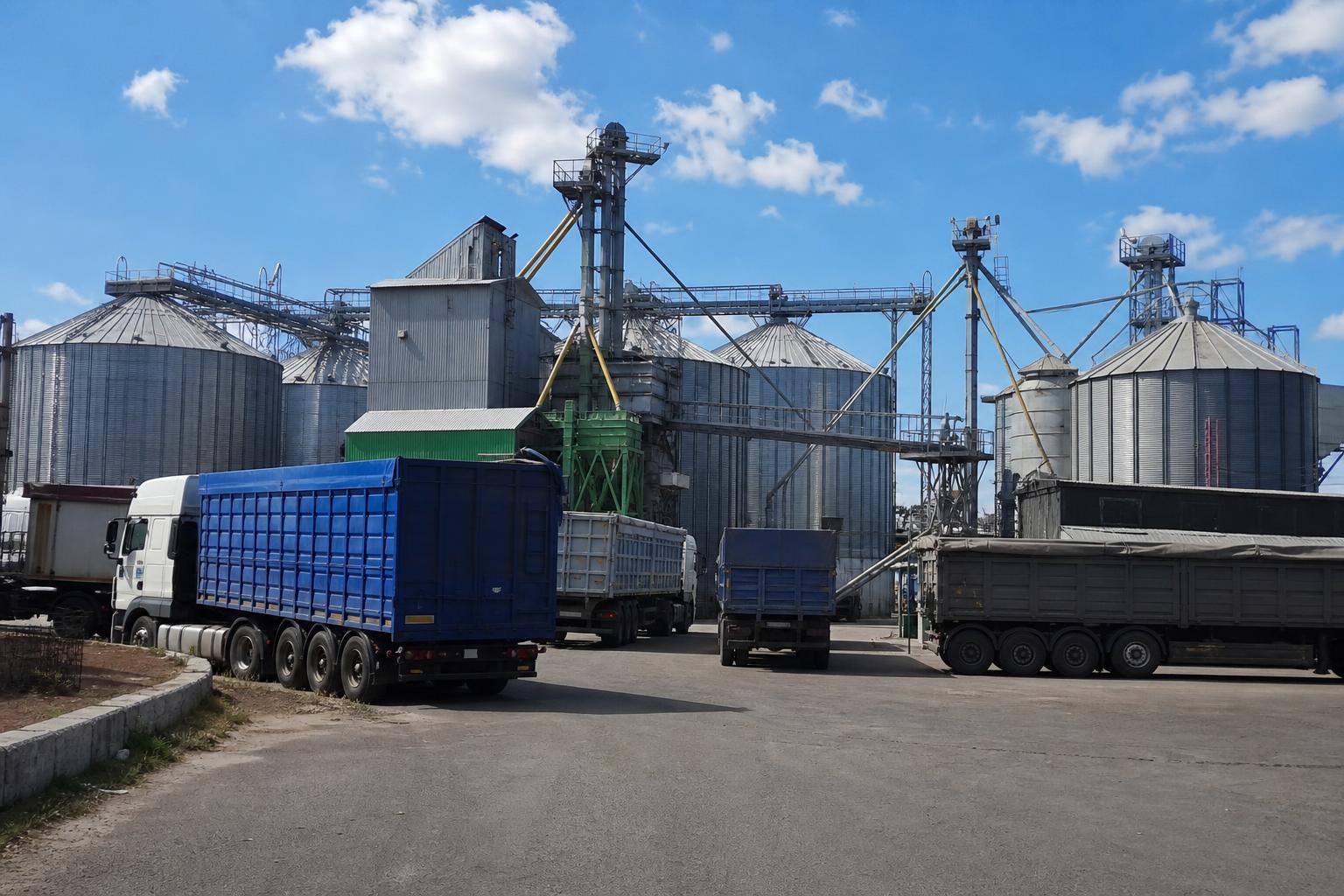
The harvest season traditionally intensifies issues related to agricultural logistics: grain quickly enters from the field, and sales, processing, storage, and shipment must operate without delays. In such conditions, the elevator becomes not just a storage facility but a logistical hub that influences the pace of batch sales.
A notable example of this season is the TAS Agro Center elevator in Budiще. During the first two weeks of the 2026 harvest campaign, it accepted over 30,000 tons of the company's own grain, with a total storage capacity of 60,000 tons.
Why Elevator Logistics Are Back in Focus
During mass harvesting, even the availability of transport does not guarantee a quick turnover of grain. If acceptance, weighing, quality analysis, processing, and batch formation are slow, equipment remains idle, and sellers lose flexibility in negotiations.
The Budiще elevator, according to TAS Agro, provides acceptance and storage for the Central and Southern clusters of the company. It also enhances logistical and trading capabilities in Kyiv and Cherkasy regions.
For agricultural producers, this is an important benchmark: placing grain closer to production areas or regional buyers can reduce the need for urgent long-distance transportation immediately after harvest.
What Grain Sellers Need to Know for AgroPost
During harvest, sellers should not only specify the crop and volume but also clarify logistical parameters of their offer. This helps buyers quickly assess the actual value of the batch, considering delivery or self-pickup.
- Storage location: elevator, farm warehouse, or field storage.
- Pricing format: self-pickup, delivery to buyer, or conditions at the elevator.
- Readiness for shipment: date, minimum batch size, availability of transport.
- Grain condition: whether processing is needed before sale.
- Documents and quality: basic indicators that the buyer should know before concluding the deal.
The more precisely these conditions are described in the listing, the less time is spent on clarifications. In a market where decisions are often made quickly, this can be a competitive advantage for the seller.
What Buyers and Traders Need to Know
During harvest, buyers should evaluate not only the grain price but also the logistical readiness of the batch. A batch already stored at an elevator with processing and shipment options may be more convenient for contract planning.
According to TAS Agro, the Budiще elevator works not only with the company's own grain but also accepts products from third-party depositors. For local farmers, this means access to storage and processing services without the immediate need to sell the harvest from the field.
For buyers, this model simplifies the formation of uniform batches and provides more time for transportation coordination. However, the final benefit depends on elevator tariffs, distance to the shipment point, and grain quality.
Key Conclusions for the Season's Logistics
- Peak grain intake during harvest makes elevator capacity a critical element of the supply chain.
- Receiving over 30,000 tons in two weeks at a single facility demonstrates the importance of prepared infrastructure in production regions.
- Sellers should immediately specify storage, processing, and shipment conditions in their listings.
- Buyers should consider not only the price per ton but also the full logistical cost of the deal.
Implications for the Market
Ukraine's agricultural logistics during harvest increasingly depends on the combination of transport, elevator capacity, and rapid communication between sellers and buyers. For AgroPost users, this is a practical signal: a well-structured offer with clear logistical conditions increases the chances of quickly finding a counterparty and avoiding unnecessary delays.
Comments
No comments yetNo comments yet - be the first.