
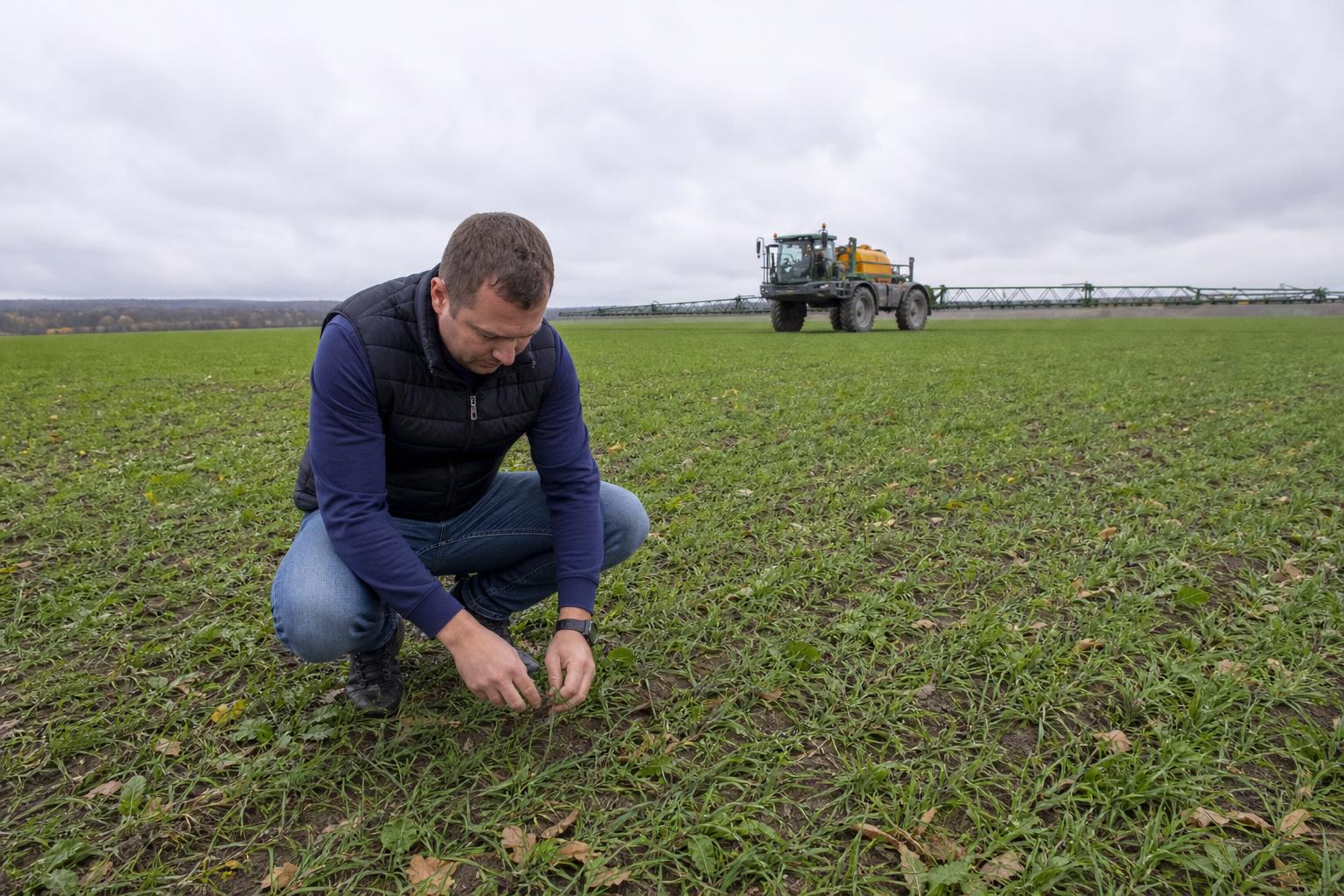
Autumn weed control in winter cereals is not only a way to reduce competition for moisture and nutrients. According to a Ukravit expert, it can also lower the risk of excessive plant elongation and leave farms with fewer unresolved tasks at the start of spring.
The decision to treat depends on weather conditions, budget and the actual weed pressure in the field. Before buying a herbicide, check that the crop, target weeds and application conditions match the information on the product label.
Potential benefits of autumn treatment
Controlling broadleaf weeds in autumn reduces their competition with winter crops for resources. According to Oleksandr Myhlovets, head of Ukravit’s Agrotechnology Department, treating weeds at more susceptible growth stages can be an advantage over postponing the task until spring.
Autumn control can also reduce the need for spraying after vegetation resumes. This matters when planning fieldwork during a period of changeable weather, when machinery may be tied up with other operations. Weed control may indirectly reduce the risk of disease spread and pest damage to crops, but it does not replace separate crop protection measures.
How to select a product and plan purchases
For buyers, the key is to match the weed species present in the field with the product’s mode of action and its approved use on the specific crop. Check the active ingredient, application rate, crop growth stage and label restrictions. Application information must comply with the current registration and the manufacturer’s instructions.
In its material, Ukravit cites an MCPA-based selective herbicide as one option for controlling broadleaf weeds, including volunteer sunflower and oilseed rape. The company recommends applying this product in autumn when the average daily temperature is +9…+10 °C or higher. This recommendation applies to a specific product and is not a universal temperature threshold for all herbicides.
AgroPost crop protection product sellers should provide complete, verified information on active ingredients, crops and target weeds. Buyers should confirm that a product suits their field conditions and check the label before use.
What this means for the market
Autumn demand for herbicides depends on the weather window, crop condition and farms’ financial capacity. For buyers, a product’s value depends not only on its name but also on clear information about how it should be used. Before placing an order, compare this information with the field’s actual needs and current requirements for crop protection products.
Comments
No comments yetNo comments yet - be the first.