
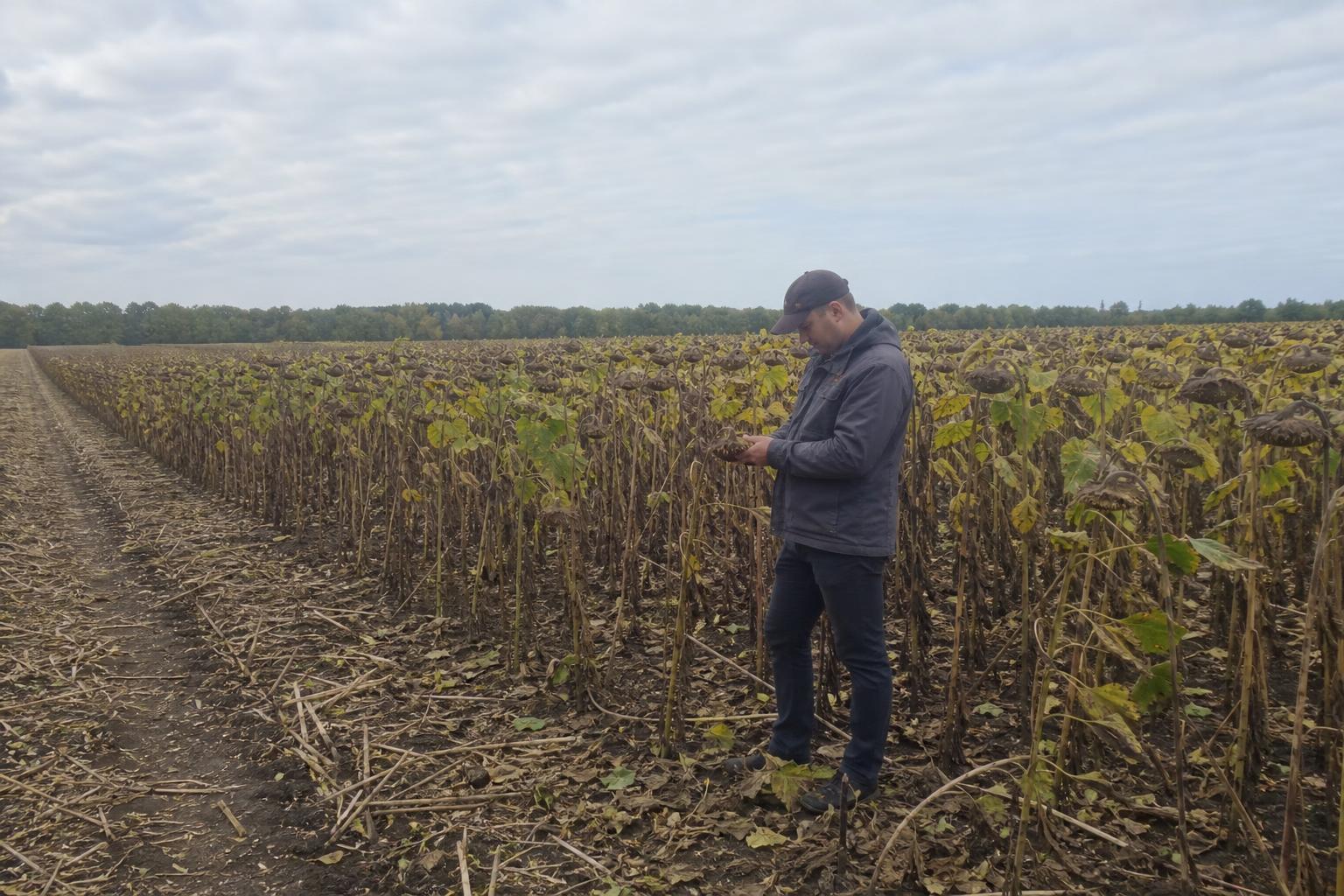
Sunflower harvesting is nearing completion, but some areas remain in the field. According to figures cited in a report on the harvest, as of November 9, 4.8 million hectares, or 91.6% of the projected area, had been harvested, yielding 10.7 million tonnes of seed. The average yield was 2.23 tonnes per hectare.
For crop protection specialists, these figures are not a signal to apply products across the board, but a reason to assess the condition of individual fields. Overall harvest data do not establish whether a problem exists in a particular field or whether treatment is warranted.
What to check in unharvested fields
Before making any decision, assess the actual condition of the crop: whether there are signs of infestation or damage, what growth stage it has reached, and when harvesting is planned. These factors should inform consultation with an agronomist and a check of the specific product’s approved use instructions.
Seasonal reports also mention risks associated with leaving sunflower in the field, including mice and diseases. This is a reason to inspect fields carefully, but not sufficient grounds to recommend a specific crop protection product without a diagnosis.
How to avoid choosing the wrong crop protection product
Do not select a product based solely on the crop name or a general description of the problem. Buyers should check the product’s intended use, target pest or disease, permitted application timing and method against the label and current product registration.
AgroPost sellers should clearly state in their listings which crop the product is intended for, its target use and other information required by the label. This helps buyers compare offers based on their needs, rather than just the product name or price.
What the harvest figures show
The 4.8 million hectares harvested represent 91.6% of the projected area. This means that about 8.4% of the area had yet to be harvested as of the stated date—a calculation based on the reported percentage. Average yields at the time were higher than the year-earlier figure cited in the source, but these numbers alone do not explain the condition of crop protection in the fields.
What this means for the market
For farms with sunflower still to harvest, the priority is to assess risks at field level and not rely on overall statistics in place of an inspection. For crop protection product sellers, accurate descriptions of intended use and application conditions are essential: they make it easier to find the right product but do not replace agronomic diagnosis.
Comments
No comments yetNo comments yet - be the first.