
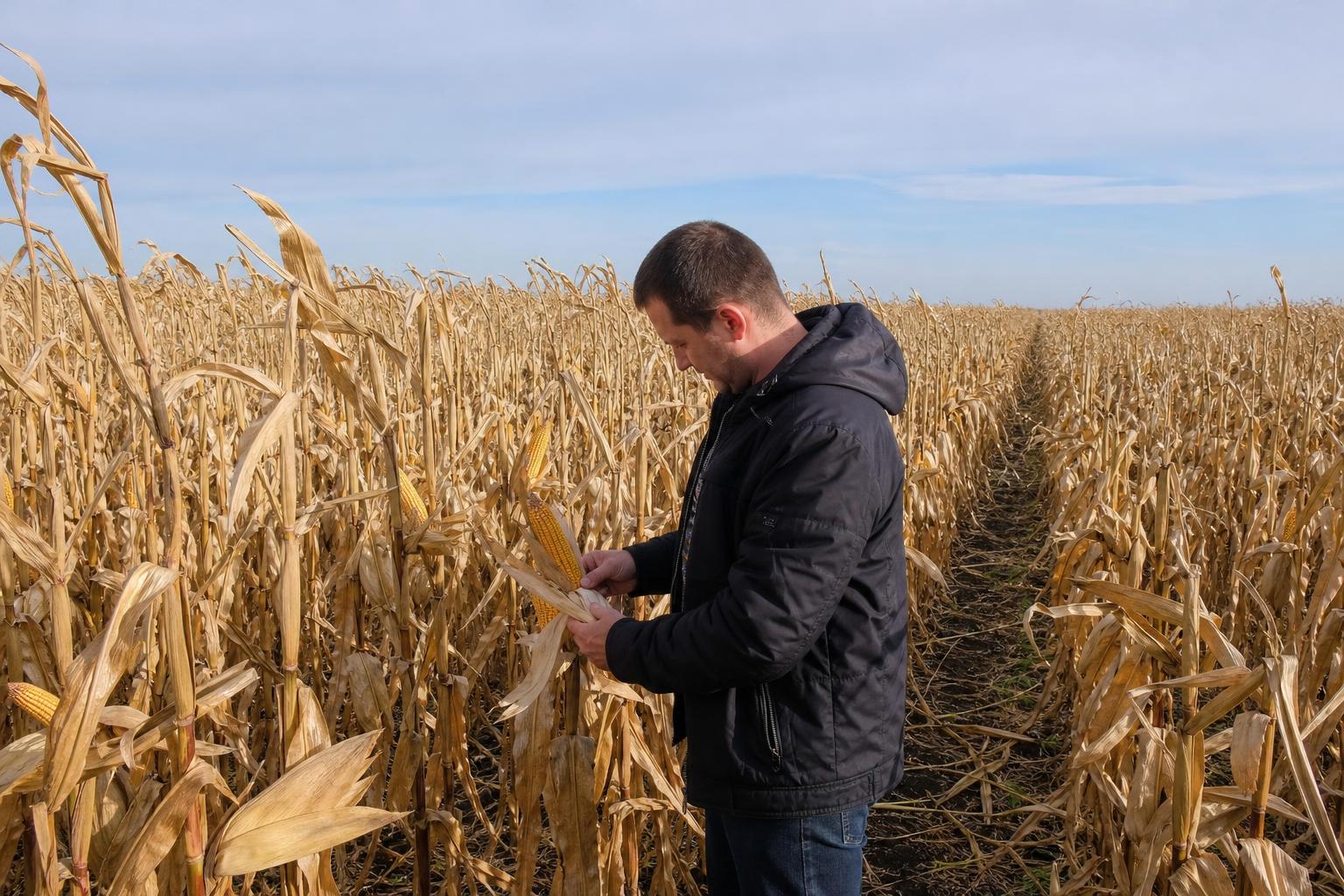
Kernel forecasts corn yields of 8.1 t/ha, compared with 9.3 t/ha last year. The company attributes the expected decline to summer heat and a lack of rainfall during key stages of crop development in one of its clusters.
For sellers and buyers of crop protection products, this figure should be viewed with caution: the data provided contain no information on pest or disease prevalence, product applications, or crop protection product purchasing volumes.
What the yield data show
According to Kernel’s operational report, wheat yields rose by 9% to 6.4 t/ha, sunflower yields increased by 18% to 3.1 t/ha, and rapeseed yields climbed by 48% to 3.5 t/ha. For corn, by contrast, the company expects yields to fall by 13% year on year.
As of October 23, the company had completed wheat and rapeseed harvesting, and harvested 96% of its sunflower area and 28% of its corn area. This provides context on harvest progress, but does not assess the effectiveness of or need for specific crop protection programs.
How to read this signal for the crop protection market
The decline in yields, which the company attributes to weather conditions, is not grounds for automatically concluding that demand for herbicides, fungicides, or insecticides will rise or fall. The report contains no data on purchases of these products.
AgroPost users selling or seeking products for corn should match their offers to the specific crop, the farm’s needs, and product availability. A yield forecast alone cannot replace information on the actual phytosanitary condition of crops.
What this means for the market
Kernel’s figures provide a benchmark for expected yields of certain crops, but do not constitute a standalone forecast for the crop protection market. For crop protection product sellers and buyers, the practical value of such reports lies in the seasonal context; decisions on products require separate data on crop conditions and the needs of each farm.
Comments
No comments yetNo comments yet - be the first.