
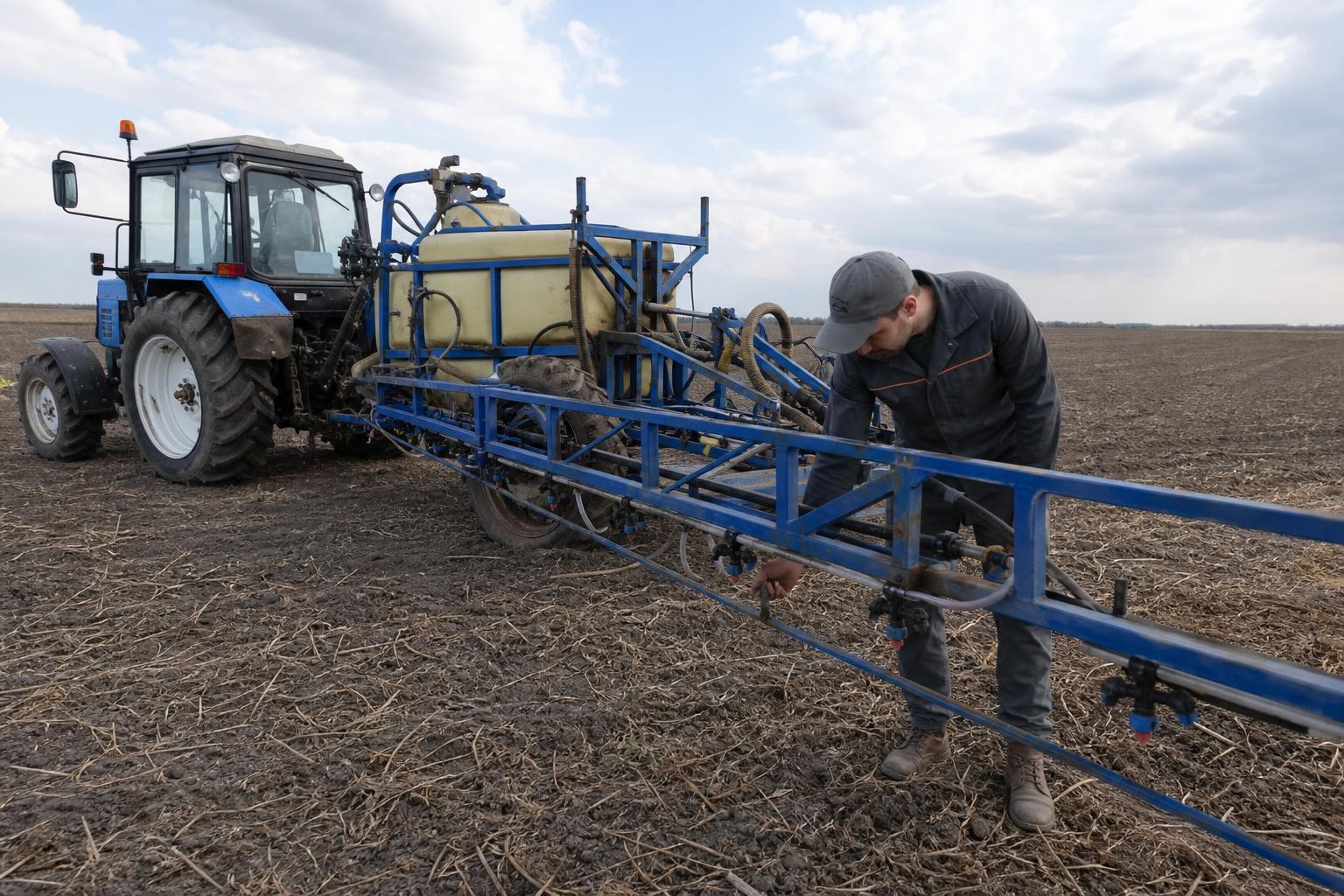
The Ukrainian plant protection market is gradually transitioning to stricter control regulations for the equipment used to apply plant protection products (PPPs). The Cabinet of Ministers has approved a unified procedure for technical inspection of such equipment, with the new requirements set to start on January 17, 2028.
For agricultural producers, this is not only a regulatory change. The proper functioning of sprayers directly affects application rates, uniformity of crop coverage, PPP consumption, and risks to workers and the environment.
What Will Change for Equipment Owners
The new rules will apply to equipment used for applying plant protection products. This includes professional machinery used in crop treatment and other agricultural operations involving PPPs.
Special emphasis is placed on the registration of trailer-mounted and mounted equipment. This will enable the state to keep records of such machinery and monitor its technical condition.
Owners of equipment will be granted a transitional period. During this time, farmers will be able to register their machinery and undergo inspection according to the new procedure.
Who Will Conduct the Inspections
Technical inspections will be carried out not only by government agencies. Private specialists and companies will also be permitted to perform inspections if they meet the requirements established by the state.
At the same time, the state will oversee their work: ensuring compliance with inspection rules, proper documentation of results, and adherence to approved procedures.
For farmers, this means that inspection will become a formalized service on the market. It will be important to choose providers authorized to conduct such inspections and issue valid documents.
Why This Is Important for the PPP Market
The new procedure aligns Ukraine’s plant protection system with EU practices. In European regulation, professional equipment for PPP application is subject to regular inspections.
For farms, a properly functioning sprayer is not just a formality but a cost-saving tool. Uneven application can increase chemical expenses, leave untreated areas, or create phytotoxicity risks where application rates are exceeded.
For equipment sellers, spare parts suppliers, and service providers, this opens additional demand for diagnostics, repairs, nozzles, pump units, booms, filters, and other components affecting application quality.
What Farmers Should Do Now
- Inventory their equipment. Record which trailer-mounted, mounted, and self-propelled units are used for PPP application.
- Check technical condition. Pay special attention to pumps, nozzles, pressure gauges, filters, booms, and application rate regulation systems.
- Plan maintenance before the season. Repairing sprayers during peak treatment periods can be more costly due to time constraints and parts availability.
- Prepare documentation. After the procedure is launched, not only the actual condition of the equipment will matter but also registration confirmation and inspection results.
- Assess the need to upgrade equipment. If machinery is worn or does not ensure precise application, replacing it may be more cost-effective than ongoing repairs.
Context for Buyers and Sellers on AgroPost
In the plant protection segment, demand may gradually shift not only towards products but also towards the technical base for their quality application. Buyers of sprayers and components will increasingly pay attention to equipment condition, service options, and documentation.
Sellers should clearly describe technical specifications, configurations, component conditions, and the ability to prepare units for inspection. For buyers, this reduces risks, and for sellers, it increases trust in their listings.
What this means for the market: Equipment inspection for PPP application will become part of seasonal planning rather than a one-time bureaucratic procedure. Farms that proactively check and prepare their machinery will experience less downtime during treatment seasons and better control their crop protection costs.
Comments
No comments yetNo comments yet - be the first.