
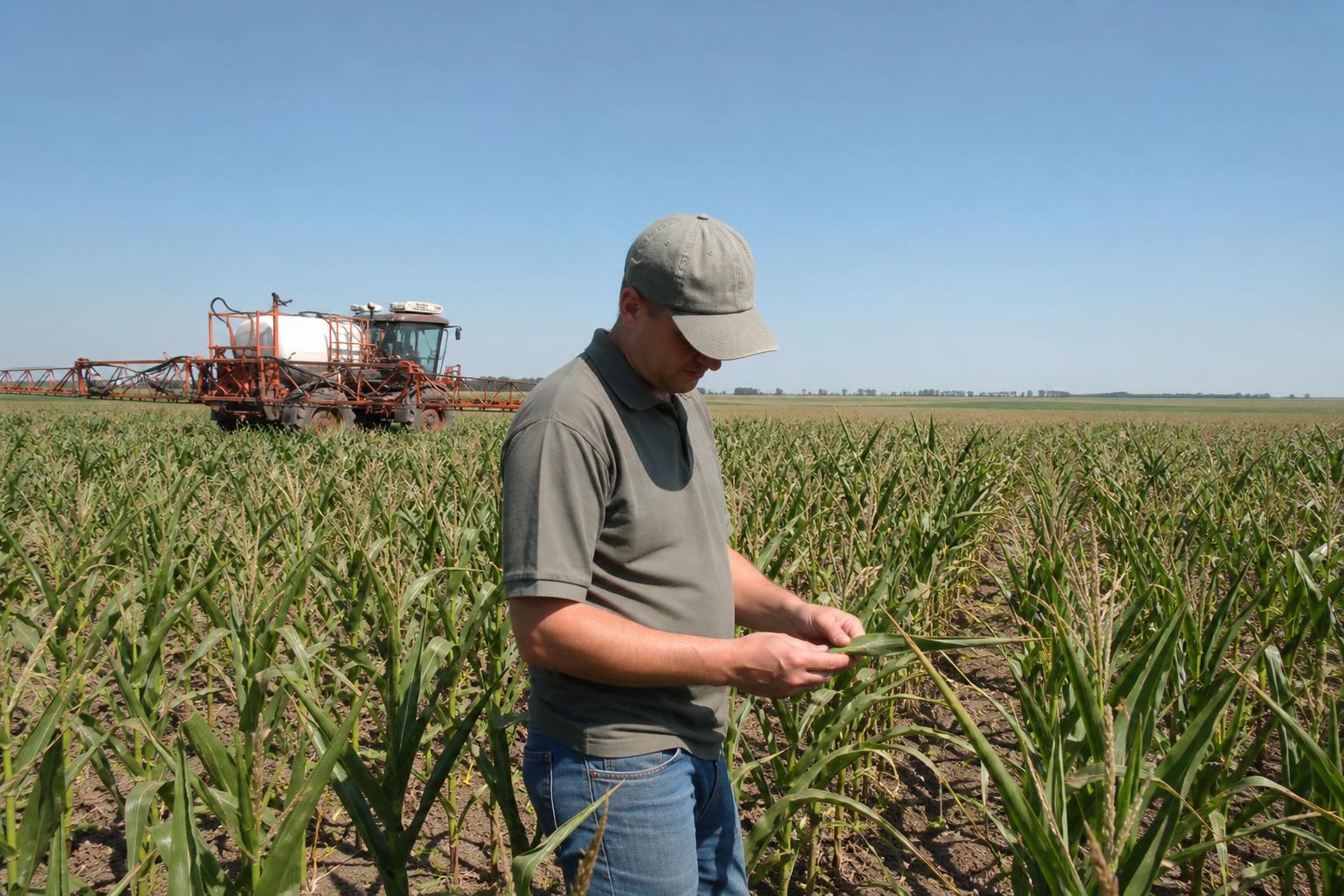
Weather risks are once again becoming a critical factor in crop protection planning. According to FAO estimates, a new El Niño phase may intensify drought threats in several agricultural regions worldwide, increasing attention to crop stress tolerance and the quality of technological solutions in the field.
For the Ukrainian agrochemical market, this is not a direct forecast for each region but a practical signal: in a season with water deficits, farmers should more frequently review herbicide, fungicide, and anti-stress crop protection schemes.
Drought Changes Crop Protection Logic
FAO analyzed 41 years of satellite data and identified regions where severe droughts most frequently occurred during strong El Niño phases. The highest risk zones include countries in the Sahara, Southern Africa, Southeast Asia, Central America, and the Caribbean basin.
Ukraine is not listed among the primary risk zones in this overview. However, the global focus on arid conditions is also relevant for Ukrainian producers: water shortages affect not only yield potential but also crop responses to treatments, plants’ ability to recover after stress, and the need for precise timing of applications.
In practice, this means that decisions regarding pesticides should not be based solely on the calendar. More reliable indicators include the actual state of crops, growth stage, soil moisture, weather forecasts, and levels of infection or weed pressure.
Potassium Availability as Part of Stress Management
An additional factor directly related to plant condition under drought is potassium availability. According to Ukravit expert Serhii Adamenko, over 50% of Ukrainian soils have elevated or high exchangeable potassium levels, but this does not guarantee its effective uptake by crops.
The main reason is the mechanism of potassium uptake by roots. Data shows that 78% of soil potassium reaches roots via diffusion, which requires sufficient moisture.
If soil moisture drops below 60% of the minimal water-holding capacity, potassium uptake by plants can decrease by 15–45%. At around 40% moisture, absorption may fall by 40–70%.
For protection systems, this is important because weakened plants are less resilient during stress periods. Therefore, in a drought season, agronomic assessments should include not only herbicide or fungicide choices but also nutrient status, turgor, leaf surface, and overall physiological condition of the crop.
What to Consider When Planning Pesticide Applications
In a season with unstable moisture, it is advisable to avoid routine solutions. Even standard protection schemes may require adjustments if the crop is under stress or lagging in development.
- Before herbicide application evaluate crop and weed status, temperature, humidity, and short-term weather forecasts.
- Before fungicide treatment assess the actual disease risk in the field, not just the calendar growth stage.
- For tank mixes pay attention to compatibility of products, pH of the working solution, and manufacturer recommendations.
- Under stress conditions consider foliar feeding only after assessing crop status and economic feasibility.
- When purchasing pesticides verify active substances, registration status, application rates, and relevance for the specific crop.
Commercial sources also highlight the use of foliar potassium products as a tool to support crops during critical phenological phases. However, such solutions should be compared based on composition, active element concentration, compatibility with pesticides, and field conditions of the specific farm.
Practical Recommendations for Sellers and Buyers on AgroPost
For pesticide buyers, the main takeaway is that during a drought period, it is better to purchase not just a generic “herbicide” or “fungicide,” but a solution tailored to specific field problems. When making a request, it is advisable to specify the crop, growth stage, previous treatments, weed types, or symptoms of diseases.
For sellers, it is important to clearly specify the active ingredient, crop application, dosage, packaging, documentation, and compatibility recommendations. In the crop protection category, this increases trust in the listing and reduces the number of clarifications from buyers.
There is also a growing demand for consultative approaches: farmers seek not only the product but also advice on whether treatment is advisable now or if it’s better to wait for weather changes or crop development stages.
What this means for the market: In the crop protection category, demand is increasingly shifting from standard seasonal purchases to precise selection of pesticides based on crop conditions. For AgroPost, this translates into higher value for listings with detailed product descriptions, clear specialization, and practical information for farmers.
Comments
No comments yetNo comments yet - be the first.