
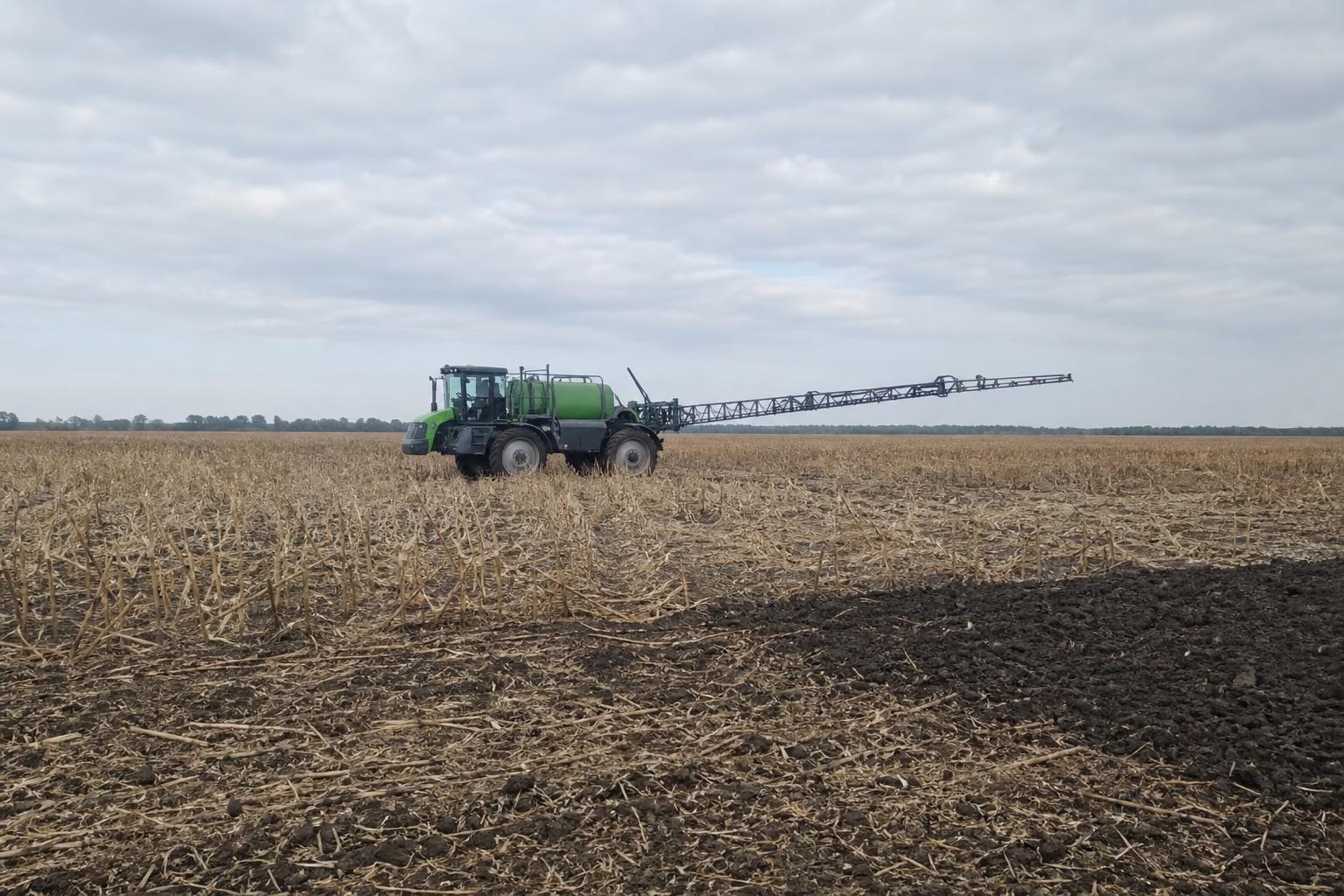
Autumn sowing in Ukraine is entering a phase where farmers need to quickly coordinate crop rotation, budgets, and procurement of crop protection products. The crop protection market’s key indicators remain the pace of rapeseed harvesting, farm liquidity status, and availability of working capital financing.
According to the Ministry of Agrarian Policy, as of August 3, Ukrainian farmers had harvested rapeseed from 910.6 thousand hectares, or 68.4% of the forecasted areas. The total yield reached 2.4 million tons with an average yield of 2.63 t/ha. This provides a basis for planning subsequent field operations on cleared plots.
Rapeseed as an Indicator of Readiness for the Autumn Season
Rapeseed harvesting traditionally opens the window for preparing fields for subsequent crops. For crop protection buyers, this period is when it’s advisable to assess the need for herbicides to control volunteers and weeds, seed treatments, and fungicides for early protection of winter crops.
Regional differences in rapeseed yields are also significant for the market. The highest yield at the reporting date was in Lviv region — 4.03 t/ha. Regions with yields over 3 t/ha included Ternopil, Khmelnytskyi, Sumy, Chernivtsi, Rivne, Vinnytsia, and Volyn.
Lower yields were recorded in Zaporizhzhia — 1.57 t/ha, as well as in Dnipropetrovsk and Kherson regions — 1.88 t/ha. For crop protection product sellers, this indicates that the solvency and demand structure can vary significantly between regions.
Which Crop Protection Products Might Be in Focus
Before autumn sowing, buyers typically focus on products that ensure crop start-up and reduce risks during early vegetative stages. The practical focus includes seed treatments, soil and pre-emergence herbicides, and fungicides for autumn application.
For sellers on AgroPost, it is important to clearly specify crop, active ingredient, application rate, packaging, stock remaining, and region of shipment. During active pre-sowing preparations, buyers respond more quickly to listings with clear delivery conditions and available documentation.
Buyers should compare not only the price per liter or kilogram but also the total cost per hectare, logistics, delivery times, and compatibility with planned technology. This is especially critical for farms working within narrow technological windows.
Financing May Influence Procurement Pace
The Ministry of Agrarian Policy announced preparations for a package of financial solutions in cooperation with the Ministry of Finance, Ministry of Economy, NBU, banks, and agricultural associations. Among the discussed tools are extended preferential credit programs at 5-7-9%, government guarantees, and eased borrowing requirements.
For the crop protection market, this is important not as a guaranteed demand volume but as a factor that can influence procurement timing. If farms gain access to working capital, they have more opportunities to purchase products before peak logistical demand.
At the same time, sellers should consider that some buyers may delay decisions until financing details or harvest sales are clarified. In such cases, flexible commercial terms, transparent stock availability, and prompt communication are key.
Key Takeaways for AgroPost
- Crop protection buyers should start forming a short list of products for autumn operations and verify actual availability with sellers.
- Sellers should update listings with herbicides, seed treatments, and fungicides, including delivery conditions and warehouse regions.
- Regional demand may be uneven due to varying yields and farm financial status after harvest.
- Price per hectare is more important for buyers than the nominal package price; ads should highlight practical application parameters.
What this means for the market: crop protection enters a season of short-term decisions, where participants with confirmed availability, clear logistics, and a direct link between product and crop/technology will succeed. For AgroPost, this presents an opportunity to connect crop protection sellers with farms preparing fields for autumn sowing more efficiently.
Comments
No comments yetNo comments yet - be the first.