
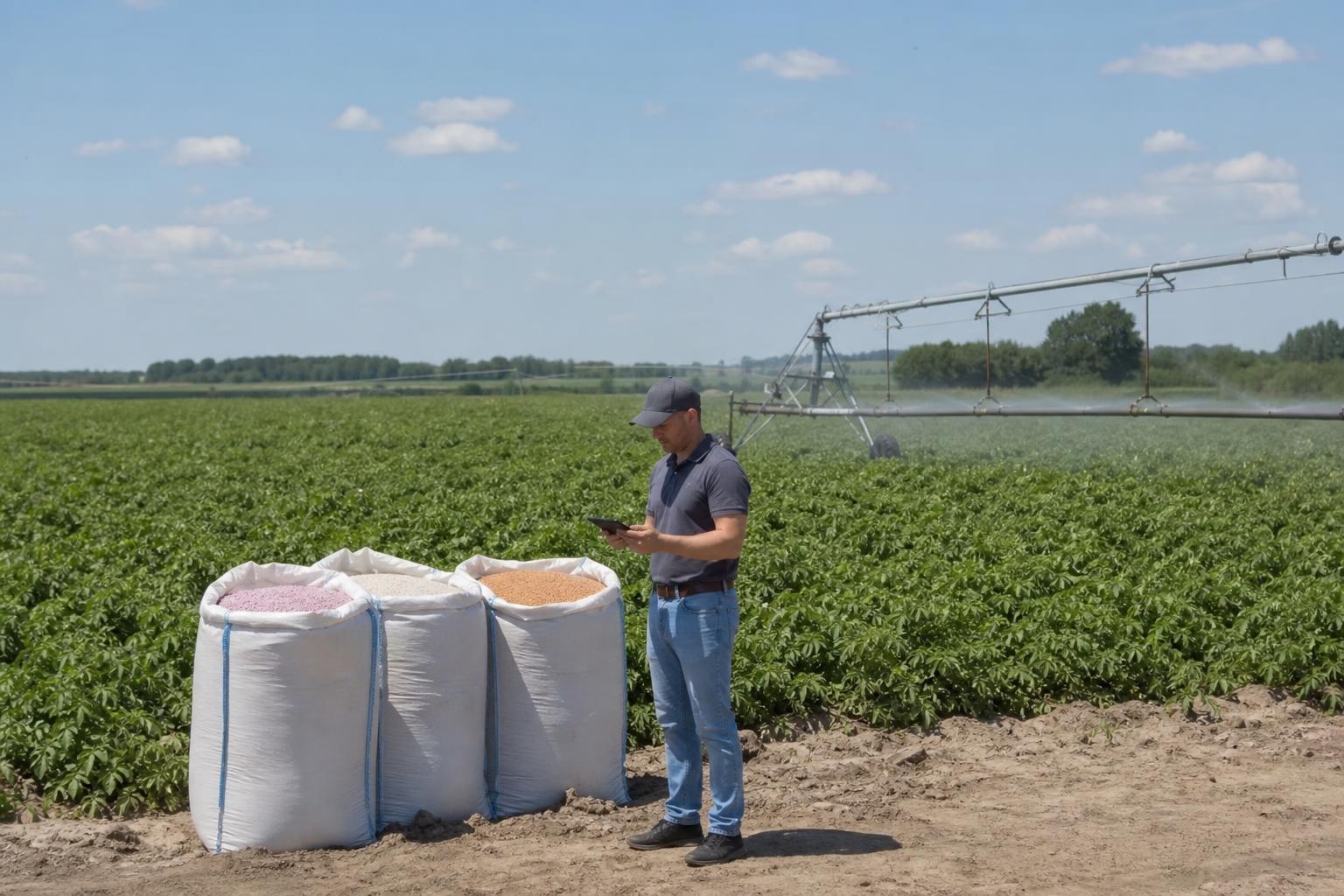
For the fertilizer market, potatoes remain a niche but sensitive segment to technology. Purchase decisions often depend not only on price but also on moisture regimes, planned yields, tuber quality, and storage or processing requirements.
Data published in July on potato consumption and an example farm that restored irrigation in Zhytomyr region provide useful signals for fertilizer sellers and buyers. While this is not agricultural chemical sales statistics, it offers practical insights into where demand may be more particular about product composition and consultation.
The Potato Segment Is Becoming More Measurable
According to research by KSE in partnership with the Ukrainian Association of Potato Producers, the average consumption of fresh potatoes in Ukraine is estimated at 68 kg per person per year. This is lower than the previously cited estimates of 120–140 kg.
On a monthly basis, the average is 5.7 kg per person. In rural areas, consumption is higher — 7.7 kg per month; in cities — 4.7 kg; in Kyiv — 4.1 kg.
For the fertilizer market, this fact is important not as a direct demand forecast but as a signal for more precise planning. If the potato market better assesses actual consumption, producers will more cautiously calculate costs, application rates, and the payback of each technological operation.
Irrigation Increases Nutrient System Demands
The farm “Adelaide,” relocated from Kherson to Zhytomyr region, has restored irrigation for potato cultivation. According to the farm manager, watering allowed them to more than double the crop yield.
The farm uses an adapted old drainage reclamation system, cleaned channels, a pumping station, and sprinkler machines. Currently, about 750 hectares of potatoes are irrigated, with watering needs determined using electronic tensiometers at depths of 20 and 40 cm.
For fertilizer suppliers, this means that technological potato farms can expect not just a bag or big-bag of NPK but a clear feeding scheme tailored to specific conditions. Buyers need to see the composition, nitrogen form, solubility, compatibility with application technology, and usage recommendations.
What to Highlight in AgroPost Ads
In the potato fertilizer segment, buyers usually quickly filter out general offers. An ad performs better if it answers practical questions from agronomists or farm managers.
- Composition and concentration. For NPK, it is important to specify the formula, presence of sulfur, magnesium, or microelements if included in the product.
- Nitrogen form. Buyers need to understand what proportion is nitrate, ammonium, or other forms if indicated by the manufacturer.
- Packaging and minimum order. For potato growers with different farm sizes, critical factors are big-bags, bags, the ability to select a batch, and fast dispatch.
- Purpose. It is advisable to specify whether the product is positioned for main application, top dressing, or a specific phase if such recommendations are provided in official instructions.
- Documents. Quality certificates, origin, and current stock levels increase trust in the seller.
Key Conclusions for Sellers and Buyers
The potato sector cannot be evaluated solely based on overall consumption. Farms working with irrigation, storage, processing, or contractual quality requirements may attract more attention in the fertilizer market.
Sellers should differentiate offers for basic nutrition and intensive technology. Buyers should compare not only price per ton but also active ingredient content, logistics, packaging, and product compliance with their technological map.
What this means for the market: In the “Fertilizers” category, demand from potato growers may be less mass but more demanding in details. On AgroPost, ads that provide clear NPK, nitrogen fertilizer characteristics, and delivery conditions will stand out, allowing buyers to quickly assess real benefits for their technology.
Comments
No comments yetNo comments yet - be the first.