
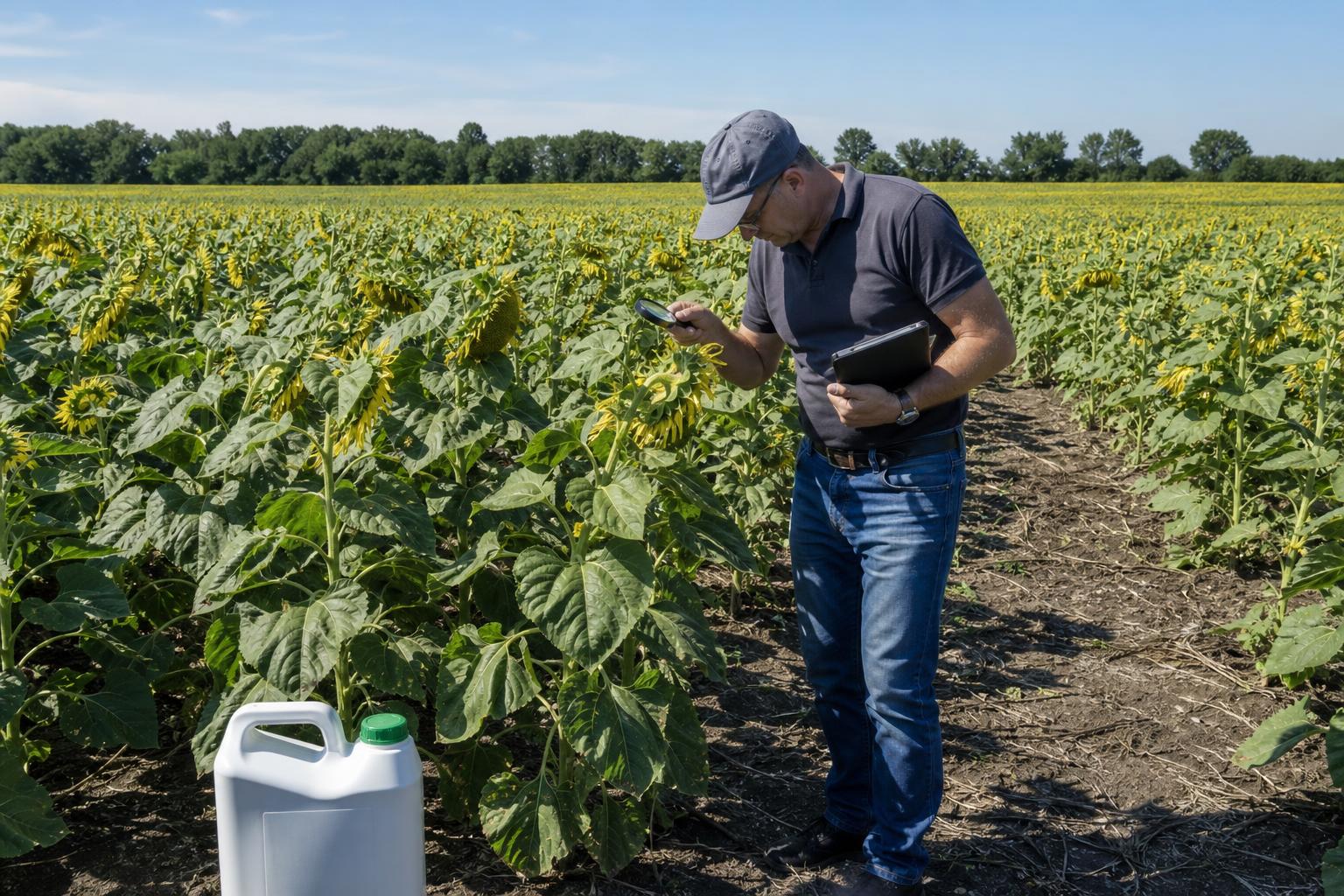
The plant protection market is entering a period when local pest outbreaks can quickly influence demand for specific groups of products. Industry reports mention a widespread distribution of flea beetles on sunflower crops in two regions of Ukraine.
For agricultural producers, this is not only a field issue but also a matter of timely logistics for plant protection products: availability of formulations, correct selection of active ingredients, and swift coordination of supply with suppliers.
What is known about the situation
A publicly available fragment of the report indicates flea beetle presence specifically on sunflower and in two regions. The names of the regions, pest species, crop infestation levels, and economic thresholds are not detailed in the provided materials.
Therefore, a correct market response is not to engage in mass purchasing of insecticides but to verify own fields and plan targeted treatments where pest presence is confirmed through inspection.
How this affects demand for plant protection products
Signals of pest outbreaks typically stimulate interest in the insecticide segment, especially in regions where sunflower is cultivated and where there is a risk of rapid spread between fields.
For sellers on AgroPost, it is important to update information on actual insecticide residues, packaging options, shipment deadlines, and delivery possibilities to regions with increased demand. For buyers, it is advisable to clarify availability in advance and not delay procurement until treatment becomes critically urgent.
What farmers should pay attention to
- Field monitoring. Treatment decisions should be based on field inspections, not solely on news from neighboring regions.
- Pest identification. To choose the correct product, it is necessary to understand which flea beetle species is present and at what growth stage the crop is.
- Application regulations. It is essential to verify the registration of the product for the crop, application rates, waiting periods, and restrictions related to temperature or crop development stage.
- Availability of equipment and water. Even if the product is available, treatment may be delayed due to equipment queues or weather windows.
- Communication with suppliers. It is advisable to clarify immediately whether the product is in stock, when shipment is possible, and whether the batch meets farm requirements.
What plant protection product sellers on AgroPost should do
Suppliers should clearly categorize listings by product type: insecticides, herbicides, fungicides, and complex solutions. During peak demand seasons, buyers quickly filter out vague offers.
Product descriptions should include active ingredients, crop specificity, available quantities, packaging options, storage region, and delivery conditions. This reduces clarification time and increases the chances of a quick deal.
Special attention should be paid to consultations: if a buyer searches for a product “against flea beetles on sunflower,” the seller should request additional information about the crop stage, pest density, and previous treatments, rather than offering a universal solution without diagnostics.
Implication for the market: Reports of flea beetles on sunflower enhance focus on the insecticide segment of plant protection products but do not justify chaotic procurement. The best strategy for buyers is to inspect fields and promptly reserve necessary products, while sellers should maintain current stock levels, transparent delivery conditions, and clear product descriptions on AgroPost.
Comments
No comments yetNo comments yet - be the first.