
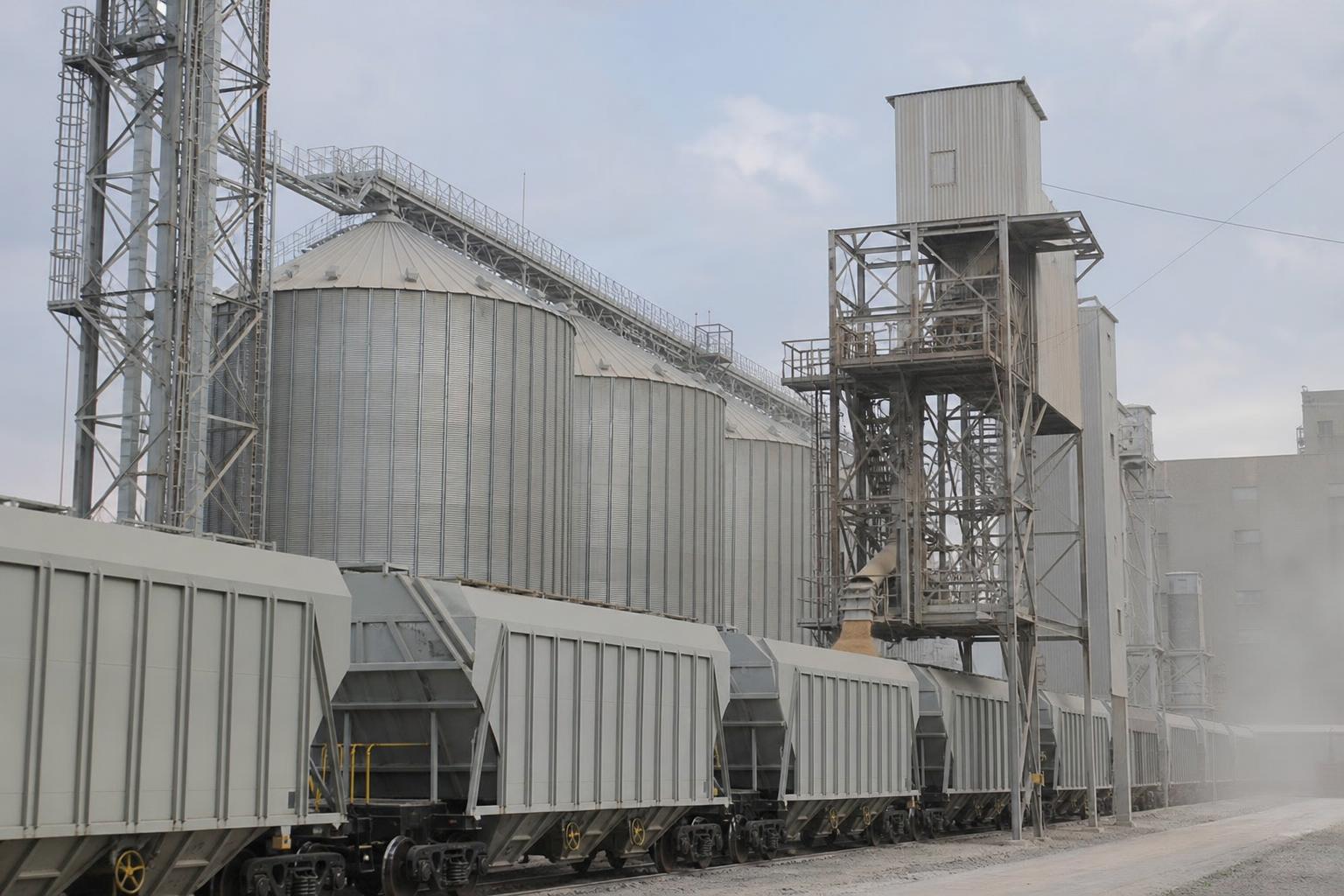
Logistics costs for grain depend not only on the distance to the destination point. The choice of route is influenced by the availability of space at elevators, processing costs, and access conditions to wagons and border infrastructure.
The new tool for searching elevators and the industry association’s appeal regarding railway services demonstrate why it is crucial for farmers to compare the total cost of logistics solutions, and for providers to clearly outline their terms.
Elevator Comparison: Not Just Storage Price Matters
The E-ZERNO platform has launched a module where elevators can specify available capacities, tariffs, and the crops they handle. It is also possible to publish offers for drying, cleaning, and loading grain.
Farmers can select facilities based on location, price, and available space. To make the evaluation useful for decision-making, it is better to compare not just individual tariffs but the expected costs for delivery, storage, processing, and further shipment.
For an elevator, a complete and clear description of the offer helps potential clients quickly assess whether the service meets their needs. In commercial proposals, it is advisable to specify clearly which crops are accepted, what operations are available, and under what conditions.
Railway Services: The Tariff Structure as a Subject of Discussion
Ukrainian Grain Association (UGA) has addressed the government and the Antimonopoly Committee of Ukraine regarding the practice of selling grain wagon usage services together with wagon repositioning on the European gauge of 1435 mm. According to the association, these services should be separated so that customers can choose repositioning separately and have equal access to it.
The appeal mentions auctions for transportation across the Vadul-Siret crossing towards Romania. According to UGA, the weighted average rate at the auctions for 450 grain wagons increased from UAH 3,371 to UAH 10,600 per wagon per day; for 90 wagons, the rate was UAH 13,044 per wagon per day. The association estimates the difference between the starting and final bids on the two auctions at over UAH 120 million per month.
This is UGA’s assessment, not a regulator’s conclusion. The association also called for an investigation into whether the described practice complies with competition legislation. For shippers, the practical takeaway is to clarify which components are included in the rate and whether alternative options are available.
What to Check Before Choosing a Logistics Partner
- Total Cost: combine the delivery to the elevator, storage, drying, cleaning, and loading into one calculation.
- Availability: confirm free capacities for the required dates and the possibility of accepting your specific crop.
- Railway Conditions: clarify whether the wagon and repositioning on the European gauge are included in the rate, and how access to the service is distributed.
- Comparability of Offers: request the same set of parameters from each provider — this makes it easier to compare tariffs and restrictions.
For logistics service providers, a detailed description of location, available operations, crops, and tariff conditions on AgroPost facilitates finding suitable clients. Buyers should inquire about the full list of operations included in the price rather than just comparing a single tariff.
What it Means for the Market: Digital catalogs simplify the search for elevator services, but the final choice requires calculating the entire route. Transparency of price components and infrastructure access remains a key topic for farmers and carriers in railway logistics.
Comments
No comments yetNo comments yet - be the first.