
For grain market participants, purchase prices and lot quality are not the only considerations: post-harvest handling costs and the predictability of shipments also matter. Recent reports on drying automation and vessel movements from the Sea of Azov concern different links in the supply chain, but both should be factored into operational planning.
The drying savings figures were provided by an equipment supplier, while the shipping information was reported by Bloomberg, citing sources. These are estimates and reports that should be verified before making specific commercial decisions.
Grain drying: measurement accuracy matters
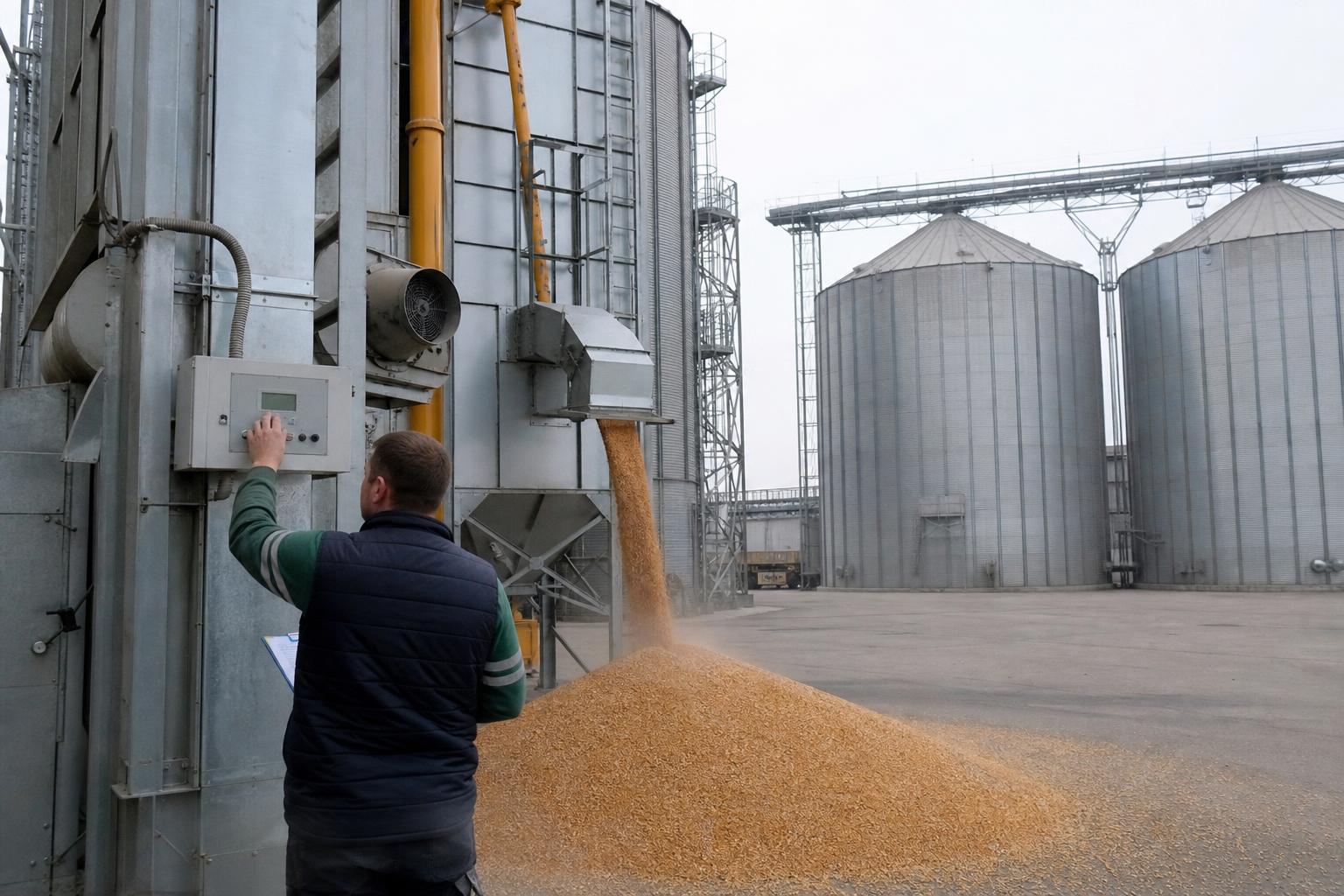
According to calculations by UK-based Perry, drying 15,000 tonnes of grain and reducing moisture by 6 percentage points could generate potential savings of about $54,000 per season. The company attributes some losses to overdrying, which can occur when target moisture levels are set with an excessive safety margin.
Perry’s proposed Grain Sentry system takes samples before and after drying, sends the results to a controller and adjusts the dryer’s operating parameters. The company claims a moisture measurement error of 0.1%. Actual savings depend on the crop, initial moisture content, weather and equipment configuration.
Export logistics: permission does not mean a stable route
According to Bloomberg, citing sources, Russian authorities temporarily allowed grain vessels to leave the Sea of Azov; at least one vessel passed through the Kerch Strait into the Black Sea. This does not indicate a full resumption of shipping: the report also refers to security risks along the route.
For Ukrainian sellers and buyers, the episode is a reason to closely monitor the availability of sea routes, shipping conditions and changes in market quotations. The vessel movements reported do not, on their own, justify conclusions about changes in Ukraine’s export capacity.
What to check before a deal
- Confirm the lot’s actual moisture content and target drying parameters rather than relying solely on average standards.
- To assess the return on automation, request a calculation based on the specific crop, volumes and operating schedule of the elevator.
- Before agreeing on a price and delivery schedule, check the route’s current status, transport availability and associated costs.
What this means for the market: grain sellers should factor post-harvest handling costs into their offers, while buyers should verify the quality and logistics terms of each lot. Claimed savings from automation should be assessed using the elevator’s own data, and security and route-related reports should be verified immediately before a transaction.
Comments
No comments yetNo comments yet - be the first.