
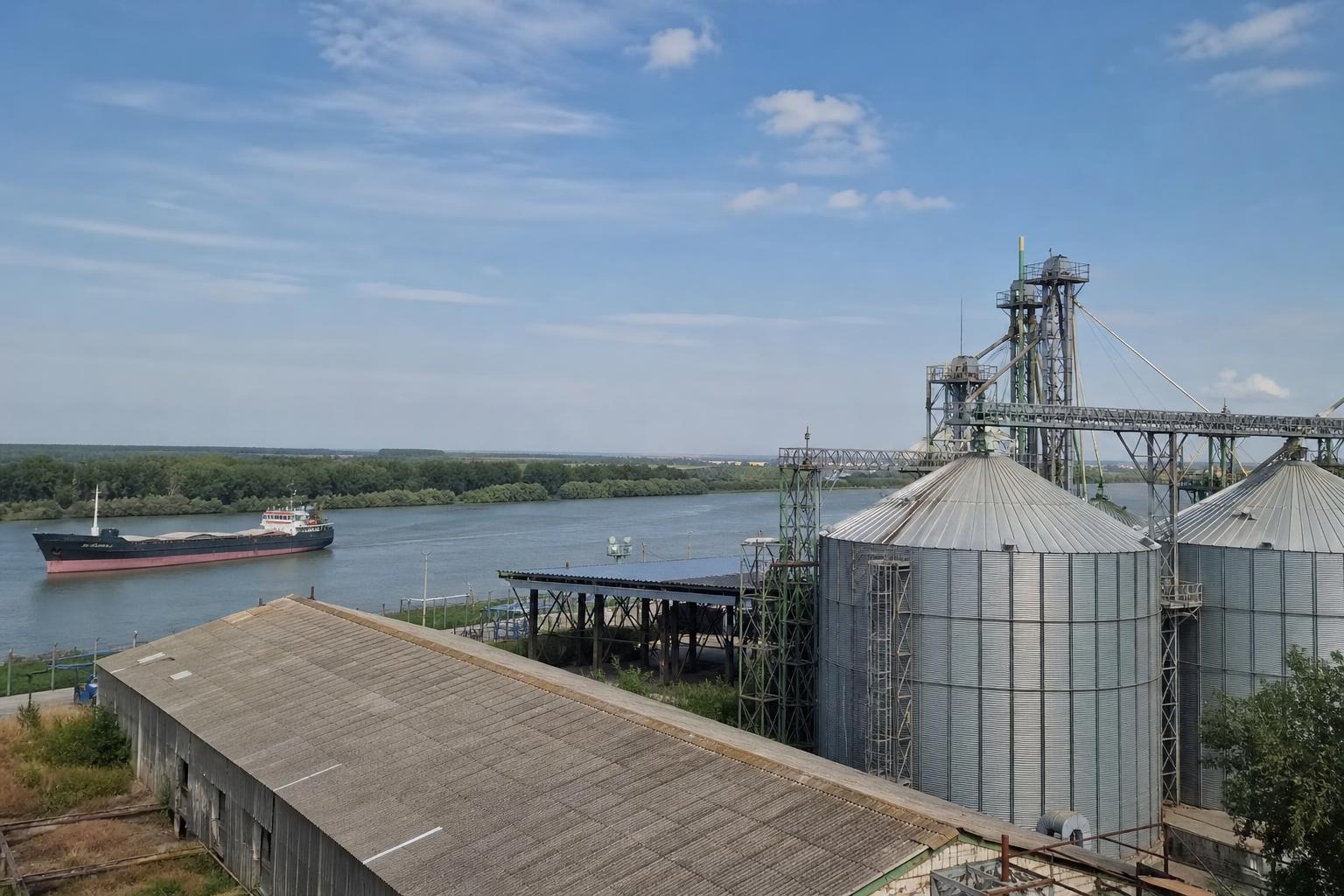
In Ukraine’s grain market, it is important to account not only for the price of grain but also for the costs of storing it and delivering it to the buyer. Recent estimates for Danube freight and grain storage offer useful benchmarks for planning, but they should be assessed against the specific route and the farm’s requirements.
For sellers, this is primarily a matter of calculating the full cost of shipment. For buyers, it is an opportunity to assess the logistics component of an offer and the availability of the lot more accurately.
Danube freight: different trends for coasters and barges
Freight rates for coasters sailing from Ukraine’s Danube ports are rising amid a limited number of available vessels. Barge freight, by contrast, is becoming cheaper: higher water levels on the Danube have allowed for larger loads, while the supply of transport capacity has increased.
One route-specific benchmark is around $135 per tonne of corn for a 6,000-tonne shipment from Danube ports to Egypt by coaster. According to the figures provided, the rate rose by $5 per tonne over the week. The estimate accounts for passage through the Sulina Canal and approximately five days of free waiting time.
Vessel readiness also matters in freight negotiations: charterers prefer coasters that have already discharged at Danube ports, so they do not have to wait for canal passage. Offers of vessels calling at Greater Odesa ports have also become more frequent, but this alone does not guarantee specific shipment volumes or timelines.
Grain storage: above-ground silos remain the lower-cost benchmark
The estimated cost of building underground grain storage is $140–160 per tonne of capacity. For above-ground silos, the benchmark is $80–100 per tonne. An expert estimate indicates that a fully underground facility can cost two to three times more than an above-ground one, depending on the project.
The final cost depends on soil conditions, groundwater levels, the depth and geometry of the structure, and the need for dewatering, waterproofing and excavation support. Ventilation, drainage, and temperature and humidity monitoring must also be planned separately for operation, as condensation and groundwater can pose a risk of grain spoilage.
Alternatives include partially buried structures, modular tent-covered warehouses with a capacity of 20,000–30,000 tonnes, and polymer grain bags. These options serve different purposes, so they should be compared based on total cost, operating conditions and the required storage volume.
Practical benchmarks for a deal
- For sellers: Build your calculations around the specific vessel type, route and waiting terms, rather than a general “Danube freight” rate.
- For buyers: Check whether logistics are included in the lot price and which rate the offer is based on.
- For farms planning storage: Compare not only construction costs but also engineering solutions and operating expenses.
- When reviewing offers on AgroPost: Compare grain specifications, volume, storage location and the available shipment route.
What this means for the market
Freight rates and storage costs can have a significant impact on the economics of a grain deal. Sellers and buyers should specify transport and storage terms separately and compare offers on a like-for-like basis. This makes the market price of a lot clearer and helps reduce the risk of unexpected cost changes.
Comments
No comments yetNo comments yet - be the first.