
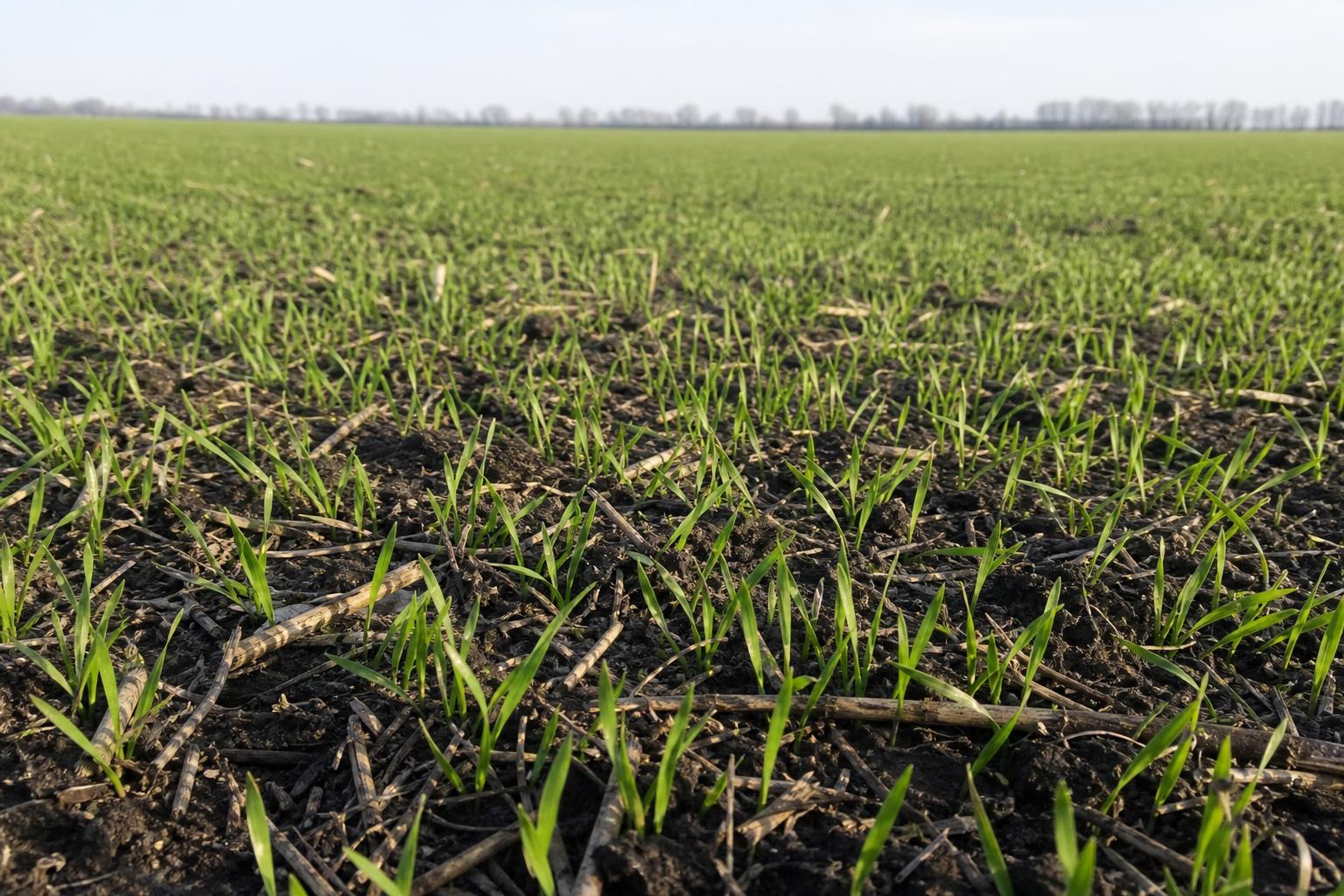
Late sowing of winter cereals leaves plants less time to develop before winter. Under these conditions, it is especially important to keep seedlings healthy and avoid slowing their growth with crop protection products.
For farms, the key issue is the condition of the crops. The information provided contains no data on grain prices or changes in export supply.
How late-sown crops differ
In a cool autumn, crops may be less affected by pests. At the same time, plants risk entering winter insufficiently developed, which reduces their winter hardiness.
The priority, therefore, is to establish strong, healthy seedlings and create conditions for their continued growth.
Criteria for choosing a seed treatment
For late sowing, a broad spectrum of disease control and the absence of a growth-regulating effect—that is, any slowing of plant growth—are important.
Latifundist.com lists smuts, Septoria, powdery mildew, and root and crown rots among the target diseases. When choosing a product, check its spectrum of activity and application requirements against the label.
What farms should consider
- Assess seedling development and the time remaining before winter sets in.
- Pay attention to protection against diseases transmitted through seed, soil and air.
- Check whether the selected seed treatment has a growth-regulating effect on the crop.
For sellers and buyers of products for grain production, this means that when comparing offers, it is important to match the stated protection spectrum to the needs of a specific crop, rather than relying solely on the product name.
What this means for the market
Late sowing increases the importance of high-quality early protection for winter cereals, but in itself does not provide grounds for conclusions about future crop volumes or price movements. Assessing the grain market requires separate data on planted areas, crop conditions, yields and trade.
Comments
No comments yetNo comments yet - be the first.