
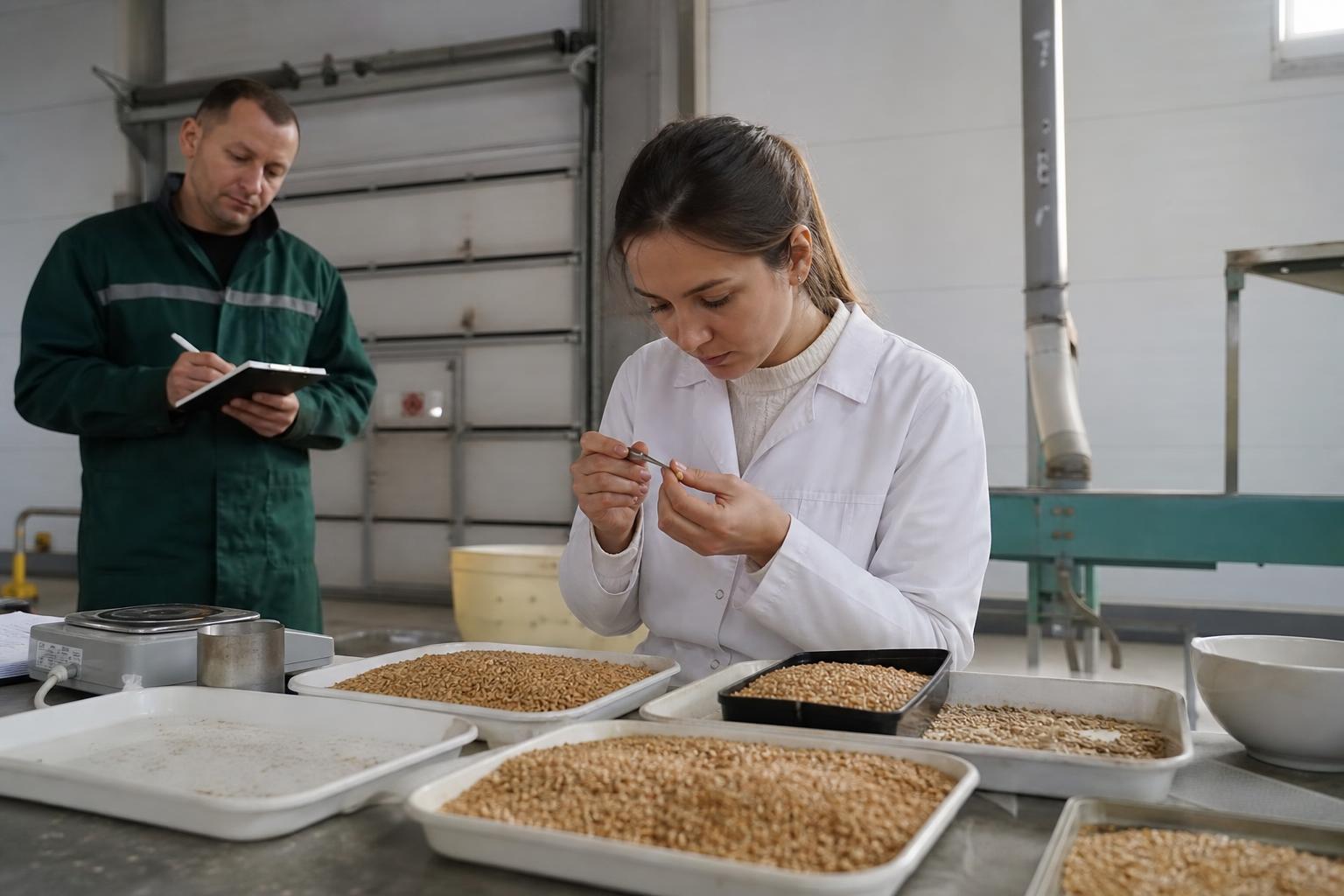
For the Ukrainian wheat market, phytosanitary quality becomes not only an agronomic issue but also a condition for access to certain export destinations. Turkey announced the tightening of controls on Ukrainian wheat from August 4, 2026.
This pertains to the complete absence of specified quarantine organisms in the batches of grain. If detected during laboratory analyses, the batch will be barred from import, and the applicant in Ukraine may be denied a phytosanitary certificate.
Which organisms will be tested in wheat
The new requirements from Turkey concern several harmful organisms of the genus Tilletia, associated with cereal diseases. The list includes:
- Tilletia barclayana;
- Tilletia indica;
- Tilletia caries;
- Tilletia controversa;
- Tilletia laevis, synonym — Tilletia foetida.
According to the State Food and Consumer Service, citing the Turkish relevant ministry, some of these organisms are quarantine pests, and their import into Turkey is prohibited, with their presence in the country unknown. Others are also banned for import, although they are found in certain regions of Turkey.
What changes for exporters and buyers
Laboratory tests will be conducted on an "available/absent" basis. This means that for the specified organisms, there is no permissible level of contamination: the requirement stipulates complete absence in the batch.
If such organisms are detected in the cargo, Turkey will not permit the import of the respective batch. If contamination is found in wheat prepared for export from Ukraine, the applicant will be refused a phytosanitary certificate in accordance with the Law of Ukraine "On Plant Quarantine".
For sellers, this increases the importance of pre-control quality checks before forming the export batch. For buyers, it emphasizes the need to verify the origin, storage conditions, and supporting documents.
Practical steps for market participants
In the wheat segment, it is crucial to clearly separate commodity batches, especially if the grain may be intended for export to Turkey or resold to traders with such a destination.
- Sellers should specify in proposals on AgroPost the crop, grade, origin region, storage conditions, and availability of recent analyses.
- Buyers should clarify whether quarantine organism checks have been conducted and whether the batch can be accompanied by phytosanitary documents.
- Elevators and warehouse operators should carefully consider mixing batches if the grain has different origins or laboratory verification statuses.
- Traders need to account for the risk of certification refusal at the procurement stage, not only before shipment.
Key conclusions for the plant protection and agrochemical market
The increased control by importers underscores that plant protection does not end with crop treatment in the field. Monitoring diseases, high-quality seed, crop management, storage, and confirmation of the phytosanitary status of the batch remain essential for the grain supply chain.
For suppliers of plant protection products, this signals the need to strengthen advisory services: farmers require not only effective products but also correct protection schemes considering the requirements of potential markets.
What this means for the market: Ukrainian wheat sellers should incorporate phytosanitary testing into standard batch preparation, especially for export-oriented grain. On AgroPost, well-documented offers with confirmed analyses and clear batch histories will gain higher trust from buyers and traders.
Comments
No comments yetNo comments yet - be the first.