
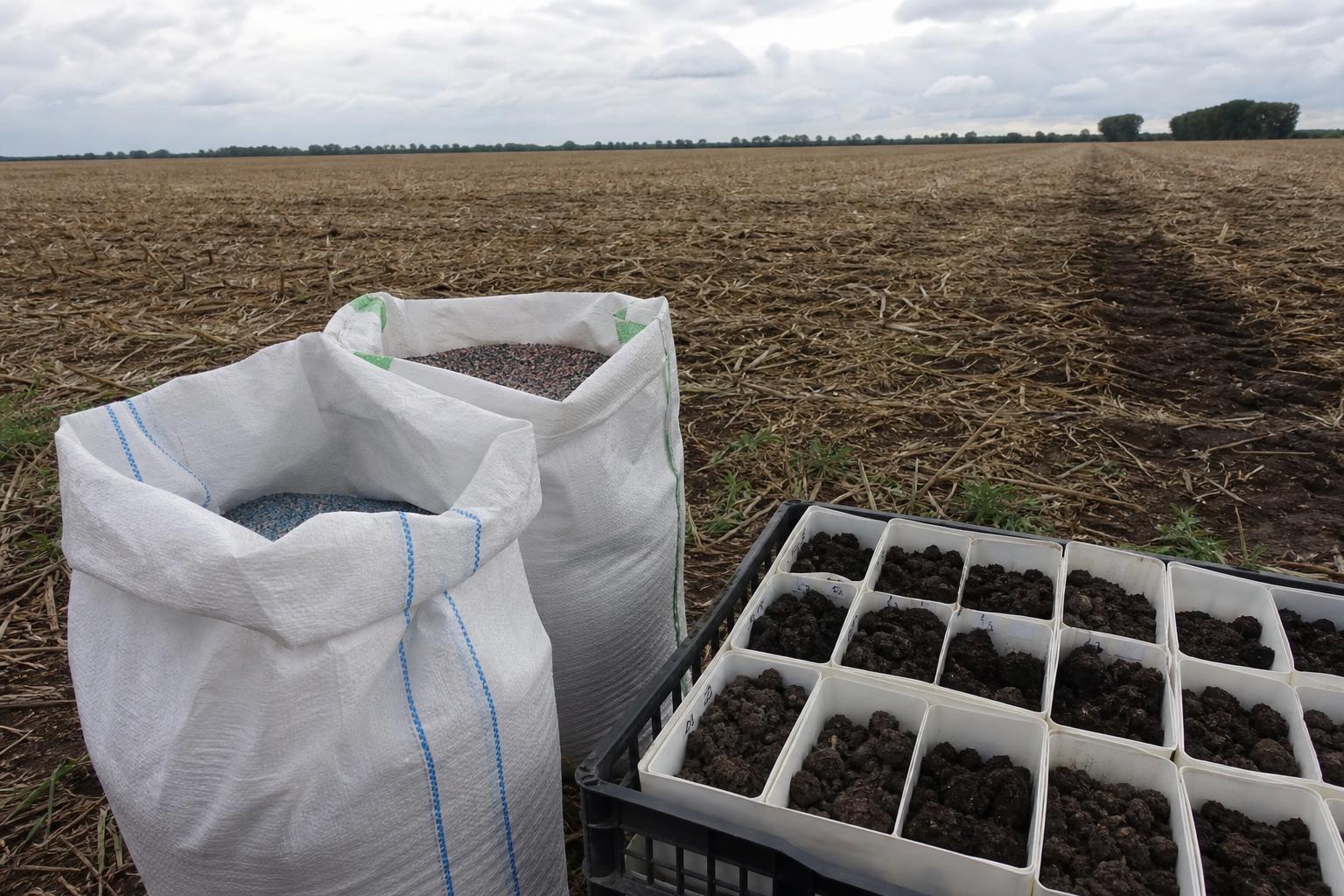
The Ukrainian fertilizer market is entering a period where purchasing decisions are increasingly tied to field results. The start of early grain harvests provides farmers with initial practical benchmarks: where the agrofon performed better and where the nutrient system requires adjustment.
Against this backdrop, the importance of soil literacy, nutrient planning, and flexible offers from fertilizer suppliers is growing. For AgroPost, this means demand not only for standard nitrogen or NPK products but also for clear solutions tailored to specific crops, regions, and budgets.
Field Signal: Yield Differences Are Linked to Agrofon
In Odesa region, Agrain Group has begun harvesting early grains in Bolhrad and Izmail districts. According to the company, the spring barley at the start of harvest shows an average yield of about 6 t/ha, with some fields ranging from 5.5 to 7 t/ha depending on the agrofon.
For fertilizer sellers, this is an important market indicator. Farms see the difference between fields not just in theory but in the combine bunker. Therefore, sales arguments should shift from simple "in stock" to explaining where the product is most appropriate: for initial feeding, deficit correction, main application, or specific fertilization systems.
Preliminary information indicates that barley grain moisture content is 12–14%, and drying is not required. While this is not a direct indicator of the fertilizer market, such seasonal results can quickly close the first cycle of technology assessment for farms and move toward planning subsequent purchases.
Soil Literacy Becomes Part of the Agrochemical Market
At Poltava State Agrarian University, Ukraine’s first SOIL MUSEUM has opened. It is positioned as a scientific and educational space for studying soil ecosystems and promoting responsible soil management.
For the fertilizer sector, this is not a commercial news but reflects a broader trend: the agricultural market is gradually shifting from universal schemes to solutions based on understanding soil properties. Fertilizer buyers will increasingly inquire about soil analysis, nutrient balance, pH, organic matter, and product compatibility within technology.
Marketplace sellers should consider this shift. Listings with detailed descriptions of composition, element forms, application crops, packaging, delivery conditions, and recommendations will appear more convincing than brief positions without details.
Farm Financial Cycles Influence Fertilizer Purchases
An additional market signal is farms’ investments in their own grain storage. In Rivne region, Sупер Еліта farm has installed a flat-bottom silo with a capacity of 1,400 m³. The farm explained that the decision was driven by expanding sowing areas and a desire to reduce dependence on external elevators.
Such investments do not directly determine fertilizer demand but indicate that producers are trying to manage harvest sales more flexibly. If a farm can store grain until a more profitable period, it plans cash flows differently, which in turn affects resource procurement, including fertilizers.
For sellers, this means offering various formats: large batches for farms with pre-established budgets and smaller volumes for those purchasing gradually for specific field operations.
What Fertilizer Sellers and Buyers Should Consider
- Buyers: compare not only price per ton but also active ingredient concentration, logistics, delivery times, and product suitability for your crop.
- Buyers: use harvest results as an audit of your nutrient technology — differences between fields can indicate where system adjustments are needed.
- Sellers: include complete fertilizer composition, forms of nitrogen, phosphorus, or potassium, recommended application periods, and available packaging in your listings.
- Sellers: tailor offers to seasonal scenarios — main application, initial feeding, cereal top-dressing, preparation for winter crops, or row crops.
Implication for the market: in the near future, fertilizer proposals that help farmers make field-based decisions rather than just rely on price lists will prevail. Early harvest results, soil awareness, and the need to manage financial cycles are pushing the market toward more precise, transparent, and practical selection of nitrogen, complex, and specialty fertilizers.
Comments
No comments yetNo comments yet - be the first.