
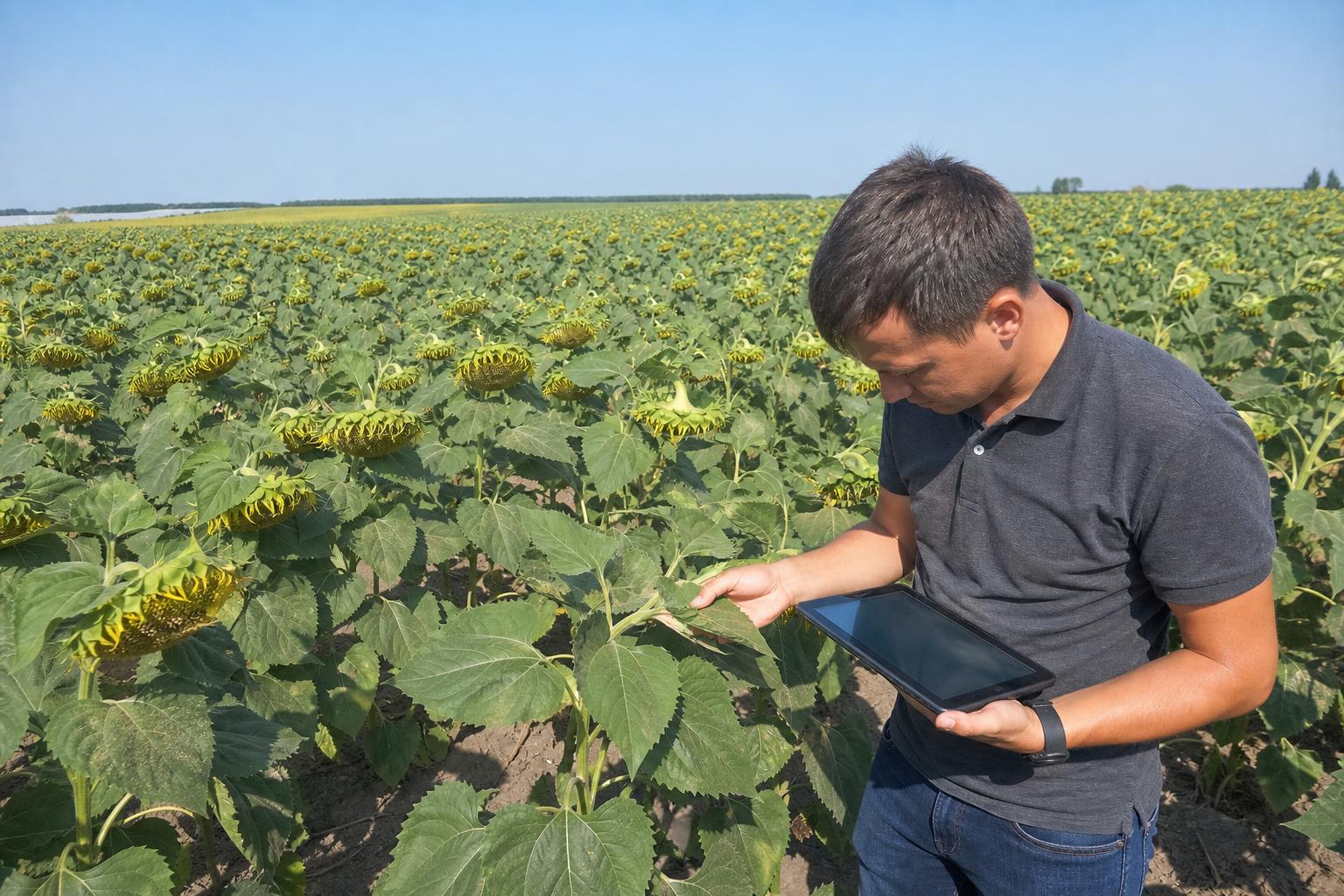
During the sunflower and soybean harvest formation period, farmers should intensify field monitoring. Drought and elevated temperatures alter pest activity, so protection decisions are best based on actual crop conditions rather than calendar timing.
For pesticide sellers and buyers on AgroPost, this signals the need for more careful planning of fungicide stocks, consulting support, and rapid shipment. The upcoming weeks could be active for the oilseed protection segment.
Current Observations in Sunflower Crops
According to agronomic experts, signs of downy mildew and white rust are already present on sunflower crops. Particular attention should be paid to early sowing dates and hybrids with lower resistance to downy mildew.
The risk for producers involves not only potential yield loss but also delayed response. If symptoms are visible in the field, it is crucial to quickly assess the extent of disease spread, crop stage, weather forecast, and the availability of appropriate treatments.
Second Half of Vegetation: Diseases Not to Underestimate
In the latter part of the sunflower growing season, diseases such as alternariosis, fusarium, and rust may develop. These can exert additional stress on crops, especially if the plants are already weakened by heat or drought stress.
For soybeans, regular monitoring of leaf health and overall phytosanitary status remains relevant. During harvest formation, delayed field inspections can reduce the effectiveness of subsequent treatments.
Impact on Pesticide Demand
The market may see increased interest in fungicides with protective and curative properties, particularly combined solutions for sunflower and soybean. Some sources mention a combination of active ingredients like cymoxanil and azoxystrobin as options for controlling specific diseases, but the choice of product should be based on registration, label instructions, and agronomist recommendations.
Buyers should verify not only prices but also the availability of the required packaging, delivery terms, product authenticity, and crop compatibility. Sellers are advised to clearly specify active substances, application rates according to the label, crop type, and regional availability of the product.
Key Conclusions for Agribusiness
- Sunflower and soybean during the harvest formation phase require more frequent disease and pest monitoring.
- Signs of downy mildew and white rust are already observed on sunflower, with potential development of alternariosis, fusarium, and rust later.
- Early sowings and less resistant hybrids should be prioritized for inspection.
- For the pesticide market, rapid diagnostics, fungicide availability, and correct active ingredient selection are crucial.
Implications for the market. The plant protection segment is shifting from planned procurement to quick, targeted solutions for specific field issues. On AgroPost, buyers should promptly seek proven fungicides for sunflower and soybean, while sellers need to update stock levels, delivery conditions, and product descriptions to enable farmers to make swift decisions.
Comments
No comments yetNo comments yet - be the first.