
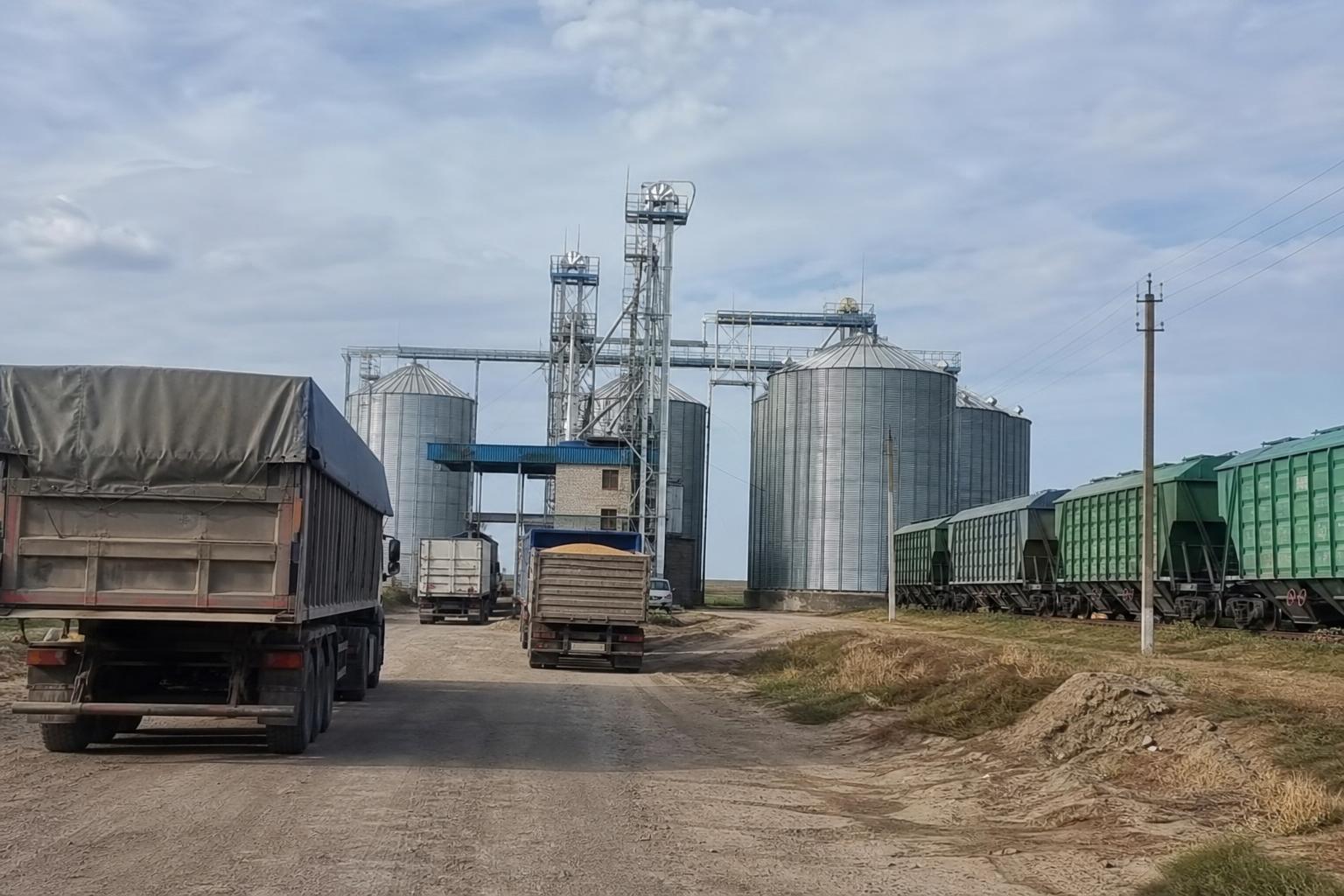
The Ukrainian agrarian market is entering a period of increased logistical demand. According to data from the State Statistics Service, as of September 1, farmers have harvested 33.6 million tons of grains and legumes, including 25.8 million tons of wheat and 6.05 million tons of barley. Additionally, reports indicate 3.99 million tons of rapeseed.
Separate pressure on transportation is exerted by the vegetable segment: vegetable production is estimated at 3.46 million tons, and fruits and berries at 759 thousand tons. For the market, this means competition for transport, storage facilities, drying, transshipment, and rapid document processing.
The harvest drives demand for transport and short delivery routes
Large volumes of grains traditionally concentrate demand for road and rail transportation to elevators, processors, and export routes. Even without sharp changes in freight rates, sellers should allocate time for finding vehicles, coordinating loading schedules, and verifying acceptance at the elevator.
For vegetables and fruits, the logistics requirements differ: not only the cost of transportation matters but also speed, container condition, temperature control, and the ability to deliver small batches promptly. On marketplaces, this emphasizes the importance of precise lot descriptions: volume, shipment location, desired timelines, transport type, and payment terms.
Export routes: focus on the western direction
The news also mentions plans to build a 47 km European gauge railway line from Chernivtsi to the Romanian border. For agrologistics, such infrastructure projects are important as they can expand routing options towards the EU and neighboring ports.
While the project is not yet implemented, market participants should work with existing channels: coordinate transshipment in advance, check the availability of wagons or trucks, and compare delivery costs to various destinations.
Elevator safety as part of logistics
Logistics does not end with transportation. The incident involving a grain dryer fire at an agricultural enterprise in Ladichyn village, Ternopil region, highlights that storage and grain processing remain significant operational risks.
According to firefighters, the fire occurred in the morning of September 20, with a report received at 04:20. The fire covered approximately 150 m² upon arrival. The fire was contained to prevent spreading to the neighboring grain drying complex. Causes and damages are still being investigated.
For grain owners, this is a practical signal: before dispatching a batch for drying or storage, it is advisable to verify equipment condition, acceptance schedules, responsibilities, and the possibility of quickly redirecting cargo if facilities are halted.
Key conclusions for sellers and buyers
- Grain sellers should specify not only the price but also conditions of shipment, permissible downtime, and delivery points.
- Buyers should confirm transportation and acceptance in advance, especially for large batches of wheat, barley, and rapeseed.
- Vegetable producers need to specify requirements for containers, delivery speed, and temperature control.
- Carriers should clearly indicate available routes, vehicle types, load capacity, and readiness to handle agricultural cargo.
What this means for the market: in the near future, competitive advantage will depend not only on product price but also on the ability to organize delivery quickly. On AgroPost, sellers can improve deal quality through precise logistical conditions in their listings, while buyers can more rapidly find lots with clear routes and delivery timelines.
Comments
No comments yetNo comments yet - be the first.