
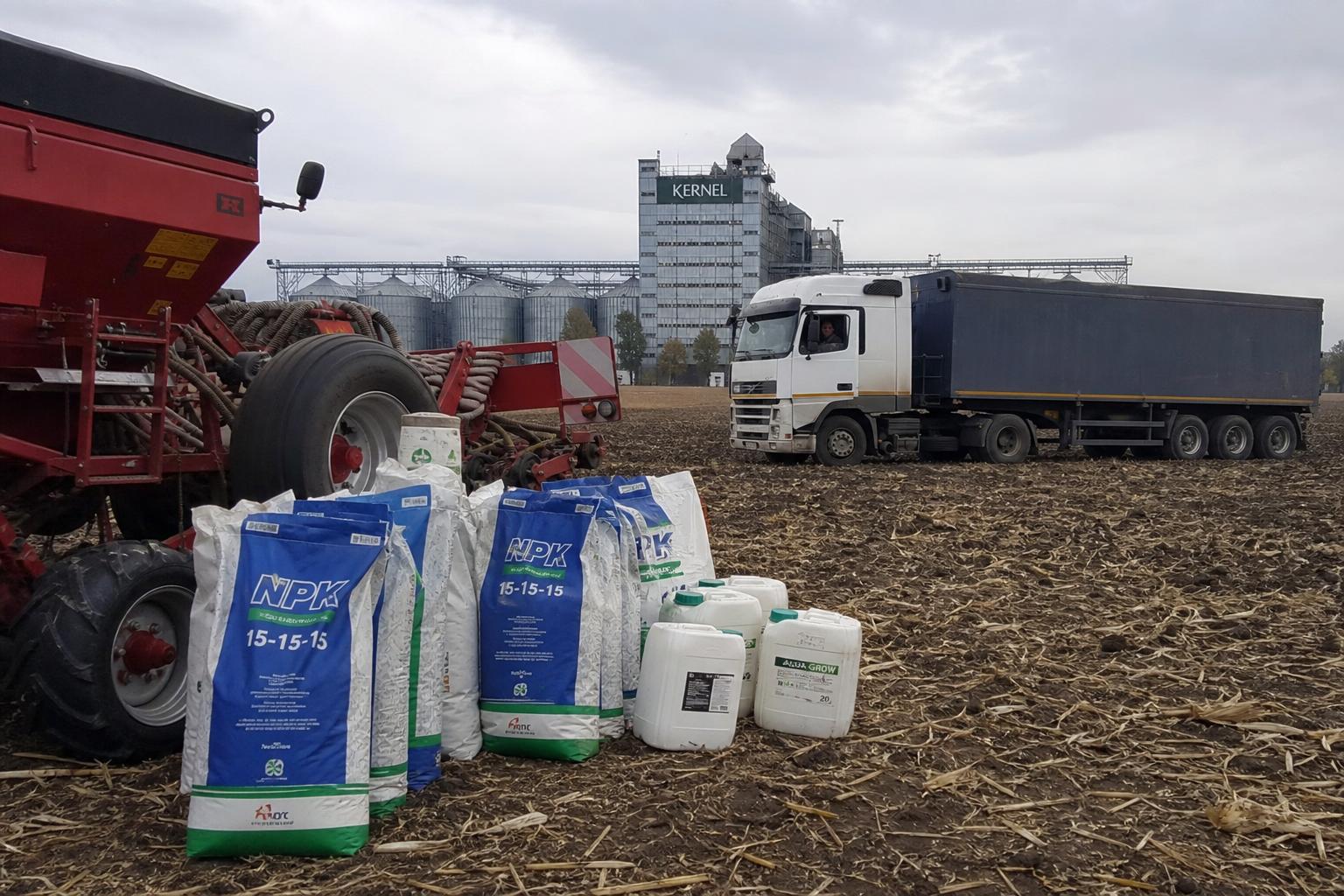
Autumn planting in Ukraine is entering a phase where demand for fertilizers, seed treatments, and starter microfertilizers directly depends on two factors: the availability of funds in farms and the predictability of delivery.
Recent market signals from the grain sector indicate that logistics remain a weak point. For the fertilizer market, this means increased value for local stocks, short supply routes, and rapid communication between seller and buyer.
Logistics Again Become a Price and Timing Factor
According to Ukrzaliznytsia, damage to a bridge in the Odessa region could complicate grain deliveries to Danube ports. About 3,000 grain wagons were heading toward these ports, and without the bridge, the journey could take up to 26 days.
Although these data pertain to grain, the signal for the fertilizer market is clear: railway and border routes remain congested and sensitive to disruptions. Fertilizer buyers should allocate more time for delivery, especially if the batch involves multiple transshipments or comes from another region.
For sellers, this emphasizes the demand for offers with clearly specified loading locations, actual stock levels, and realistic delivery timelines. On AgroPost, such details may be more important than minimal price differences.
Cheaper Corn May Hold Back Fertilizer Purchases
The grain market has recorded a decline in purchase prices for new-crop corn at Danube ports. As of September 17, prices mostly ranged from $165–170/ton CPT port, down by $3–10/ton since the beginning of the week.
For agricultural producers, this is not a direct indicator of fertilizer costs but an important cash flow metric. When crop margins decrease, farms tend to review their purchase volumes, postpone some expenses, or switch to more targeted application.
In such a situation, the best-selling products are not abstract "profitable batches" but specific solutions for sowing: nitrogen fertilizers for top dressing, NPK for main application, microfertilizers for start, and seed treatment products.
Microfertilizers in Seed Treatment: Technology Shapes Demand
In the winter cereal segment, farmers' attention is focused not only on macrofertilizers. Ukravit specialists, in their recommendations for seed treatment, note that to improve seedling start development, it is possible to combine seed treatments with complex microfertilizers and amino acids.
Specifically, an example is provided of using the complex microfertilizer Vanguard Start at a rate of 1 liter per ton of seed material. The goal of this approach is to support germination energy, root development, and sugar accumulation before wintering.
For microfertilizer sellers, this is an argument in favor of bundle offers for winter crops: seed, seed treatment, microfertilizer, and advice on compatibility. For buyers, this is an incentive to clarify not only the price per liter or ton but also the recommended application rate, compatibility in tank mixes, and the target crop.
Key Takeaways for AgroPost Participants
- Fertilizer buyers should reserve batches in advance and verify actual stock availability.
- Sellers should specify the shipment region, available volume, packaging, and delivery options.
- For nitrogen and NPK fertilizers it is important to offer not only price but also usage scenarios tailored to specific crops.
- For microfertilizers a strong argument remains their linkage to seed treatment technology and winter crop development.
Implications for the Market
The Ukrainian fertilizer market will operate in a mode of cautious demand in the near future: farmers will evaluate margins, and sellers will compete on speed, product availability, and transparent terms. Under such conditions, proposals that help meet specific sowing needs without excessive logistical risks will prevail.
Comments
No comments yetNo comments yet - be the first.